
A Study 1787 Shilling Varieties
Exploring the designs and subtle differences of the 1787 issue
Introduction
The 1787 shilling of King George III represents one of the most iconic milled silver coins of the late 18th century. Struck at the Tower Mint in London, this coin marks a return to silver coinage after a long hiatus. It is notable for its clean, neoclassical portrait of George III and the intricate crowned shields on the reverse.
Collectors value the 1787 shilling not only for its historical context but also for its numerous die varieties. These varieties include differences in stops, hearts in the Hanoverian shield, and variations in edge lettering.
Historical Background
By the mid-1780s, Britain’s silver coinage was severely depleted due to clipping, export, and hoarding. The 1787 Shilling marked the first substantial silver issue since 1758, authorized by George III to restore confidence in circulating coinage. Although officially a circulation piece, many were hoarded as novelty or presentation coins, explaining their frequent high state of preservation.
The elegant bust by Lewis Pingo represents the King in his late forties and signaled a neoclassical shift in style at the Royal Mint.
General Information
- Monarch: George III (1760–1820)
- Denomination: One Shilling (1⁄20)
- Date: 1787
- Composition: Sterling Silver (0.925 fine)
- Weight: Approximately 6.02 grams
- Diameter: 25 mm
- Edge: Reeded slanting right
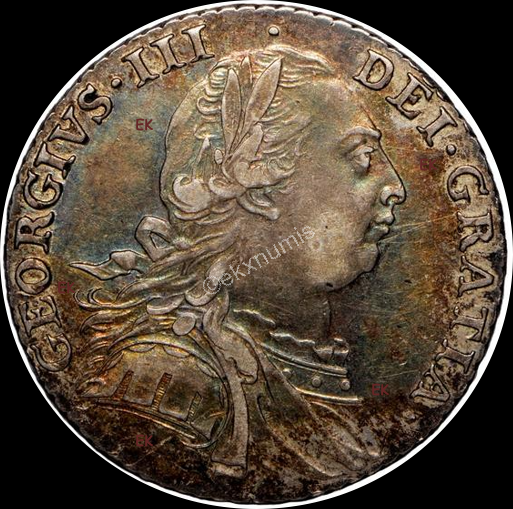
- Obverse: Laureate and draped bust of George III facing right, legend around
- Obverse Lettering (Latin): GEORGIVS·III· DEI·GRATIA·
- Obverse Lettering Translation: George the Third by the Grace of God
- Reverse: Cruciform shields surmounted by a crown, with the Order of the Garter at the center, legend around
- Reverse Lettering (Latin): •M•B•F•ET•H•REX•F•D•B•ET•L•D•S•R•I•A•T•ET•E• 1787
- Reverse Lettering Translation: King of Great Britain France and Ireland Defender of the Faith Duke of Brunswick and Lueneburg Arch Treasurer and Elector of the Holy Roman Empire
- Engraver: Lewis Pingo
- Mint: Royal Mint (Tower of London)
Known Varieties
The 1787 shilling exists in several interesting varieties. They are often distinguished by small details:
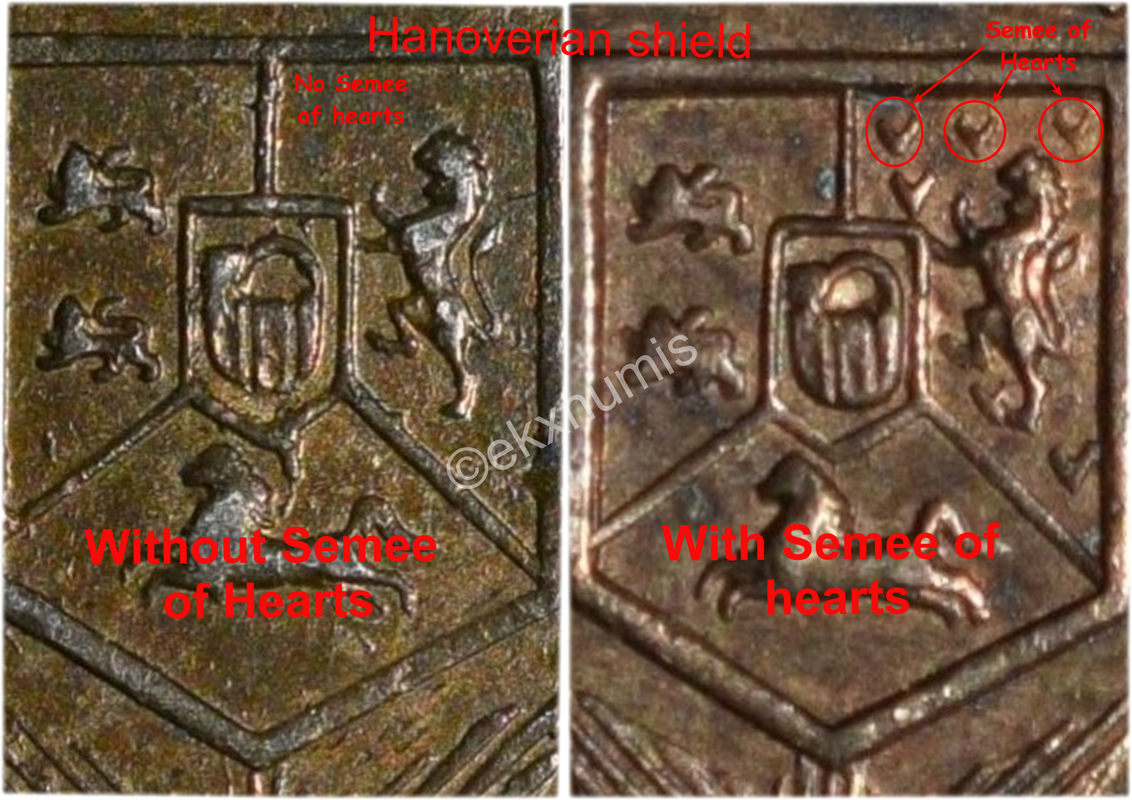
- Hearts in Hanoverian Shield: The shield on the left of the reverse displayed Hanoverian arms and hence called The Hanoverian shield. Some coins feature small hearts within the Hanoverian shield; others omit them entirely. “Semée of Hearts” literally means “strewn with hearts” — their absence here indicates a die engraved without them
- Stops: Variations include differing numbers of dots or stops around the legends. Now these stops or dots separators can be missing on both 'Obverse' and 'Reverse'.
Difference Between 'With' or 'Without' Hearts Hanoverian Shield
One of the major varieties are presence or absence of Hearts in the Hanoverian Shield on the Obverse of the coin
| Difference Between 'With' or 'Without' Hearts Hanoverian Shield |
|---|
|
List of Varieties
The following are varieties of the 1787 shilling that have been identified through research and examination. Some of these may not be documented in standard reference works, making them of special numismatic interest.
- With Semée of Hearts
- Normal
- 1 over 1
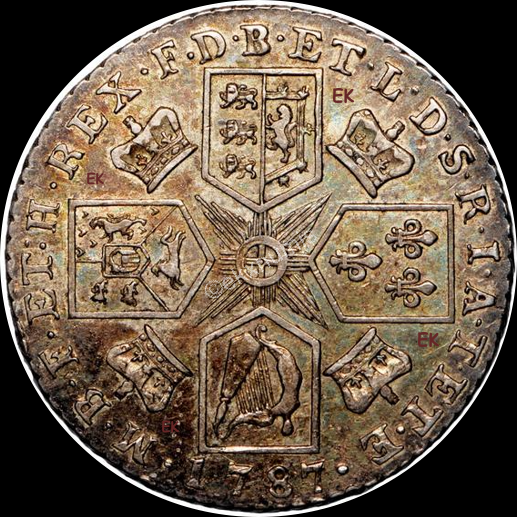
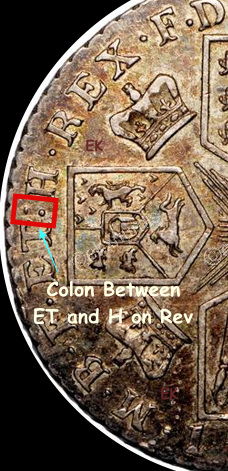
- Colon between ET and H (probably not recorded anywhere)
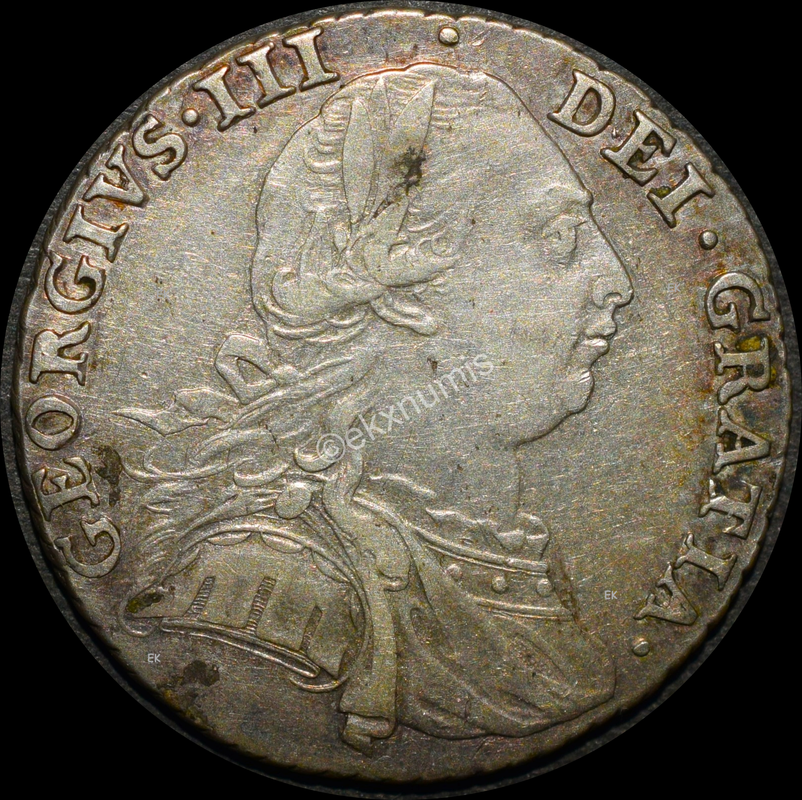
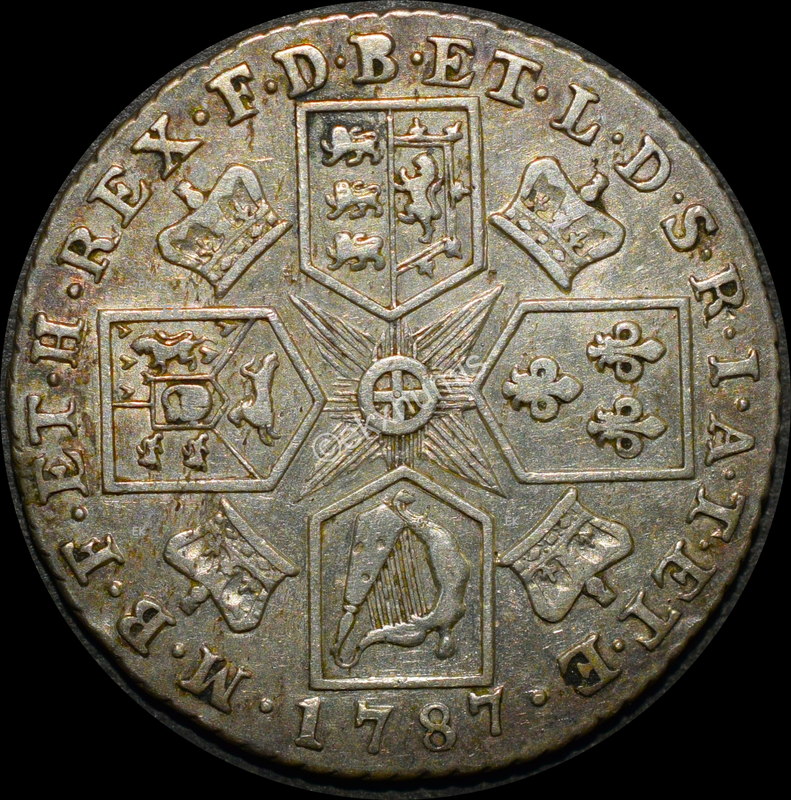
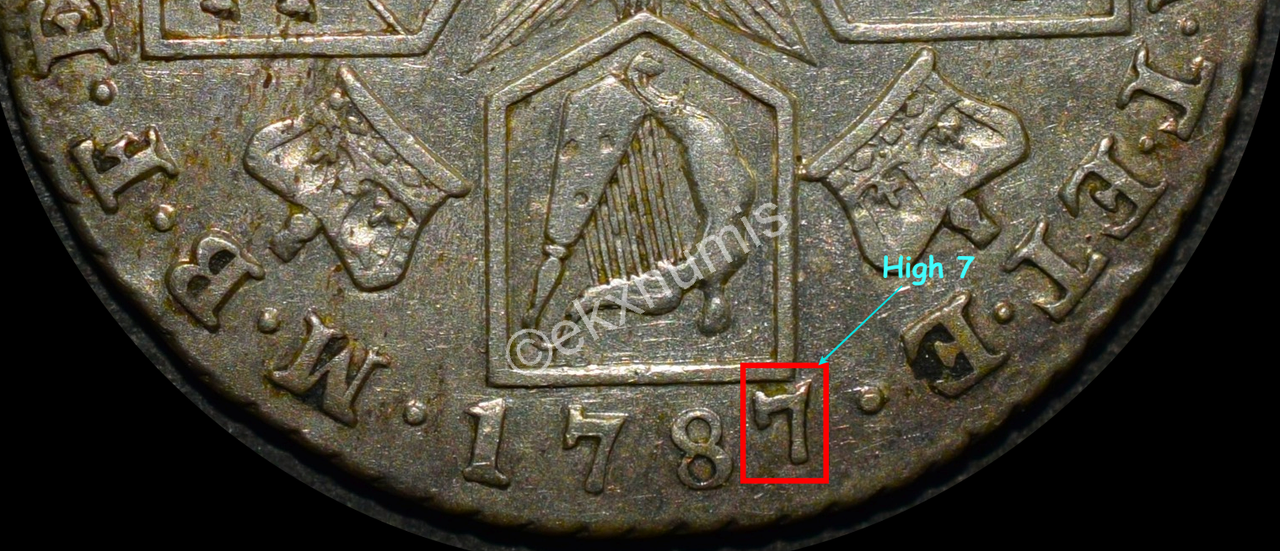
- High 7 in date (probably not recorded anywhere)
- No Semée of Hearts
- Normal
- No stop over head (on obverse)
- No stop on the obverse
- No stops at date and between M B F (on reverse)
- No stops at date (on reverse)
Details of the Varieties
With Semée of Hearts
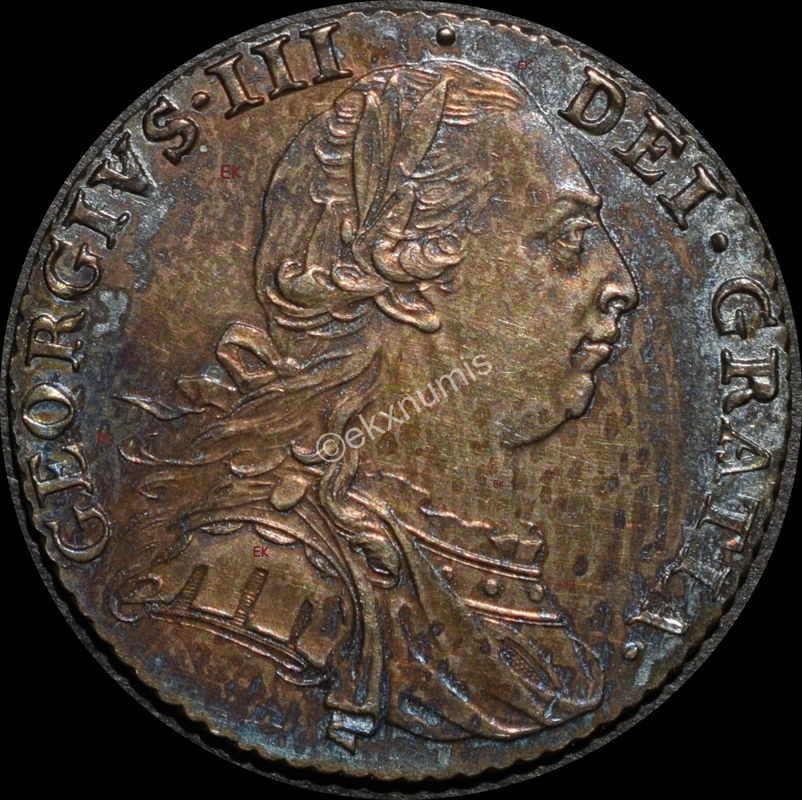
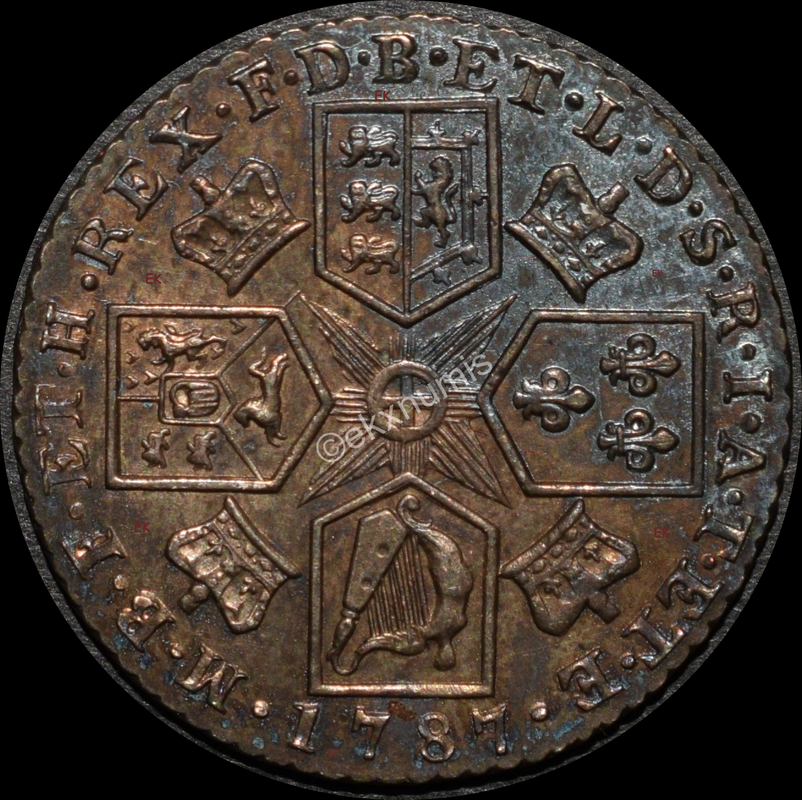
With Semée of Hearts - Normal
This type features Hanoverian shield with hearts in the and standard punctuation on both sides. It serves as the reference form for comparing the other 1787 varieties.
| With Semée of Hearts - Normal |
|---|
| Obverse | Reverse |
| 
|
Notes:
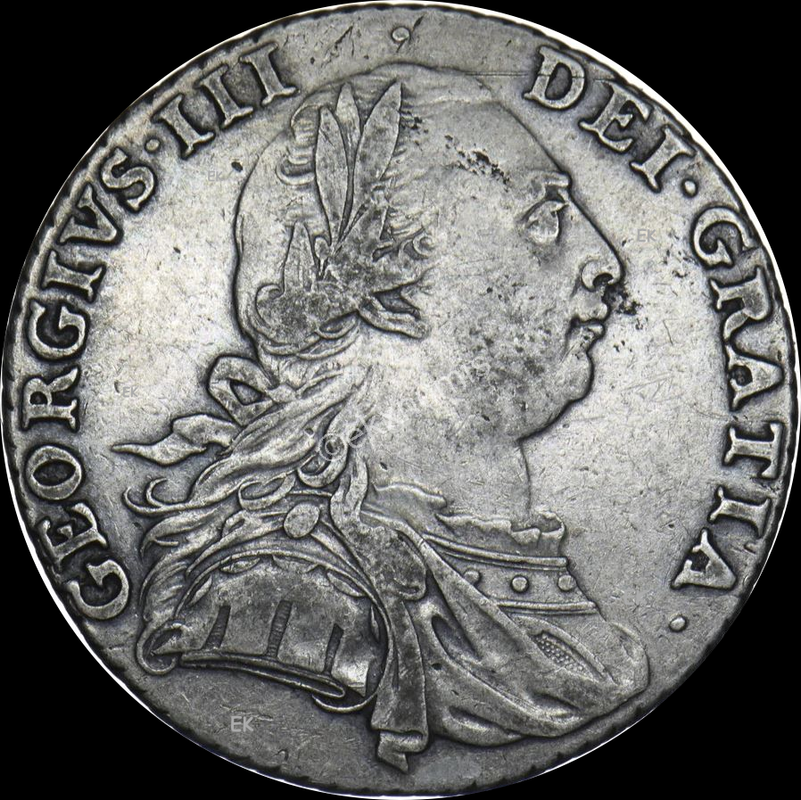
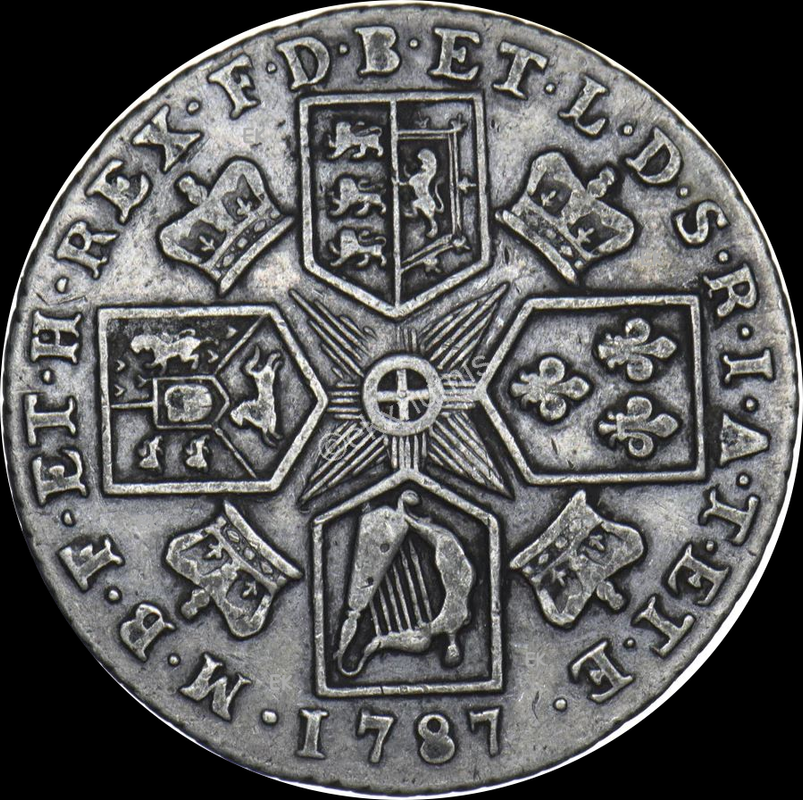
With Semée of Hearts - 1 over 1
With Semée of Hearts - 1 over 1
| With Semée of Hearts - 1 over 1 |
|---|
| Obverse | Reverse |
| 
|
With Semée of Hearts - Colon between ET and H
With Semée of Hearts - Colon between ET and H
| With Semée of Hearts - Colon between ET and H |
|---|
| Obverse | Reverse |
| 
|
| No stops at date (on reverse) |
|---|
|
With Semée of Hearts - High 7 in date
With Semée of Hearts
| With Semée of Hearts - High 7 in date |
|---|
| Obverse | Reverse |
| 
|
|
No Semée of Hearts
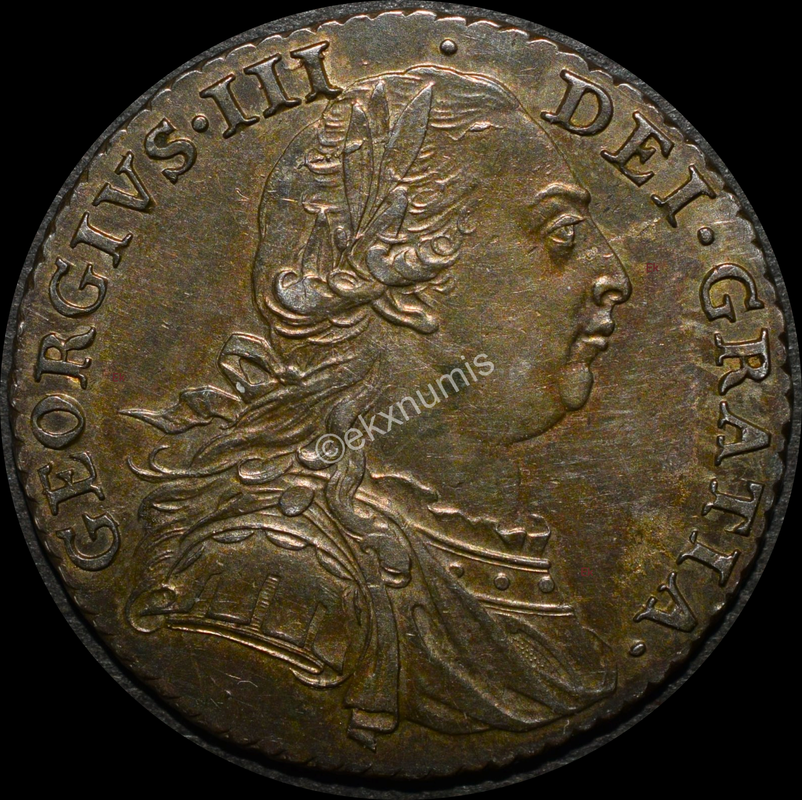
No Semée of Hearts - Normal
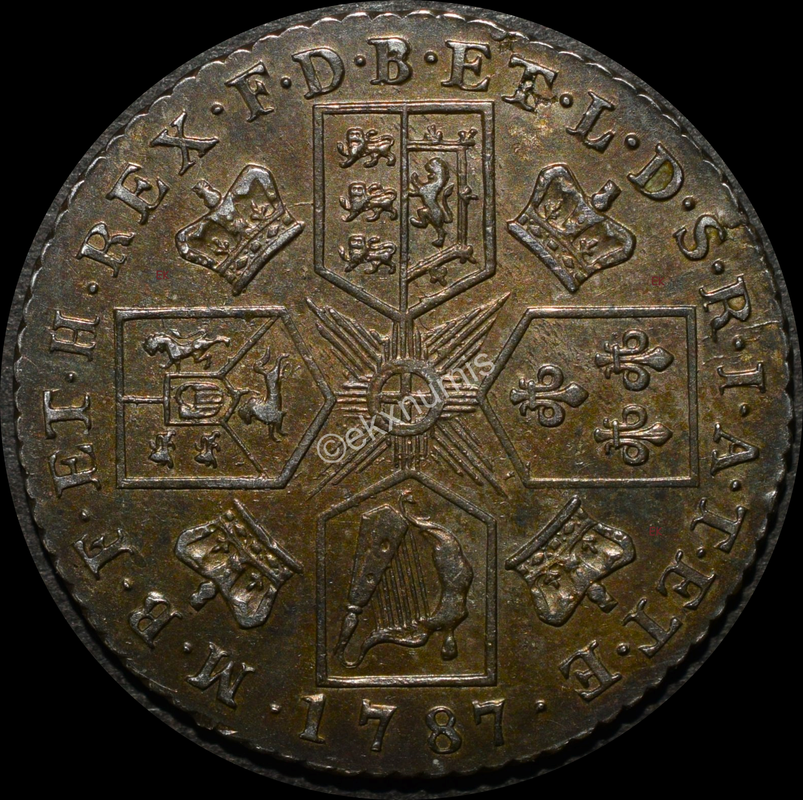
The standard 1787 shilling variety without the Semée of hearts in the Hanoverian shield. This is the most frequently encountered type of the issue, showing the typical obverse bust of George III by Lewis Pingo with standard punctuation and spacing. No unusual die flaws or punctuation errors are noted for this subtype.
| No Semée of Hearts - Normal |
|---|
| Obverse | Reverse |
| 
|
Notes: This type features no hearts in the Hanoverian shield and standard punctuation on both sides. It serves as the reference form for comparing the other 1787 varieties with now hearts on Hanoverian Shield.
No Semée of Hearts - No stop over head (on obverse)
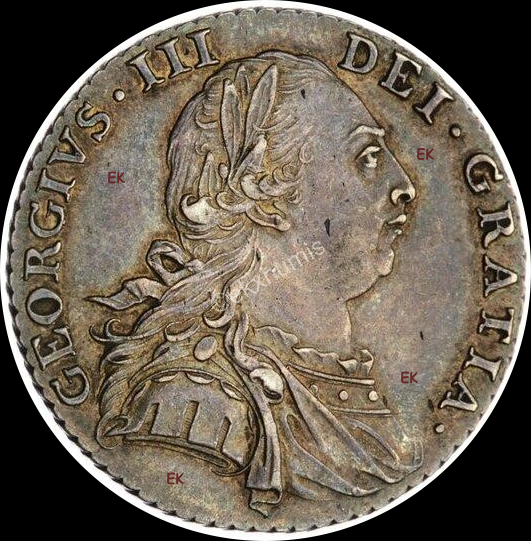
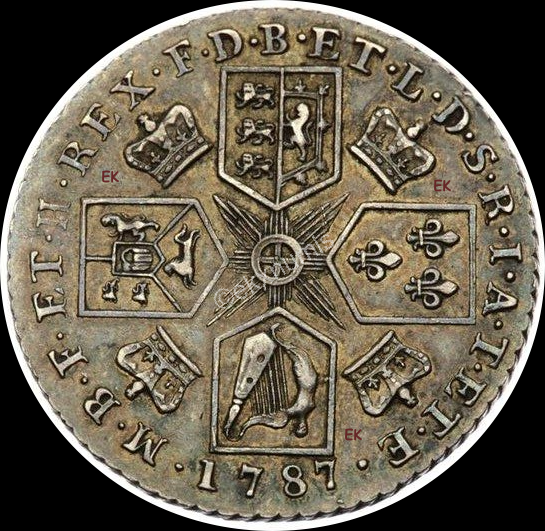
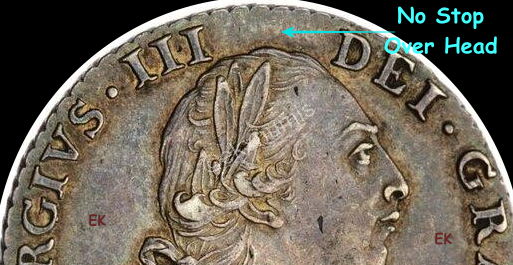
This scarce sub-variety of the 1787 shilling lacks both the Semée of hearts within the Hanoverian shield and the small punctuation stop above the King’s head on the obverse legend. The absence of the stop appears to be a deliberate engraving omission rather than die wear, suggesting the use of an alternate obverse punch or a short-lived die pairing.
| No Semée of Hearts - No stop over head (on obverse) |
|---|
| Obverse | Reverse |
| 
|
|
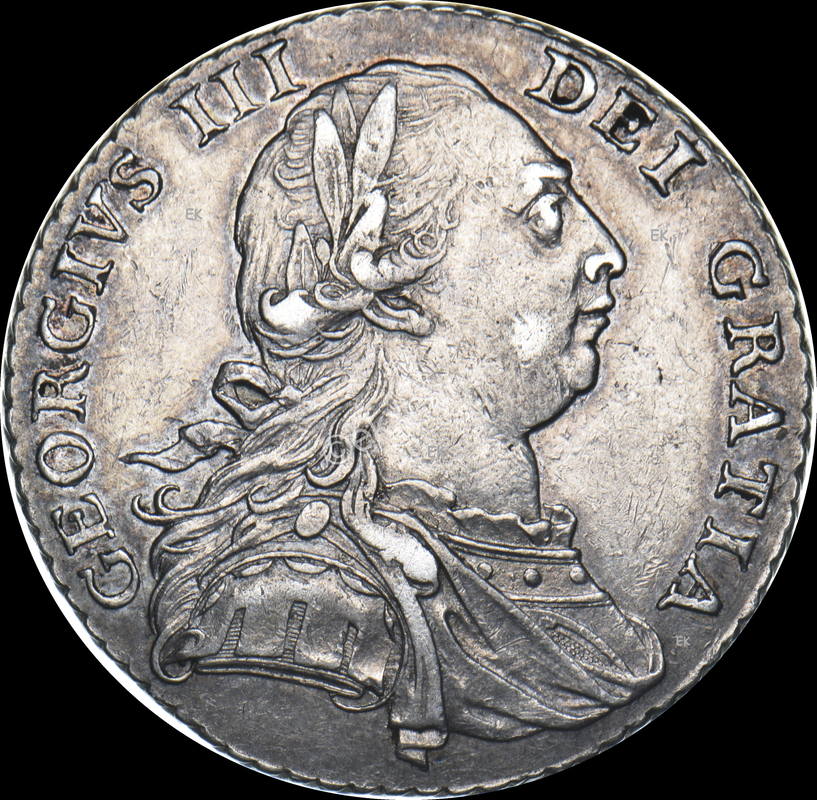
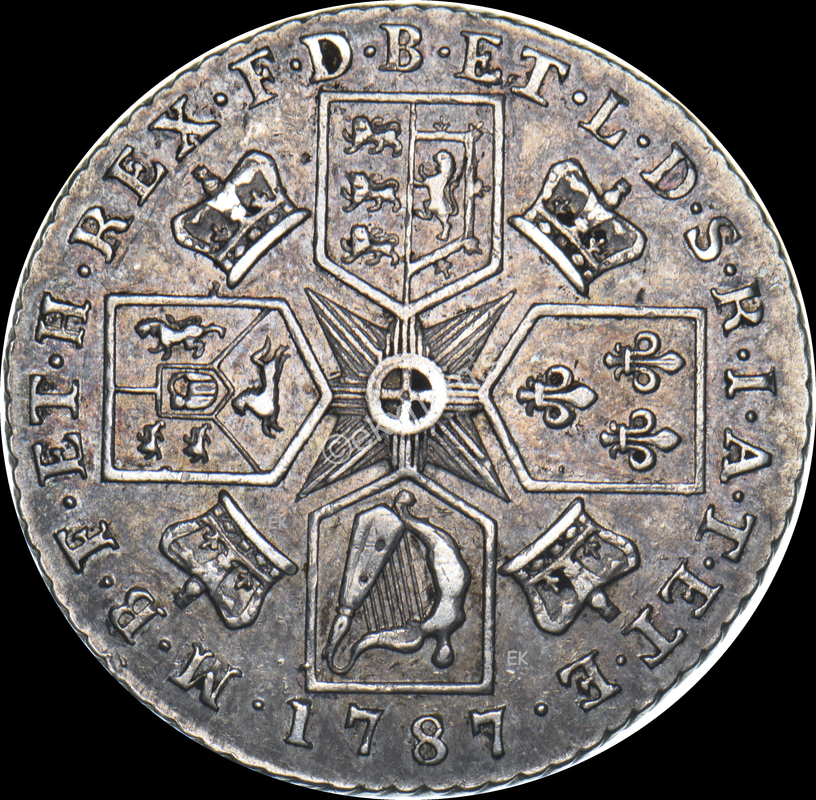
No Semée of Hearts - No stop on the obverse
This one of the rarest of the sub-varieties. Unfortunately, the image displayed here is not from my collection. This is rated R4 by Bull.
| No Semée of Hearts - No stop on the obverse |
|---|
| Obverse | Reverse |
| 
|
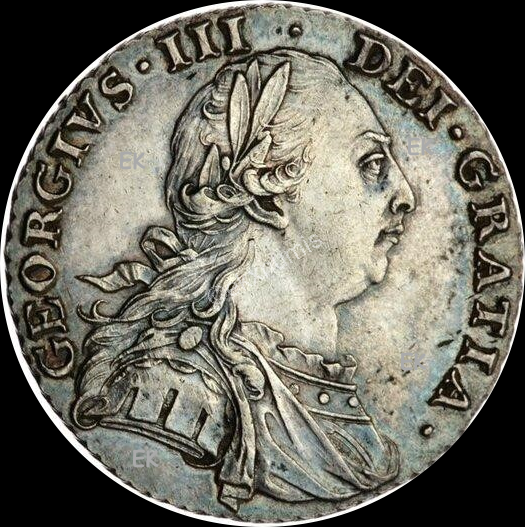
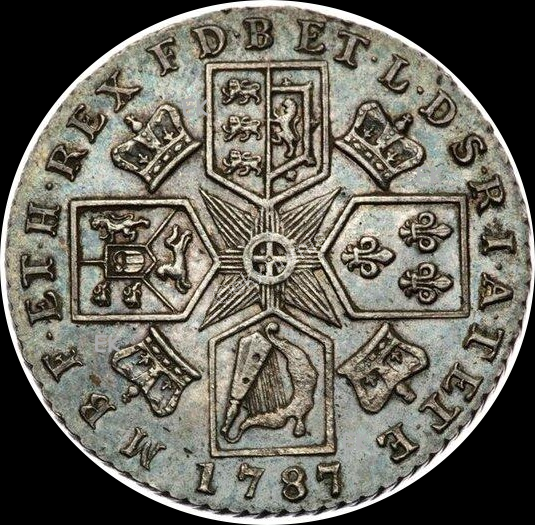
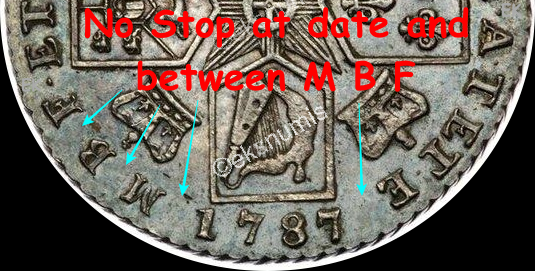
No Semée of Hearts - No stops at date and between M B F (on reverse)
This is another sub-variety of 1787 shilling without hearts. In the surrounding Latin legend, there are no dot separators between
the letters M B F (Magnae Britanniae Franciae), which normally appear as M·B·F.
This is another distinguishing engraving trait of the reverse die.
Please note Bull doesnot distinguish between 'No stops at date and between M B F' and 'No stops at date' separately. Bull also refers to this as 7/6. But I couldn't find a trace of 7/6 in any of this type
| No Semée of Hearts - No stops at date and between M B F (on reverse) |
|---|
| Obverse | Reverse |
| 
|
| No stops at date and between M B F (on reverse) |
|---|
|
No Semée of Hearts - No stops at date (on reverse)
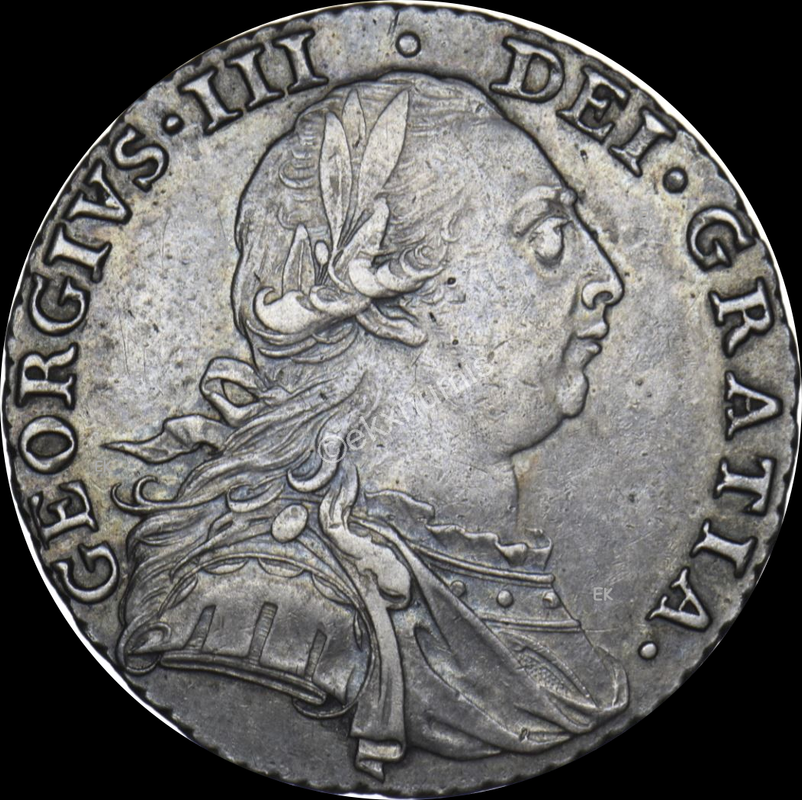
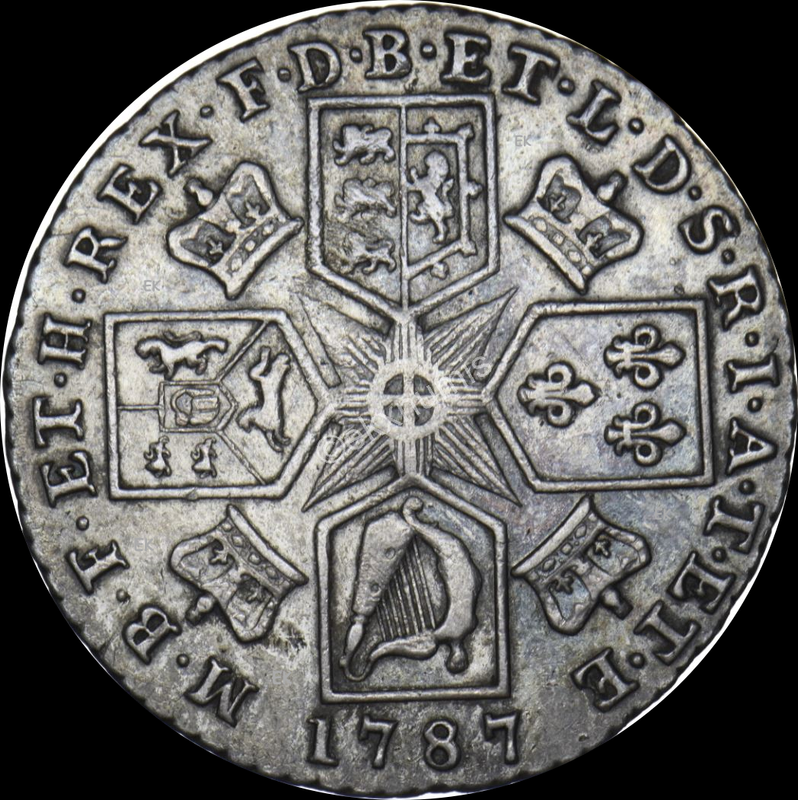
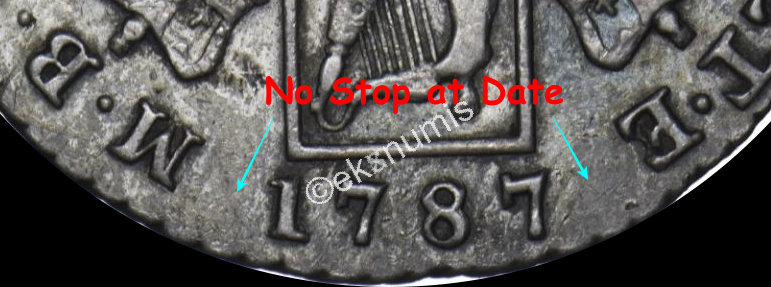
No Semée of Hearts - No stops at date (on reverse) The date 1787 appears without punctuation (no dots before or after the numerals),
whereas other varieties display ·1787·.
Please note Bull doesnot distinguish between 'No stops at date and between M B F' and 'No stops at date' separately. Bull also refers to this as 7/6. But I couldn't find a trace of 7/6 in any of this type
| No Semée of Hearts - No stops at date (on reverse) |
|---|
| Obverse | Reverse |
| 
|
| No stops at date (on reverse) |
|---|
|
Quick Reference Table
| Variety | Hearts | Stops / Punctuation | Date Feature | Rarity (Bull) |
|---|---|---|---|---|
| With Hearts – Normal | Yes | Standard | Normal | Common |
| With Hearts – 1 over 1 | Yes | Standard | Repunched ‘1’ | Scarce |
| With Hearts – Colon between ET and H | Yes | Standard | Normal | Scarce |
| With Hearts – High 7 in date | Yes | Standard | Normal | Scarce |
| No Hearts – Normal | Yes | Standard | Normal | Common |
| No Hearts – No stop over head | Yes | Missing after III | Normal | Common |
| No Hearts – No stops at date | No | Missing at date | Normal, No dot | R 2 |
| No Hearts – No stops at date & M B F | No | Missing both | Normal, No dot | R 3 |
| No Hearts – No stop on obverse | No | Missing obv stop | Normal | R 4 |
Proof and Presentation Issues
A small number of proof 1787 Shillings were struck for collectors and dignitaries. These show mirrored field and sharper details. Proofs can be found for both 'With Semée of Hearts' and 'Without Semée of Hearts'. There are some of the proof 'With Semée of Hearts' with plain edge. Some display minor die polishing lines visible under magnification.
Although not officially recorded by the Mint, their uniform strike and lack of wear distinguish them from normal circulation pieces.
Collector’s Notes
- Inspect the area around the “1” in the date for clear signs of repunching — magnification essential.
- On No-Hearts pieces, focus on the Hanoverian shield’s lower right — the absence of hearts is definitive.
- Strike weakness often occurs at the top of the crowned shields; it does not indicate wear.
- Prooflike surfaces are common due to minimal circulation; handle with non-metallic tweezers.
References & Further Reading
- English Silver Coinage (ESC 10th ed.) – Maurice Bull, 2020
- Coins of England & The United Kingdom – Seaby / Spink (S3743)
- The Royal Mint Museum Archives, London – Die records 1787 Shilling
- Numista.com – 1787 Shilling entry (ID 45143)
“A small coin with a large story — the 1787 shilling captures a moment of rebirth for British silver.”
Source: Numista, ESC, and Seaby’s Standard Catalogue of British Coins.