Collectors Guide
Elizabeth II Shillings
The Elizabeth II shilling (one shilling) was struck from 1953 to 1966 and continues the traditional English and Scottish reverse designs seen in earlier reigns. Issued in both silver and later cupro-nickel, the series reflects the broader changes in British coinage during the mid-20th century. This page provides a complete reference to Elizabeth II shillings, including specifications and collector insights.
Introduction
The Elizabeth II Shilling was struck from 1953 to 1966 and is distinctive among the denominations of the reign for carrying two separate reverse designs throughout its run. This page provides an overview of the Elizabeth II Shilling series, including the English and Scottish reverse types, obverse varieties, and year-by-year reference images.
Following the precedent established under George VI, the shilling was struck simultaneously with an English reverse — featuring a lion on a crowned shield — and a Scottish reverse — showing a lion seated within a tressure. Both types were struck each year and are equally collectible, though certain dates in one or the other type can be noticeably scarcer in high grade.
- English Reverse – Depicts a crowned lion standing on a shield, representing the heraldic arms of England. Designed by William Gardner.
- Scottish Reverse – Depicts a crowned lion seated within a double tressure flory-counter-flory, representing the arms of Scotland. Also designed by William Gardner.
- 1953 – Two obverses are recorded for both reverse types.
Coinage Details
Design — The obverse throughout the series carries the portrait of Queen Elizabeth II by Mary Gillick. The two reverse types, both designed by William Gardner, continued the tradition begun in 1937 of acknowledging the union of the English and Scottish crowns through parallel reverse designs on the same denomination.
1953 — Two obverses are recorded for the Coronation year issue, applicable to both the English and Scottish reverse types. Obverse 2 examples are the scarcer survivors; the majority of high-grade coins encountered will be Obverse 1 pieces from the original presentation sets.
1954–1966 — The shilling was produced annually in both types until the series ended in 1966. Unlike the florin, the shilling had no direct decimal successor and was withdrawn at decimalisation in February 1971. Building a complete date-and-type run across both reverses provides a satisfying collecting challenge, and condition rarity rather than date rarity is the primary driver of value for most issues.
Elizabeth II Shilling Issues
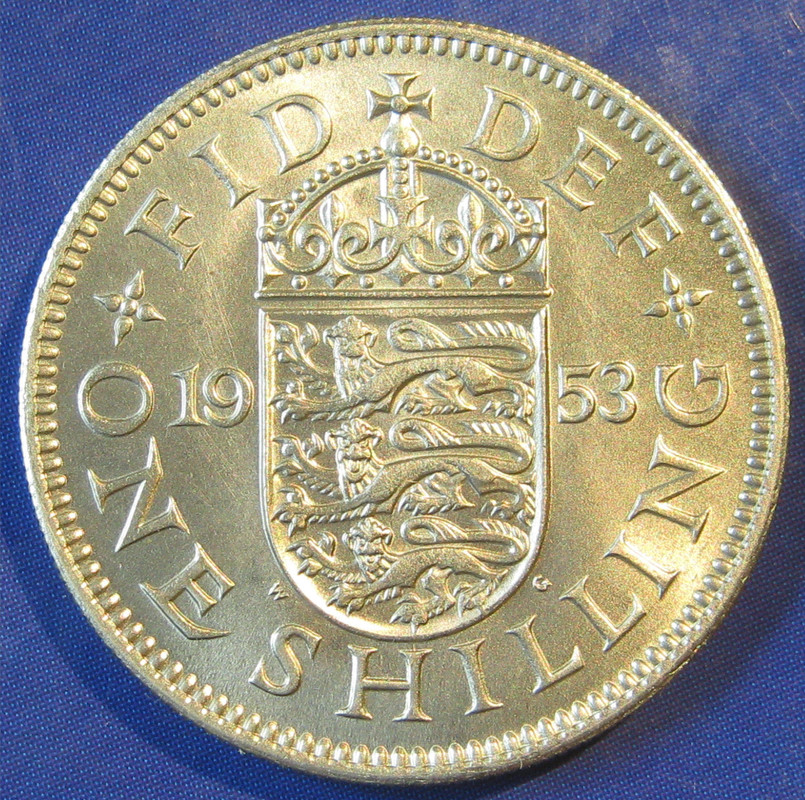 1953 English
1+A
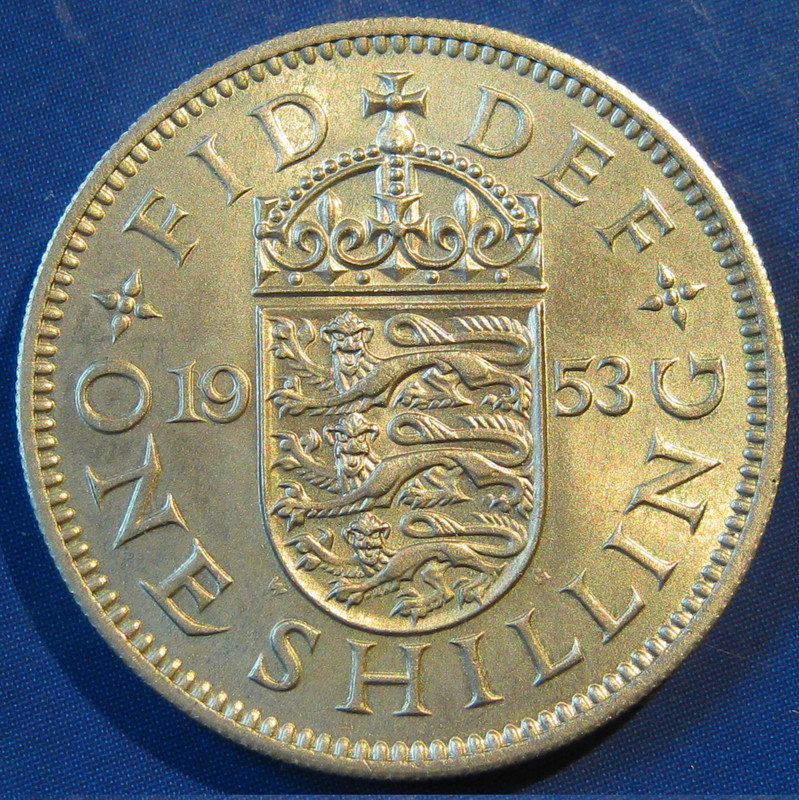 1953 English
2+A
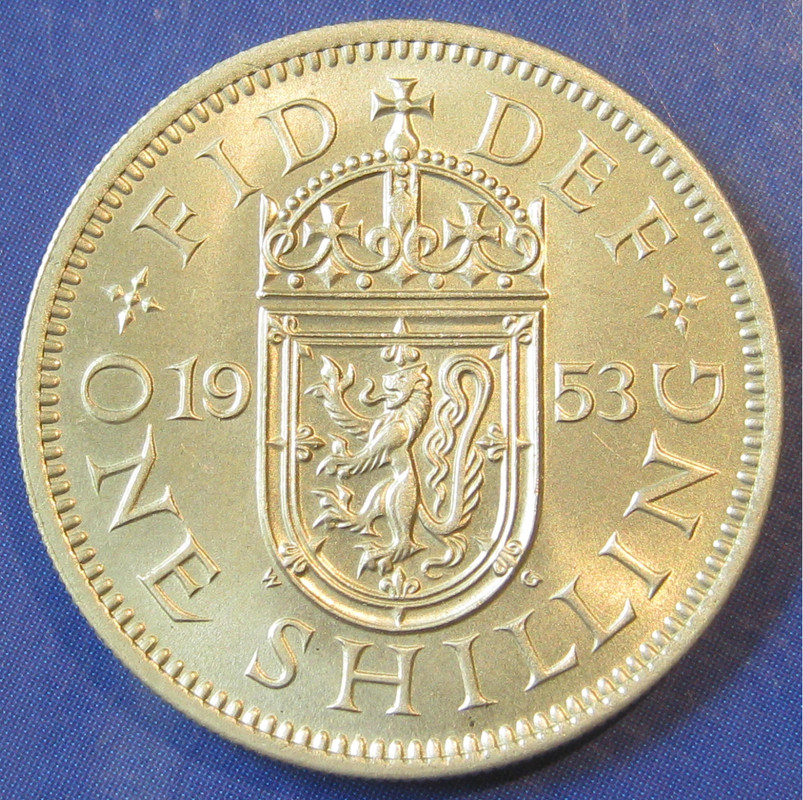 1953 Scottish
1+A
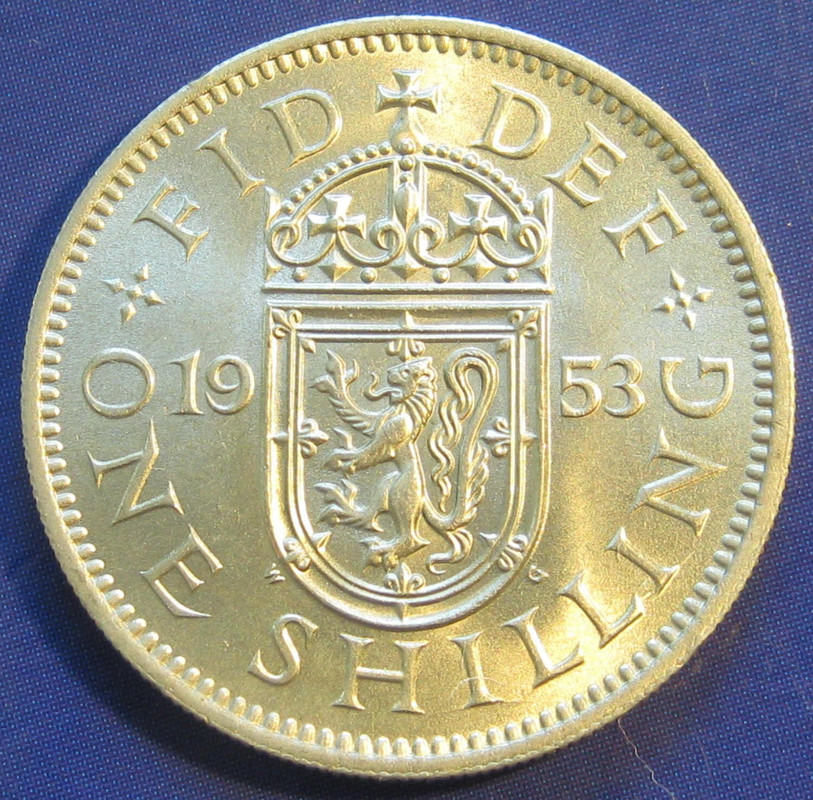 1953 Scottish
2+A
 1954 English
 1954 Scottish
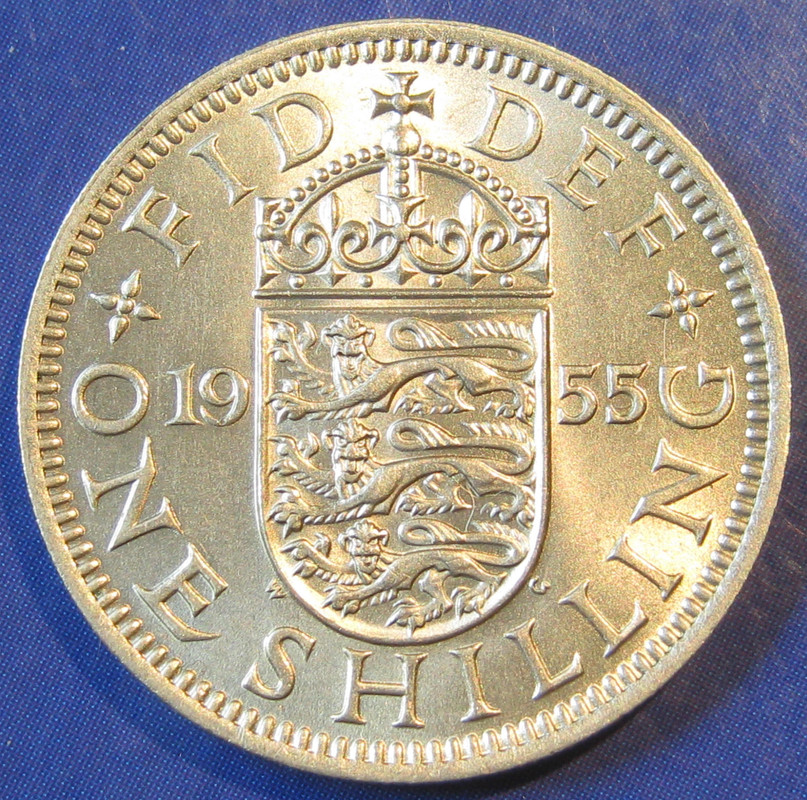 1955 English
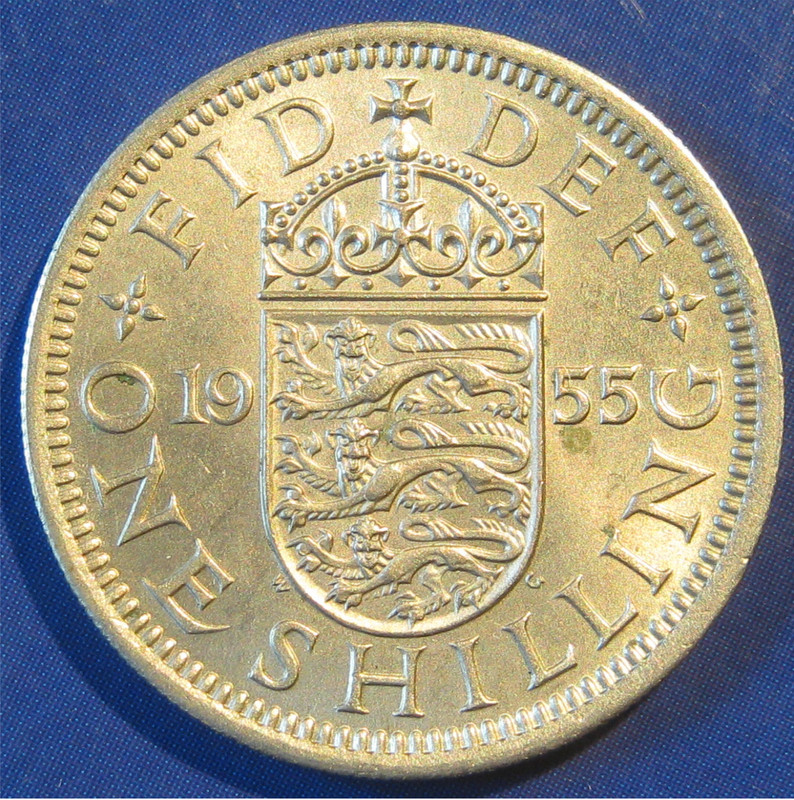 1955 English
Small Design
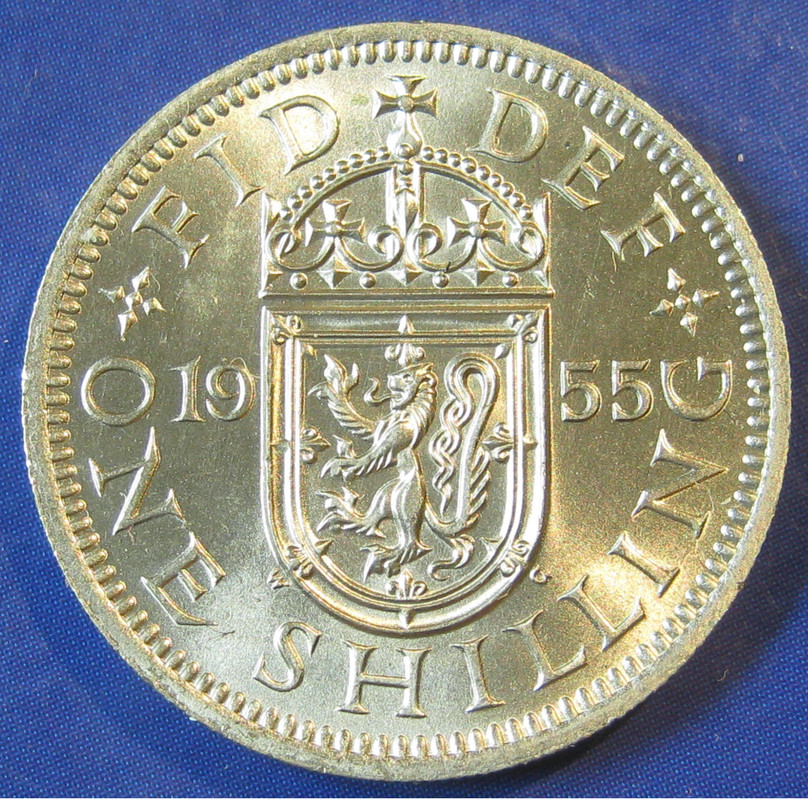 1955 Scottish
3+C
 1955 Scottish
3+D
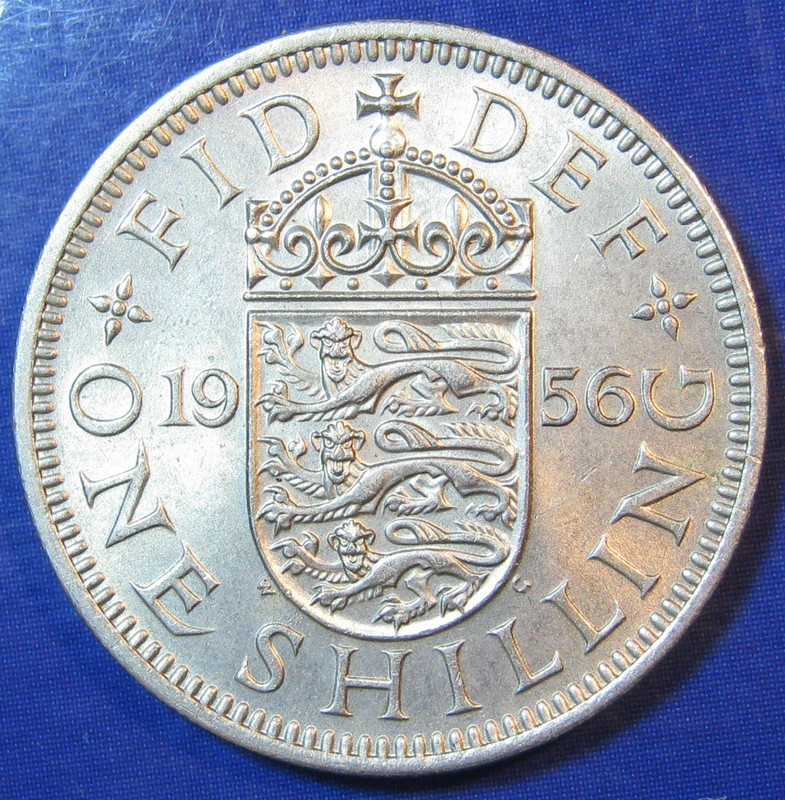 1956 English
3+C
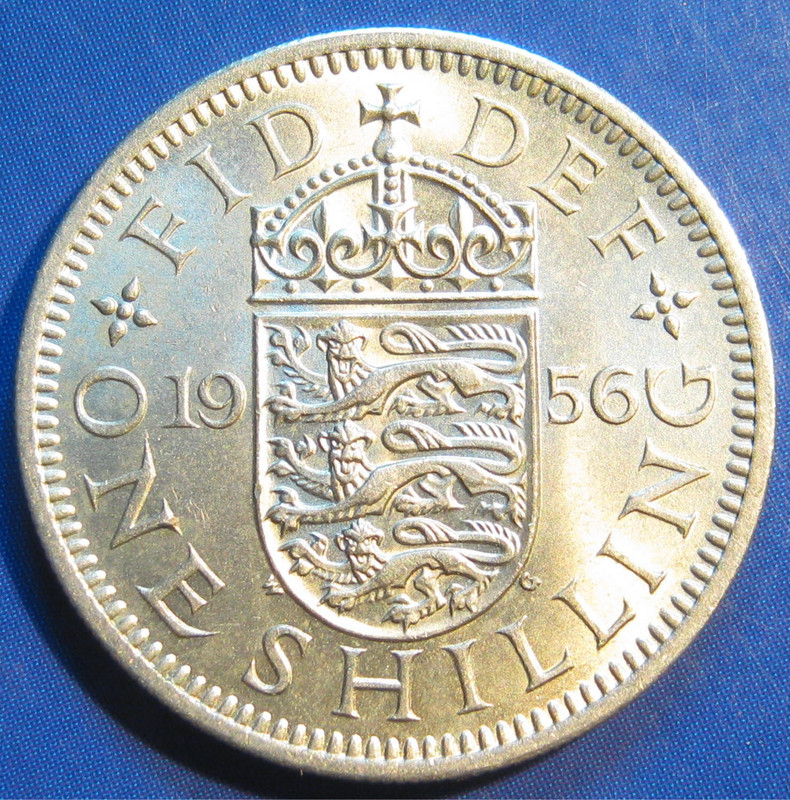 1956 Englisg
3+D
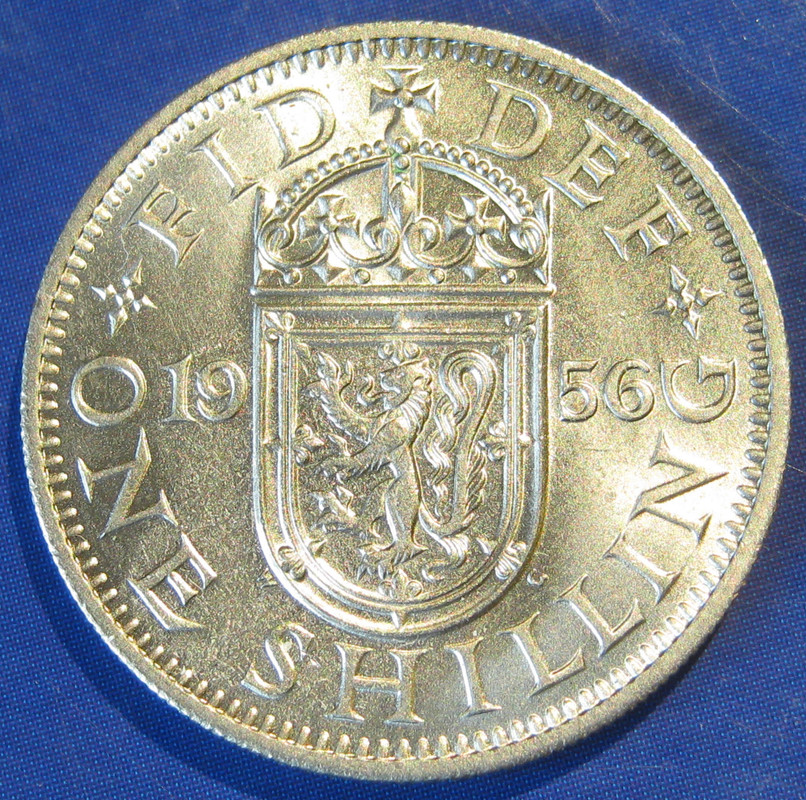 1956 Scottish
 1957 English
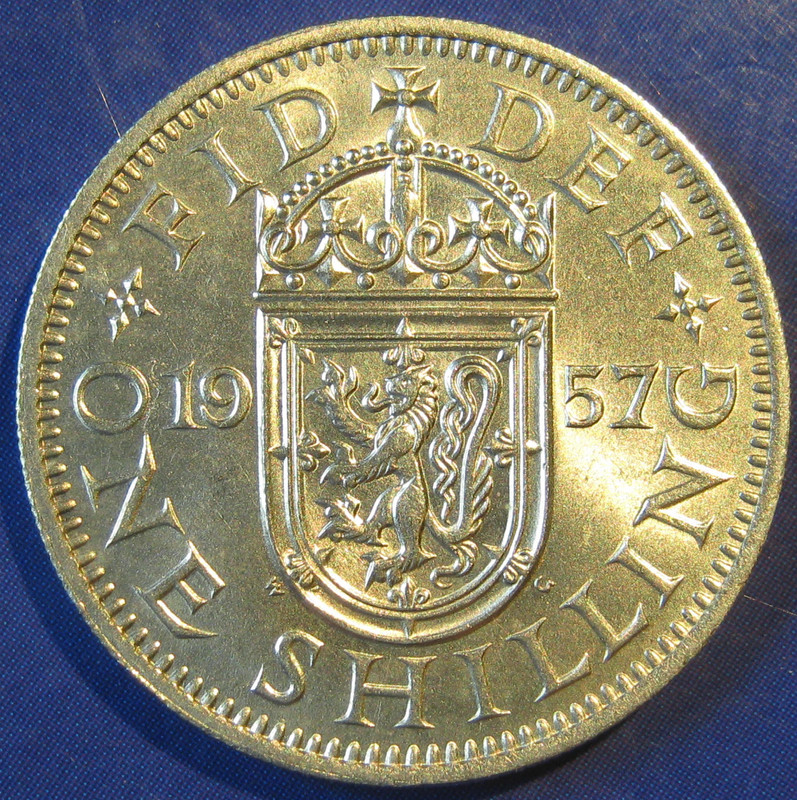 1957 Scottish
 1958 English
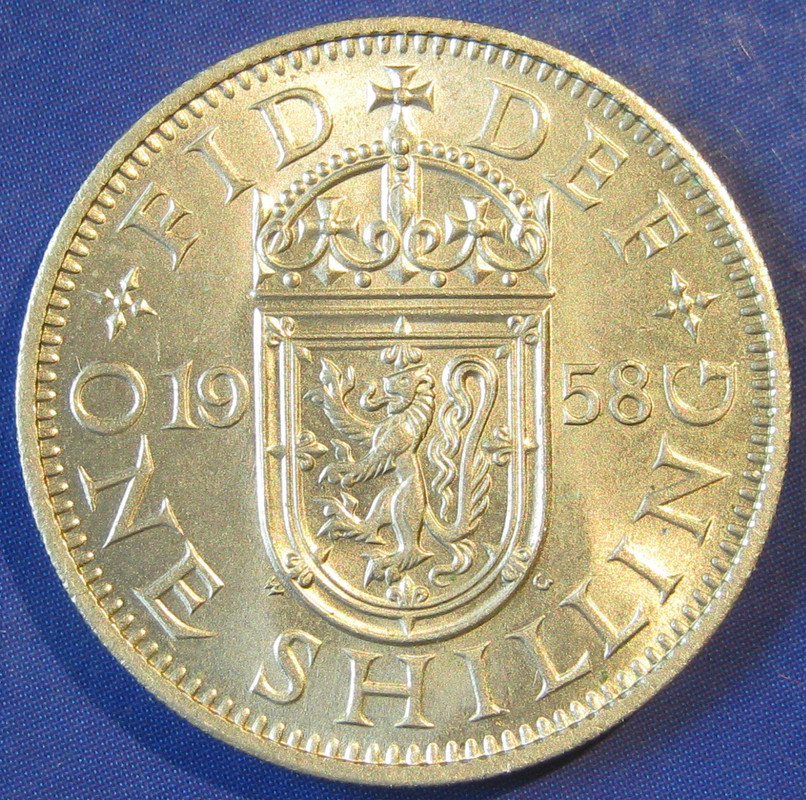 1958 Scottish
 1959 English
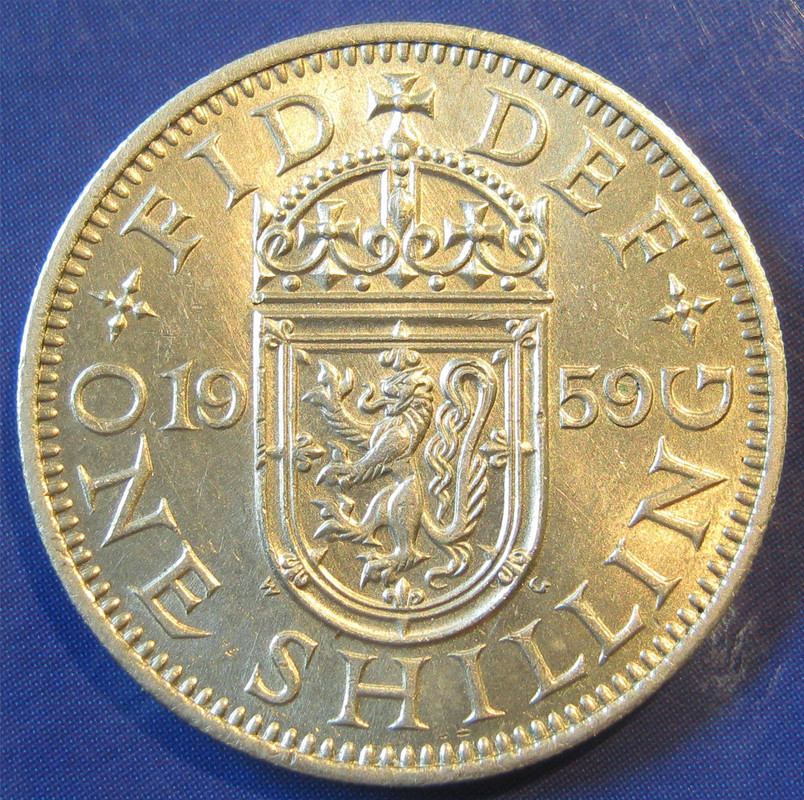 1959 Scottish
Type 1
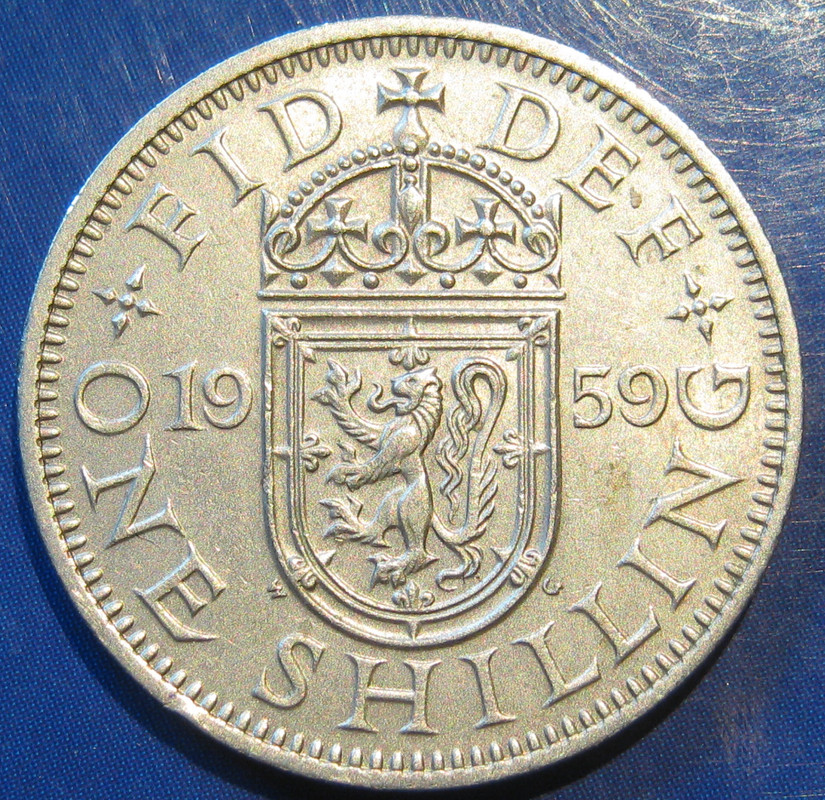 1959 Scottish
Type 2
 1960 English
 1960 Scottish
 1961 English
 1961 Scottish
 1962 English
 1962 Scottish
 1963 English
 1963 Scottish
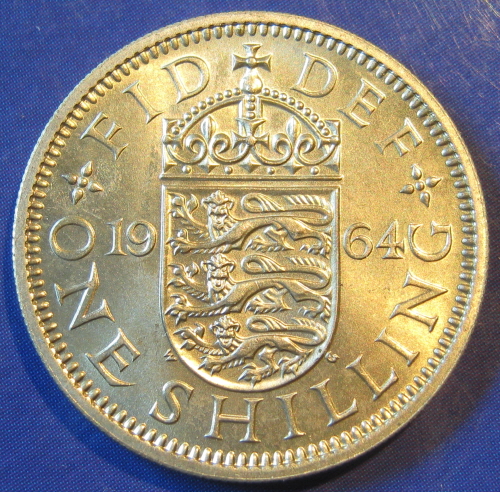 1964 English
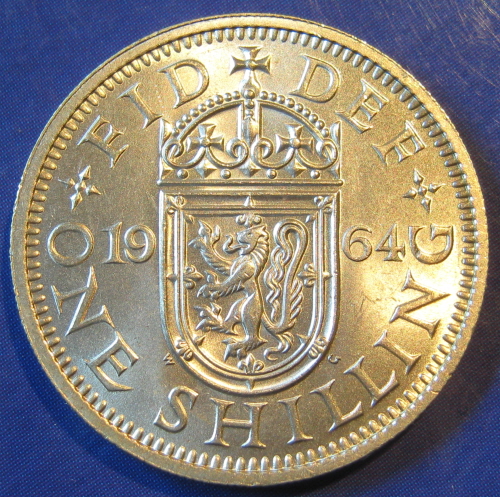 1964 Scottish
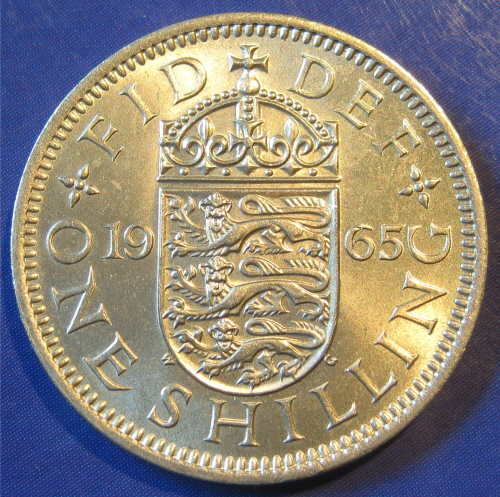 1965 English
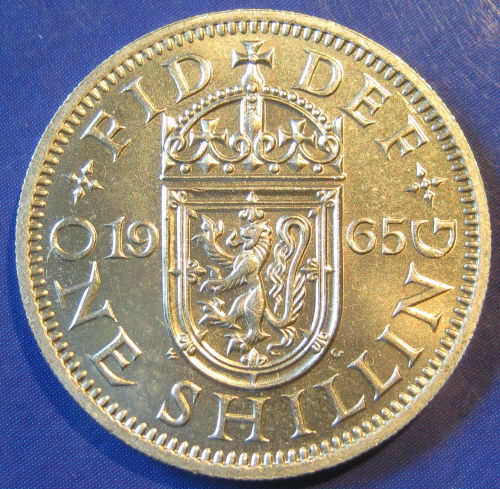 1965 Scottish
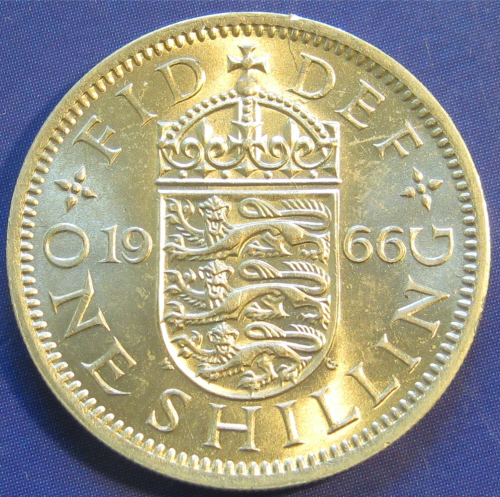 1966 English
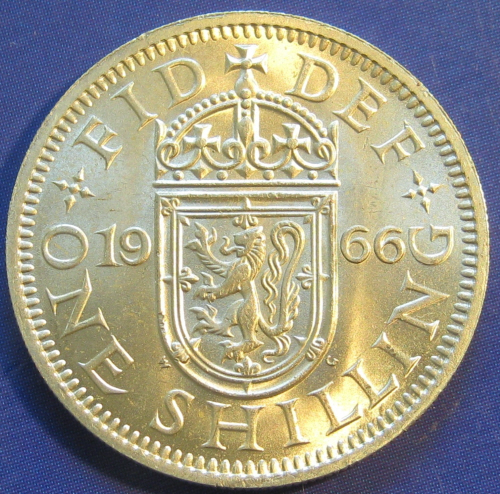 1966 Scottish
Specifications
| Years Issued | 1953–1967 |
| Diameter | 23.5 mm |
| Weight | 5.66 g |
| Edge | Reeded |
| Alloy | Copper-nickel (75% copper, 25% nickel) |
| Obverse Designer | Mary Gillick |
| Reverse Designer | William Maving Gardner |
Year-by-Year Reference
1953
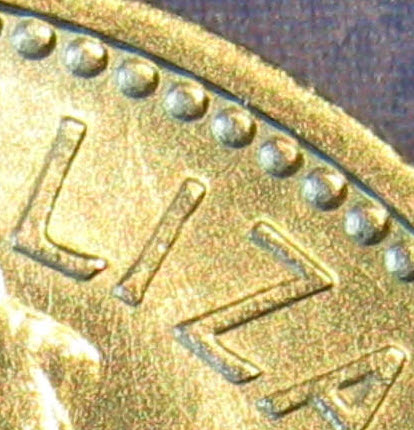
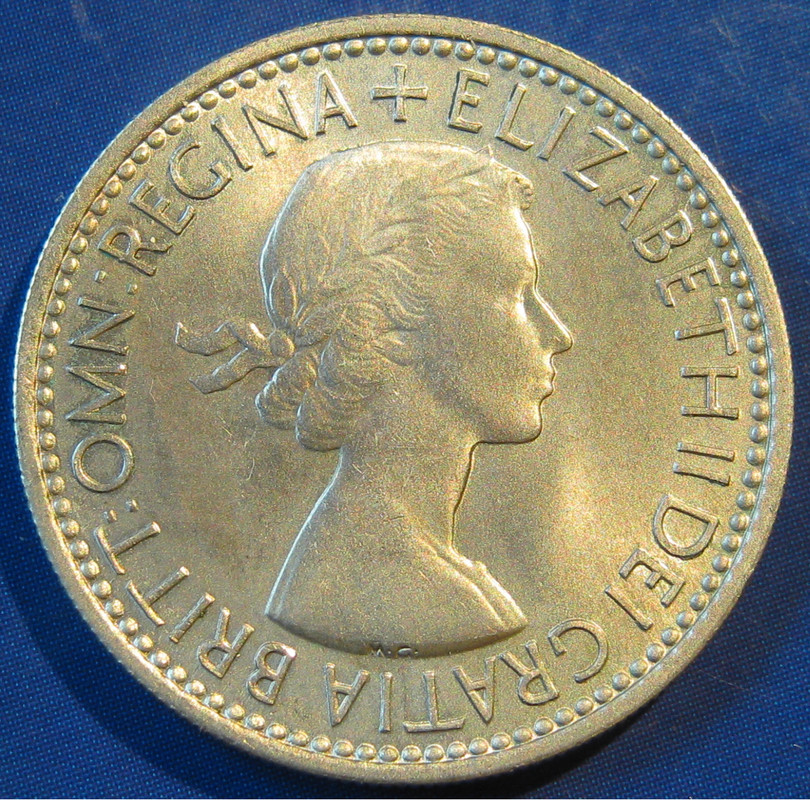
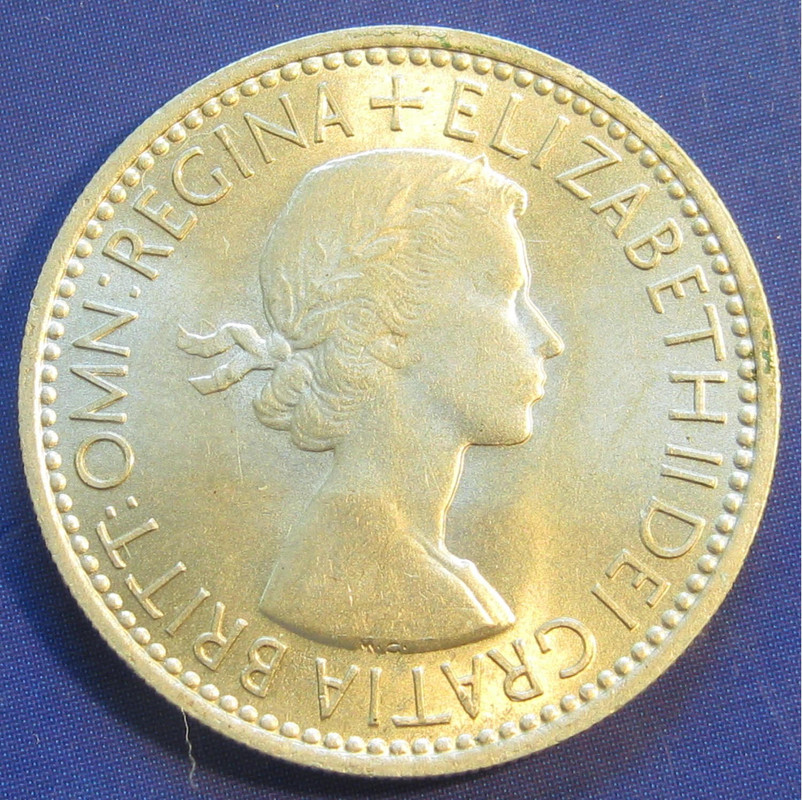
Both types of 1953 shillings occur with two obverses, the shallow Obverse 1 issued in the plastic set, and the deeper engraved Obverse 2 intended for currency. Obverse 2 coins are rather difficult to find in top grade. The completist, therefore, will be looking for four types of 1953 shilling.
As with the other denominations, it is always worth keeping an eye out for high grade Obverse 2s. There aren't that many left. Most high grade 1953 shillings will be Obverse 1, ex plastic set.
| Obverse Comparison |
|---|
| Obverse 1 | Obverse 2 |
|---|---|
|

|
| I of LIZ at a bead | I of LIZ between beads |
| 1953 Varieties |
|---|
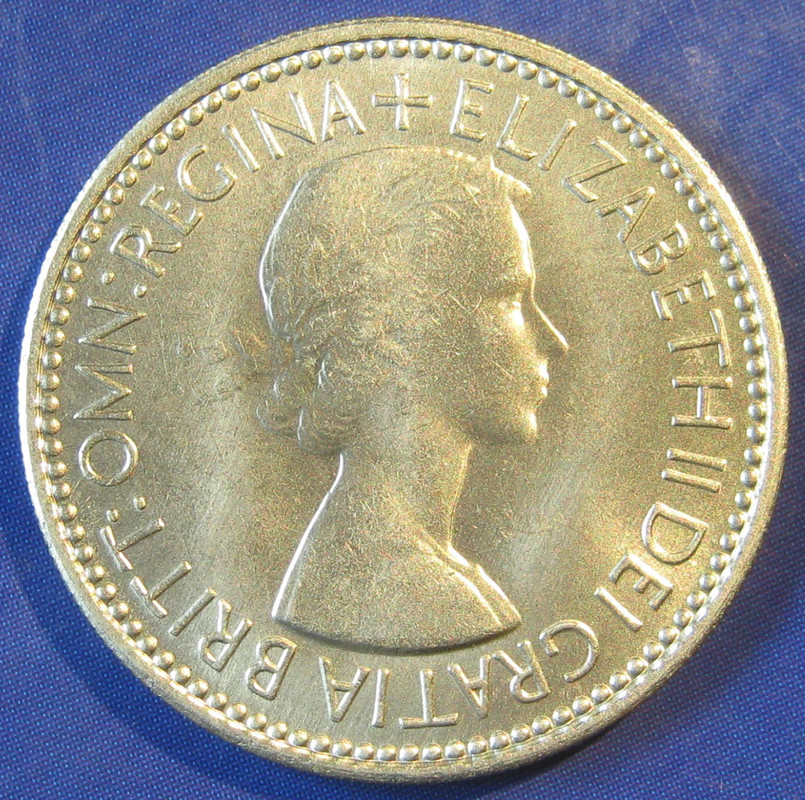 |
Obverse 1 - English
|
|
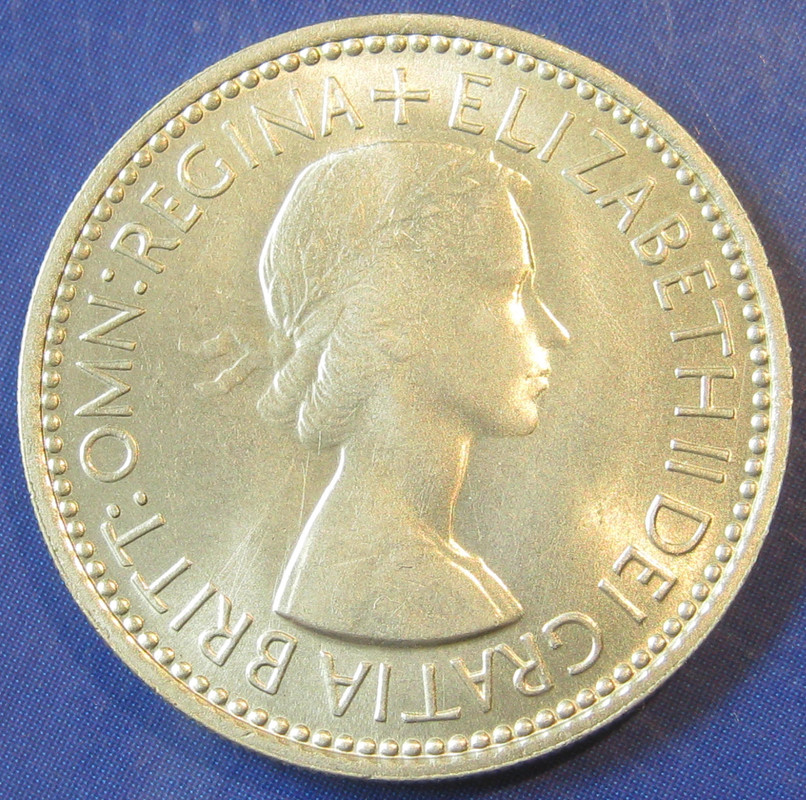 |
Obverse 1 - Scottish
|
|
 |
Obverse 2 - English
|
|
 |
Obverse 2 - Scottish
|
|
1954
1954 is one of those "second year after the coronation" years. Everyone hoarded the new monarch's first year coins, but no-one hoarded the second. This pattern can be followed through the twentieth century and across denominations:
- 1902 is common, 1903 is not
- 1911 is common, 1912 is not
- 1937 is common, 1938 is not
...and 1954 shillings and bigger should always be snapped up if you see them in UNC.
Incidentally, 1954 is the only year to feature Reverse B. The reverse changes twice in the following two years.
| 1954 English Shilling |
|---|
| Obverse | Reverse |

|
|
| 1954 Scottish Shilling |
|---|
| Obverse | Reverse |

|
|
1955
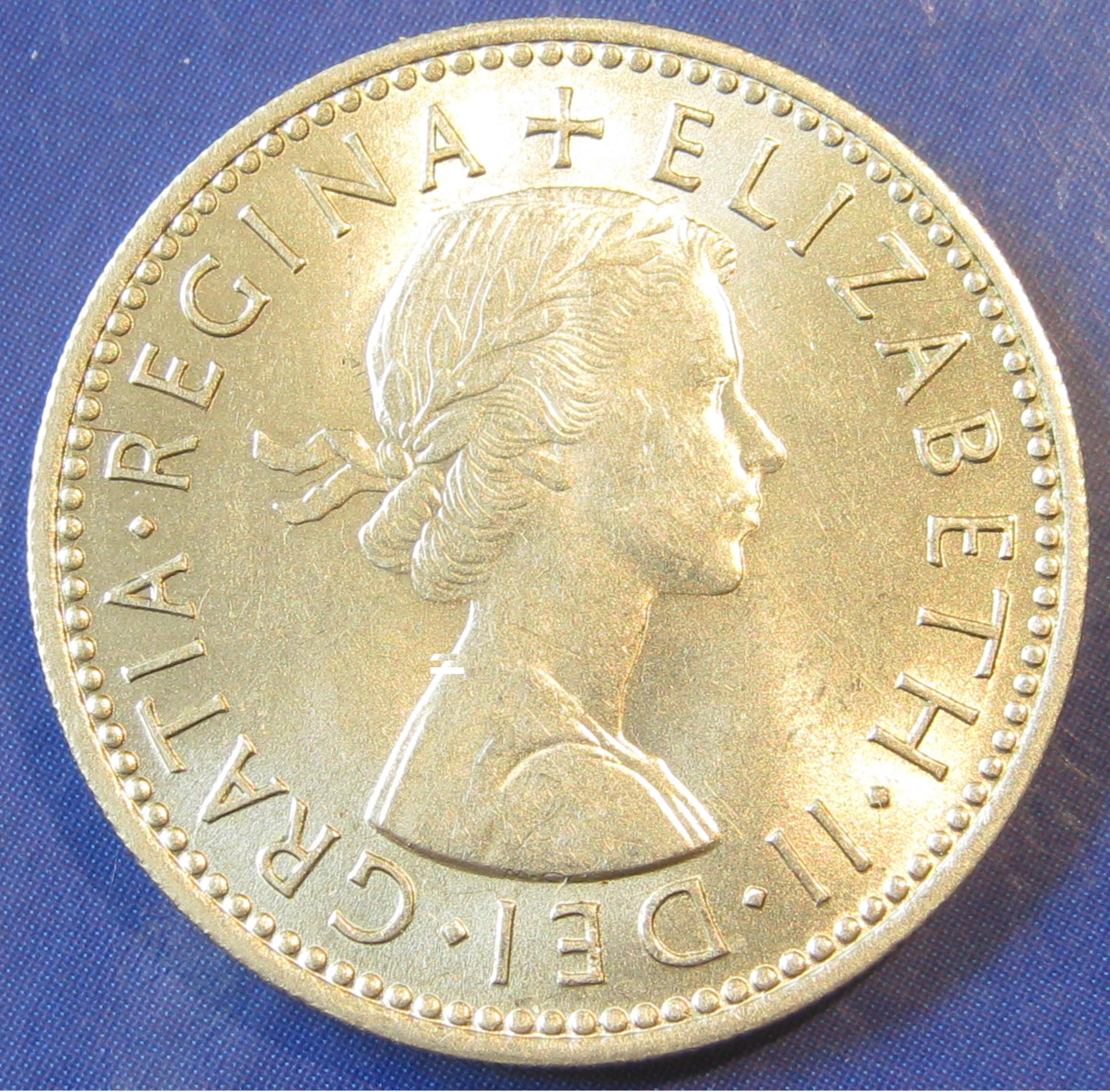
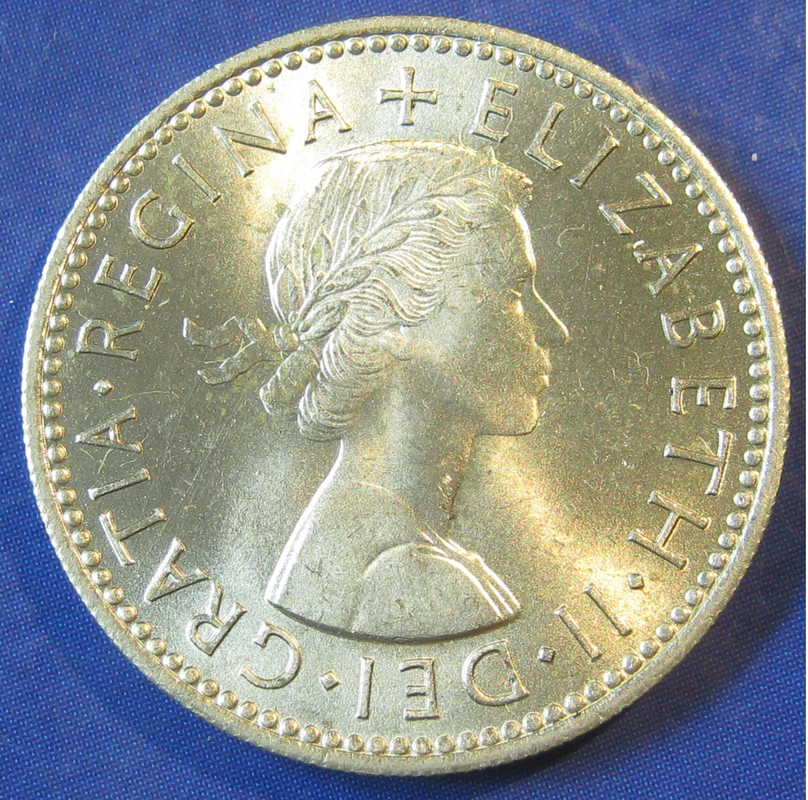
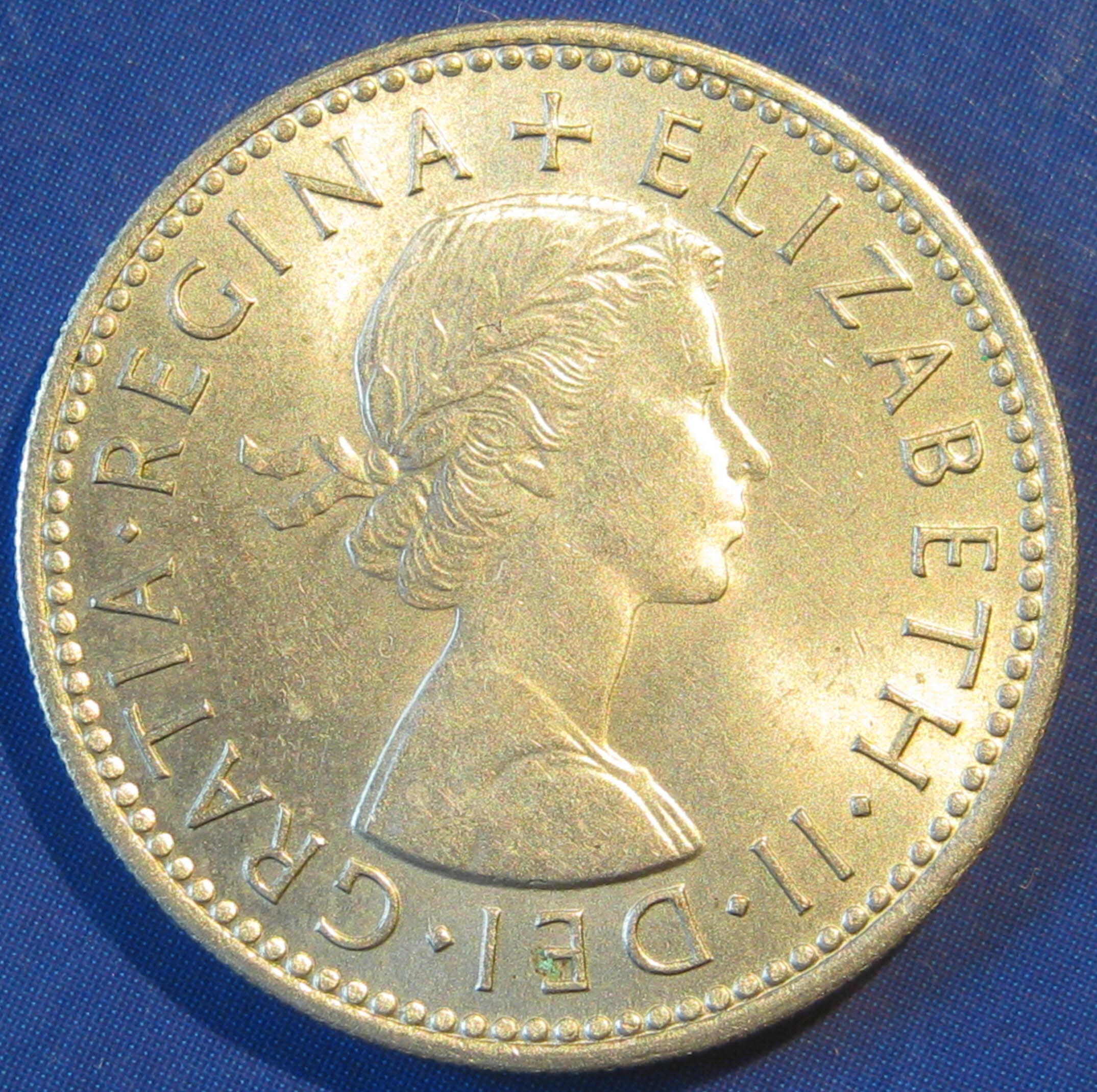
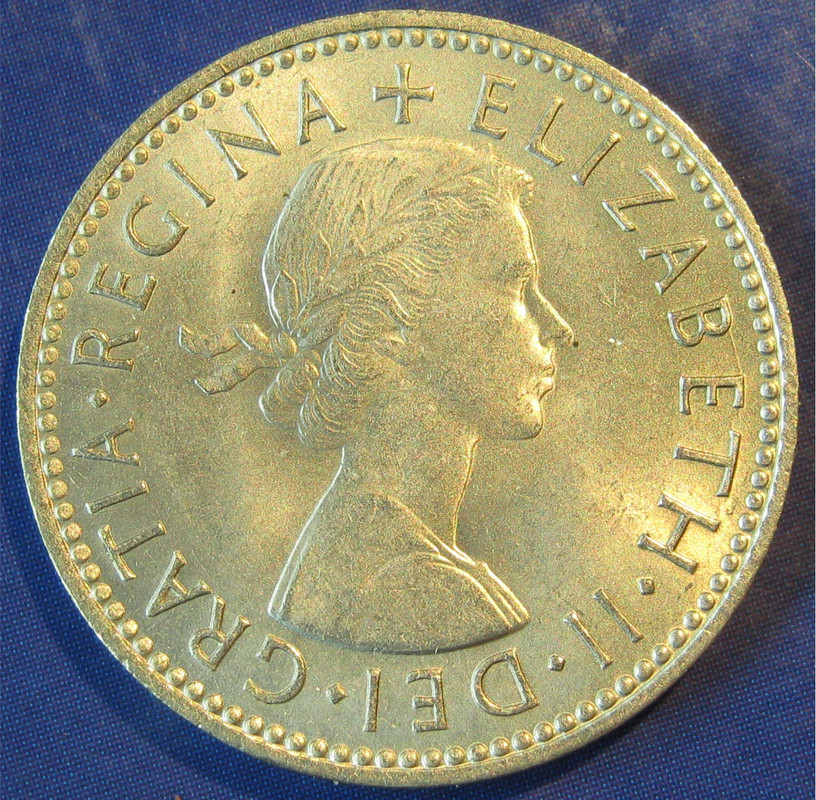
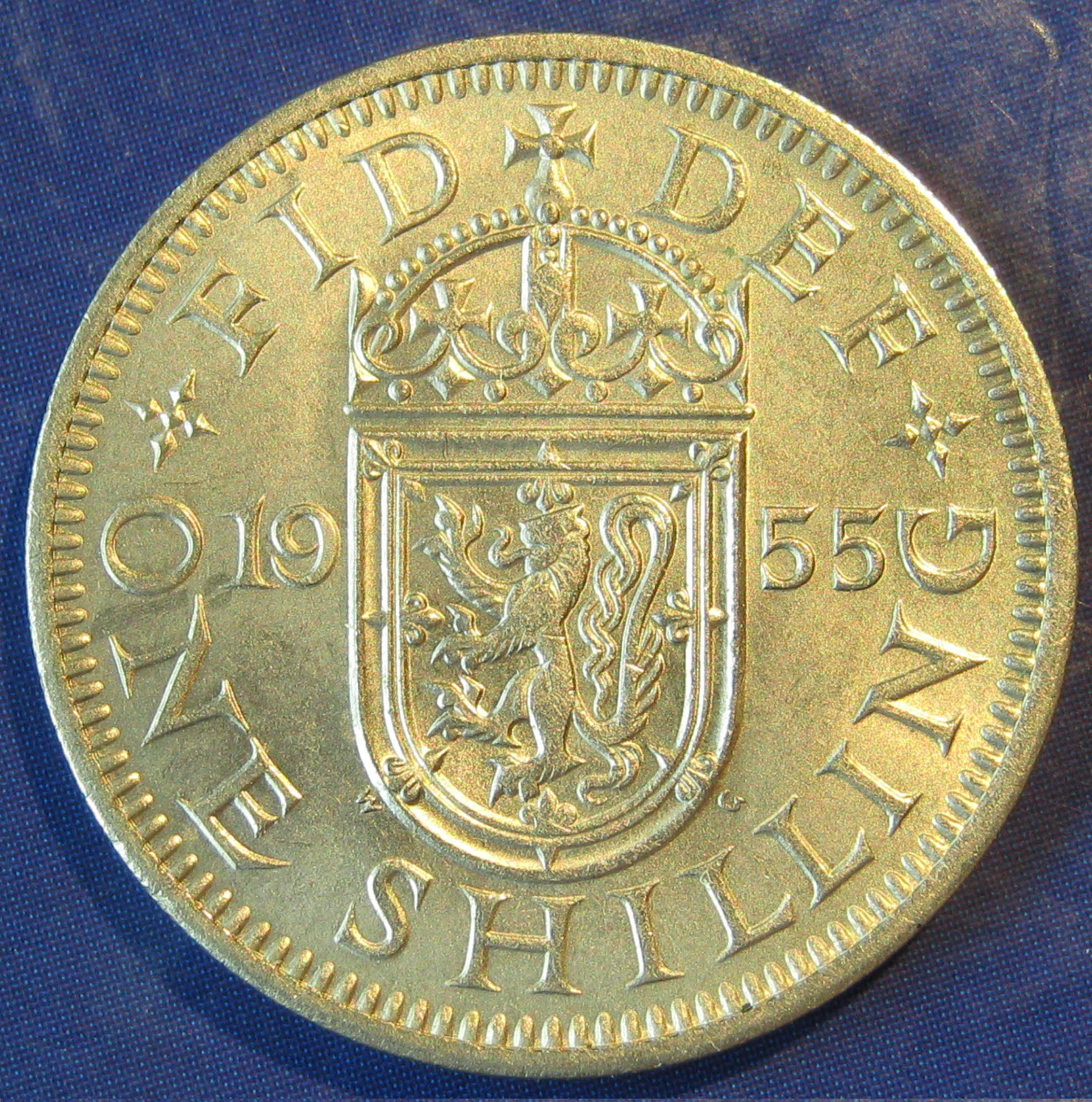
1955 shillings have two distinct Scottish reverse types, C and D, and difficult to identify microvarieties for the English and Reverse C Scottish coins.
The small design varieties of the 1955 English Reverse and 1955 Scottish Reverse C are detailed in Davies and Groom but tend not to be included in more general works as they are so difficult to identify. I do not know if they are rare or not – the single example to have passed through my hands, illustrated below, was highlighted to me by a more experienced collector. I have never managed to find the Scottish variant, but if I'm honest, I haven't looked that hard.
Reverse C is the scarcer of the two main Scottish reverses.
| 1955 English Shilling |
|---|
| Obverse | Reverse |
|
|
| 1955 Scottish Shilling |
|---|
| Obverse | Reverse |
|
|
| 1955 Shilling Varieties |
|---|
|
Small Design - English
|
|
|
|
Reverse C - Scottish
|
|
| Waiting for image | Reverse C, small design | Waiting for image |
|
Reverse D - Scottish
|
|
1956
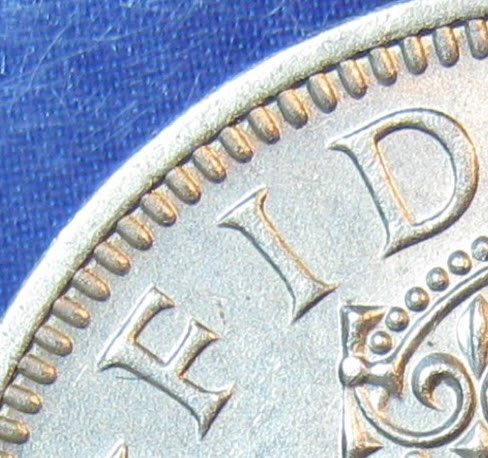
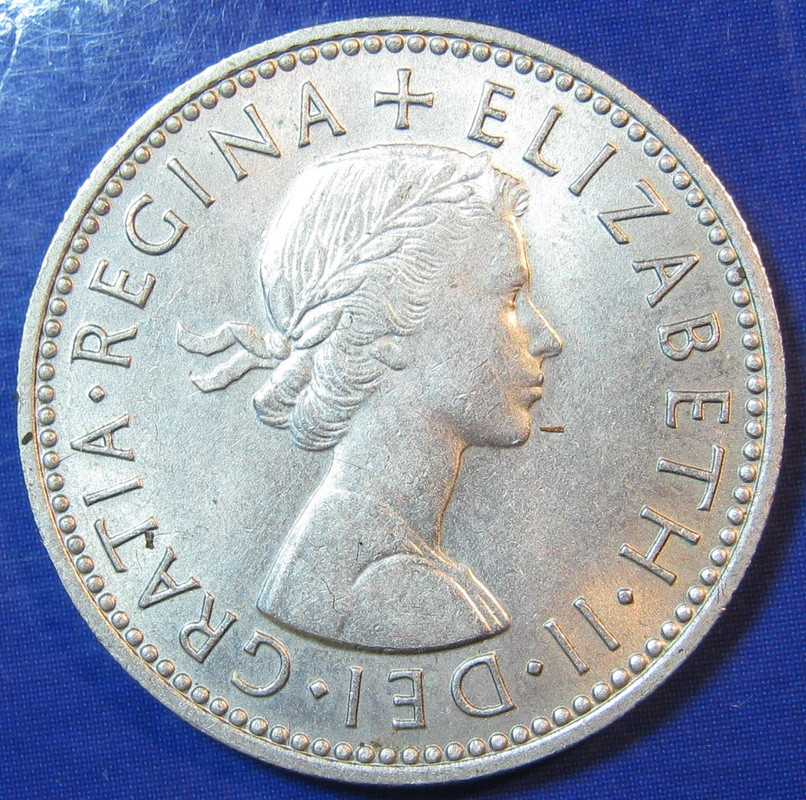
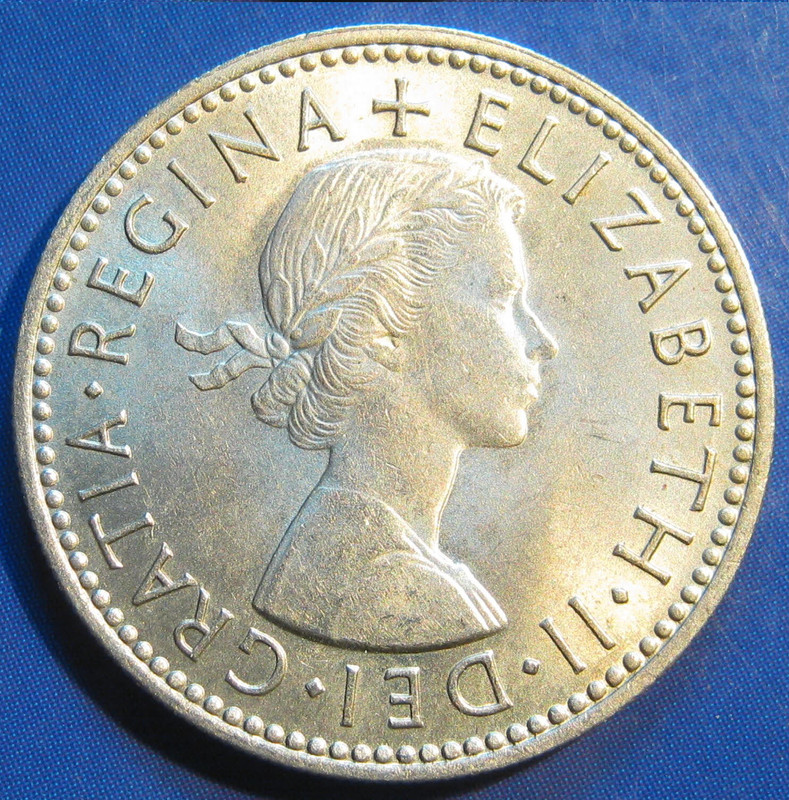
1956 English shillings occur with two reverse types, Reverse C and Reverse D, and both are tricky in high grade. Davies estimates that the two reverses are of similar abundance.
| Reverse Comparison |
|---|
| Reverse C | Reverse D |
|---|---|

|
|
| I of FID at a bead | I of FID between beads |
| 1956 English Varieties |
|---|
|
Reverse C
|
|
|
Reverse D
|
|
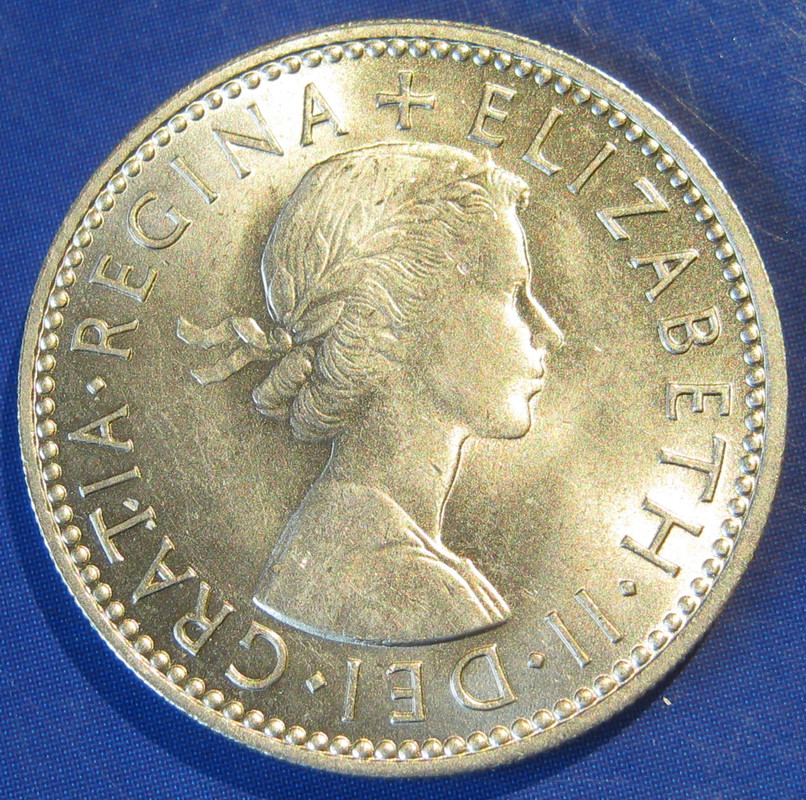
| 1956 Scottish Shilling (no varieties) |
|---|
| Obverse | Reverse |
|
|
1957
1957 Scottish shillings are among the more difficult dates in the series, much trickier than the English type, while the situation is reversed for 1958, with the English type being one of the most elusive coins in top grade, and the Scottish being relatively easy to find.
1957 Scottish shillings, in UNC, are probably as Scarce as the more well known 1959 Scottish.
| 1957 English Shilling |
|---|
| Obverse | Reverse |

|
|
| 1957 Scottish Shilling |
|---|
| Obverse | Reverse |

|
|
1958
1958 English shillings, in UNC, are one of the great unsung rarities of this period.
| 1958 English Shilling |
|---|
| Obverse | Reverse |

|
|
| 1958 Scottish Shilling |
|---|
| Obverse | Reverse |

|
|
1959
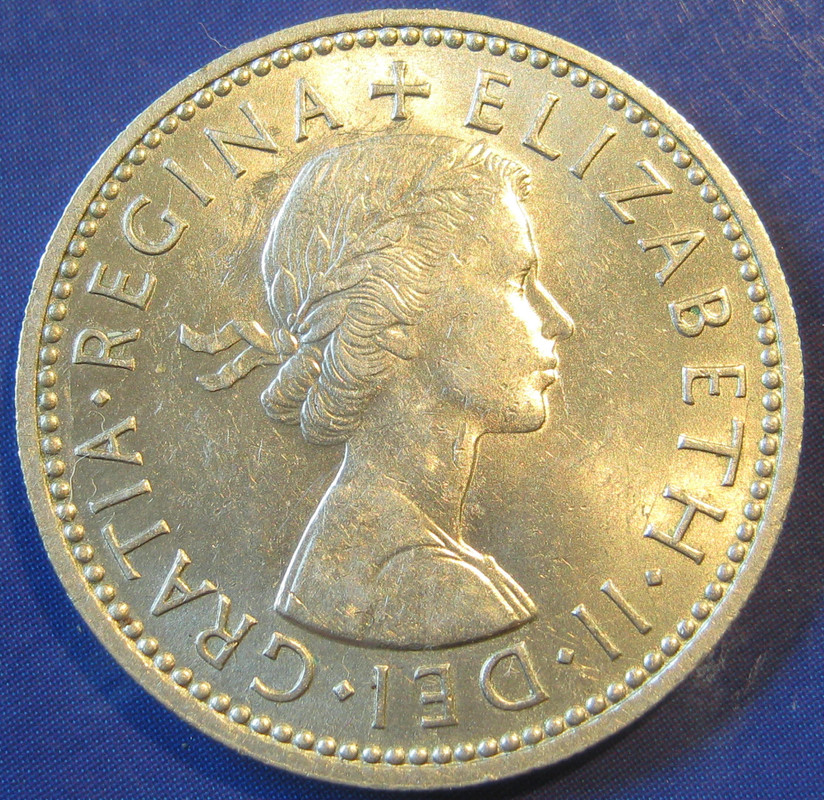
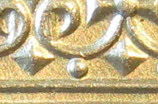
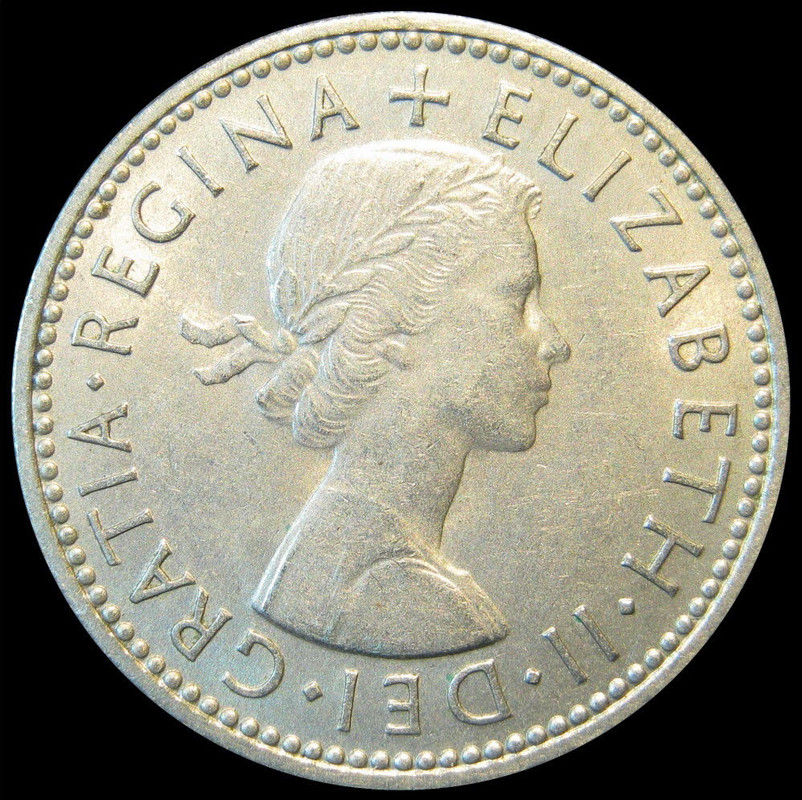
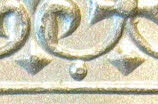
1959 Scottish shillings are only very difficult in true UNC, and its rarity is well documented and probably over-estimated. It is always worth repeating that these rarity assessments only apply to UNC coins. Examples of ALL Elizabeth II shillings, all years, exist in low grade (EF and below) in huge quantities.
There is also a useful microvariety to distinguish:
| 1959 English Shilling |
|---|
| Obverse | Reverse |

|

|
| 1959 Scottish Shilling – Type Varieties |
|---|
|
Type 1
|
|
|
Type 2
|
|
1960
| 1960 English Shilling |
|---|
| Obverse | Reverse |

|
|
| 1960 Scottish Shilling |
|---|
| Obverse | Reverse |

|
|
1961
Some dates are stubbornly difficult to find in anything above standard circulated grades. You'll find the 1961 Scottish particularly tricky.
| 1961 English Shilling |
|---|
| Obverse | Reverse |

|
|
| 1961 Scottish Shilling |
|---|
| Obverse | Reverse |

|
|
1962
| 1962 English Shilling |
|---|
| Obverse | Reverse |

|
|
| 1962 Scottish Shilling |
|---|
| Obverse | Reverse |

|
|
1963
| 1963 English Shilling |
|---|
| Obverse | Reverse |

|
|
| 1963 Scottish Shilling |
|---|
| Obverse | Reverse |

|
|
1964
| 1964 English Shilling |
|---|
| Obverse | Reverse |

|
|
| 1964 Scottish Shilling |
|---|
| Obverse | Reverse |

|
|
1965
Collecting from change was popular in 1965, prior to decimalisation, and the perception was that the low mintage of the 1965 Scottish Shilling might make it collectable. Most 1965 Scottish shillings are consequently UNC or thereabouts.
| 1965 English Shilling |
|---|
| Obverse | Reverse |

|
|
| 1965 Scottish Shilling |
|---|
| Obverse | Reverse |

|
|
1966
| 1966 English Shilling |
|---|
| Obverse | Reverse |

|
|
| 1966 Scottish Shilling |
|---|
| Obverse | Reverse |

|
|
References
Attributions and variety identifications for the George V Halfcrown series are based principally on the standard published references listed below. These works form the core framework for catalogue numbering, die classification, and comparative study.
- Coins of England and the United Kingdom
- ESC – English Silver Coinage
- Bull – English Silver Coinage since 1649
- Davies – British Silver Coins since 1816