George V
Coinage 1911–1936 · Collector Reference
A complete visual reference to the George V coinage series — ten denominations spanning twenty-five years of portrait changes, silver debasement, and reverse redesigns. Every date, every variety, with links to full denomination pages.
Introduction
The George V coinage spans 1911 to 1936 and is one of the richest and most complex series in British numismatics. Over twenty-five years it encompasses a silver debasement, two modifications to the royal portrait, new reverse designs, and some of the most famous rarities in all of British coinage — including the 1933 penny, of which fewer than ten examples are known to exist. This page provides a complete year-by-year visual reference to the George V coinage series, with links to detailed denomination pages covering all four portrait coinages, die varieties, and collector notes.
The series divides naturally into four distinct coinages, defined by two portrait modifications and the pivotal 1920 silver debasement. Each of these transitions produces its own transitional varieties and collecting opportunities, making the George V series one of the most studied and widely collected reigns of the twentieth century.
The Four Coinages
- 1st Coinage (1911–1919) – Struck in sterling silver (.925); introduced the first effigy of George V by Sir Bertram Mackennal, depicting the King bare-headed and facing left.
- 2nd Coinage (1920–1926) – Silver content reduced to .500 fine following the First World War; design otherwise unchanged.
- 3rd Coinage (1926–1927) – Modified portrait introduced, with subtle changes to the effigy and a shortened obverse legend. A short transitional series.
- 4th Coinage (1927–1936) – New reverse designs introduced across the silver denominations by George Kruger Gray, alongside the modified portrait and .500 silver alloy.
The Coinage at a Glance
- Crowns (1927–1936) – The celebrated wreath crown with a new reverse by George Kruger Gray; proof and currency issues across multiple dates.
- Halfcrowns (1911–1936) – One of the most complex series of the reign, spanning all four coinages with numerous die varieties, particularly in 1920.
- Florins (1911–1936) – Annual issues throughout; many die varieties across the series including the rare small design 1918 florin.
- Shillings (1911–1936) – Up to four obverses recorded for the first year alone; a complex series with variety interest in nearly every date.
- Sixpences (1911–1936) – Annual silver issues spanning all four coinages; the 1925 broad rim is the key variety of the series.
- Threepences (1911–1936) – Annual silver issues with obverse and reverse varieties throughout.
- Pennies (1911–1936) – Bronze; a rich variety series including the recessed ear varieties of 1915–1916, the H and KN mint-marked issues of 1918–1919, and the legendary 1933 penny.
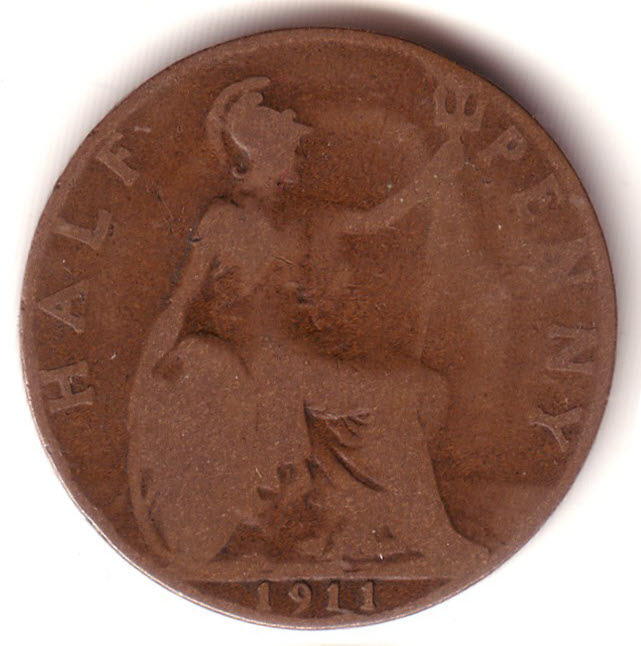
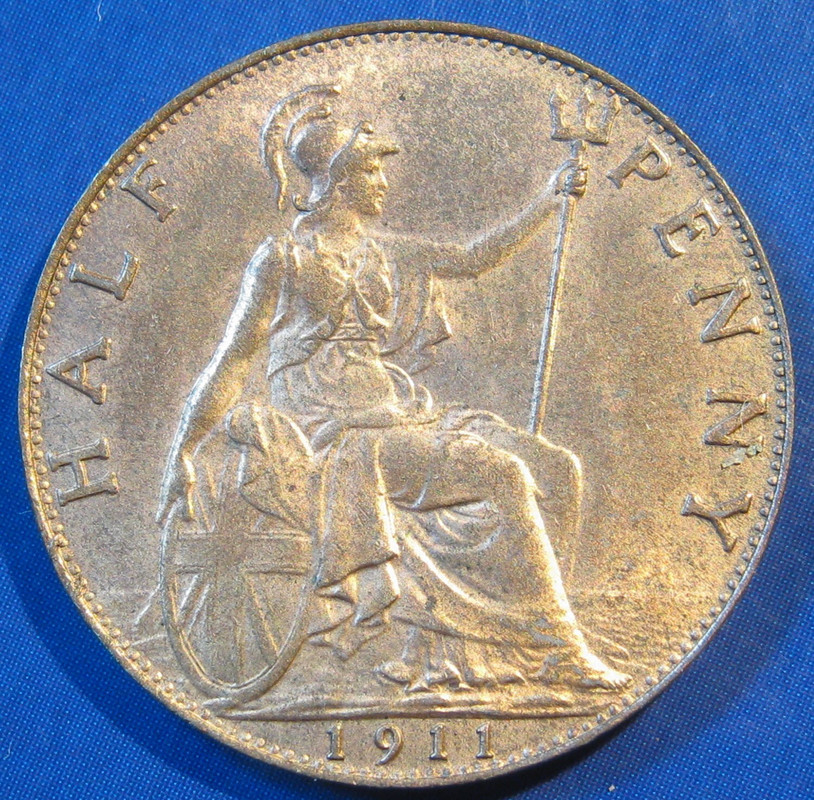
- Halfpennies (1911–1936) – Bronze; the modified effigy varieties of 1925 are the key collecting points.
- Farthings (1911–1936) – Bronze; multiple obverse types across the reign.
- Third Farthing (1913) – A single date struck for Malta; among the last British third farthings produced.
The 1920 Silver Debasement
The most significant event in the George V coinage is the reduction of the silver standard from .925 to .500 fine in 1920. Rising silver prices in the aftermath of the First World War made sterling-silver coinage economically unviable, and the government acted swiftly. For collectors, 1920 is the pivotal year of the reign: several denominations exist in both alloys for that year, and the transitional die pairings are among the most sought-after varieties in the series. From 1920 onward, British silver coins contained equal parts silver and base metal — a standard that persisted until the complete elimination of silver in 1947 under George VI.
The coin gallery below provides a year-by-year visual reference to every issue across all denominations. Click any coin image to go directly to the relevant section of its denomination page, or select a denomination from the navigation above for full variety listings, specifications, and collector notes.