
Collectors Guide
George V Halfpenny
The George V halfpenny was struck from 1911 to 1936 and continues the long-standing British tradition of bronze coinage featuring the Golden Hind reverse. While often overlooked, the series includes interesting variations and can present challenges in higher grades. This guide covers the specifications, design and collecting aspects of George V halfpennies.
Introduction
The George V Halfpenny was struck from 1911 to 1936 and is a series that is consistently underestimated by collectors. This page provides a year-by-year reference for the George V Halfpenny series, including obverse and reverse varieties, alloy changes, effigy modifications, and notes on the key challenges of the series.
In my experience, high-grade halfpennies are harder to come by than pennies from this era — more difficult than most other denominations, I'd say. The early part of the reign is plagued by weak strikes, which can make some high-grade coins appear more worn than they strictly are, and well-struck examples will command a premium.
- 1911 – Four variety combinations across two obverses and two reverses. A more complex opening year than the penny.
- 1912 – Standard type (Reverse A) is common; the scarce Reverse A* variety, recorded by Groom but not by Peck or Freeman, is worth watching for.
- 1920–1922 – Alloy changes can produce coins that appear darker or lighter than others of the same year; less clearly documented for the halfpenny than for the farthing and penny.
- 1925 – Two types of broadly similar abundance: the First Head and the Modified Head, introduced a year earlier than on the other denominations. The difference is immediately apparent when the two are compared side by side.
- 1928–1936 – The small head, introduced across all denominations bar the farthing in 1928, carries the series to its close.
Coinage Details
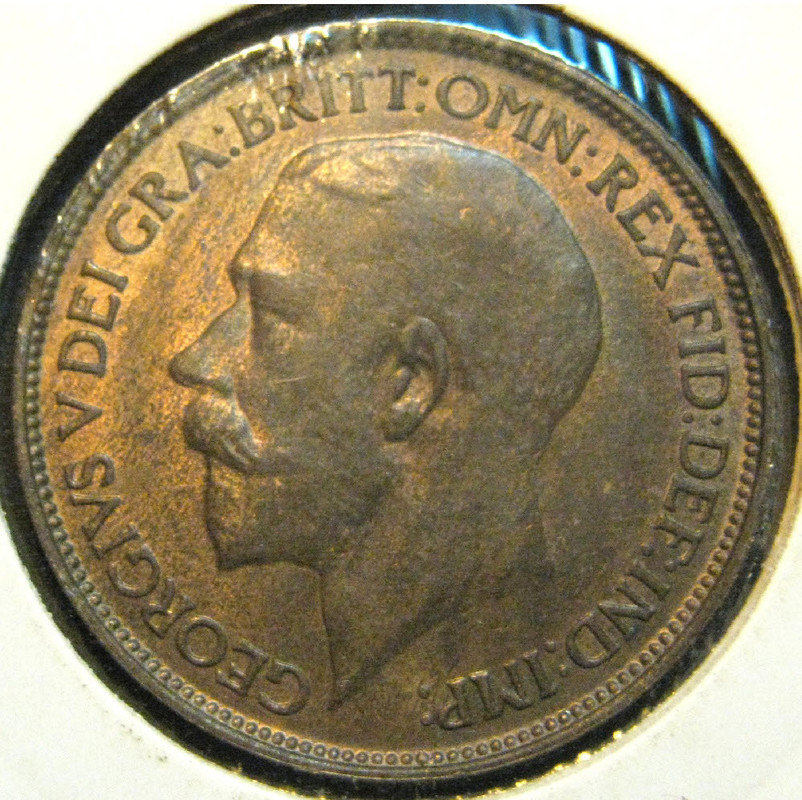
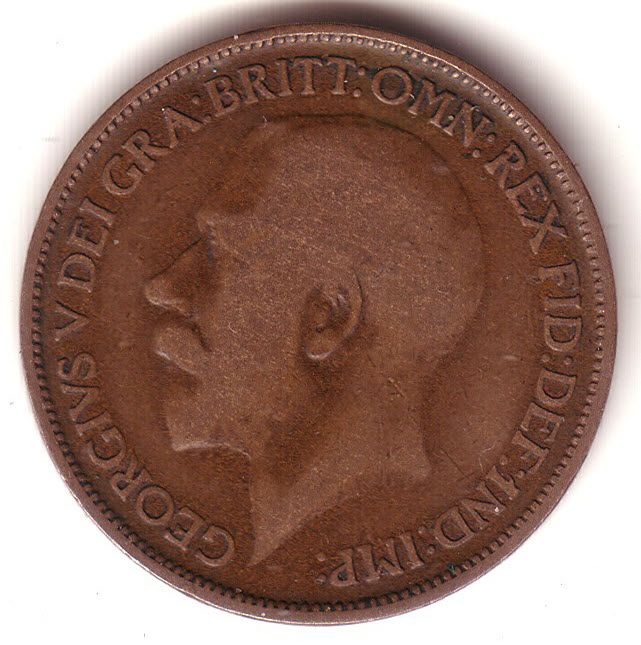
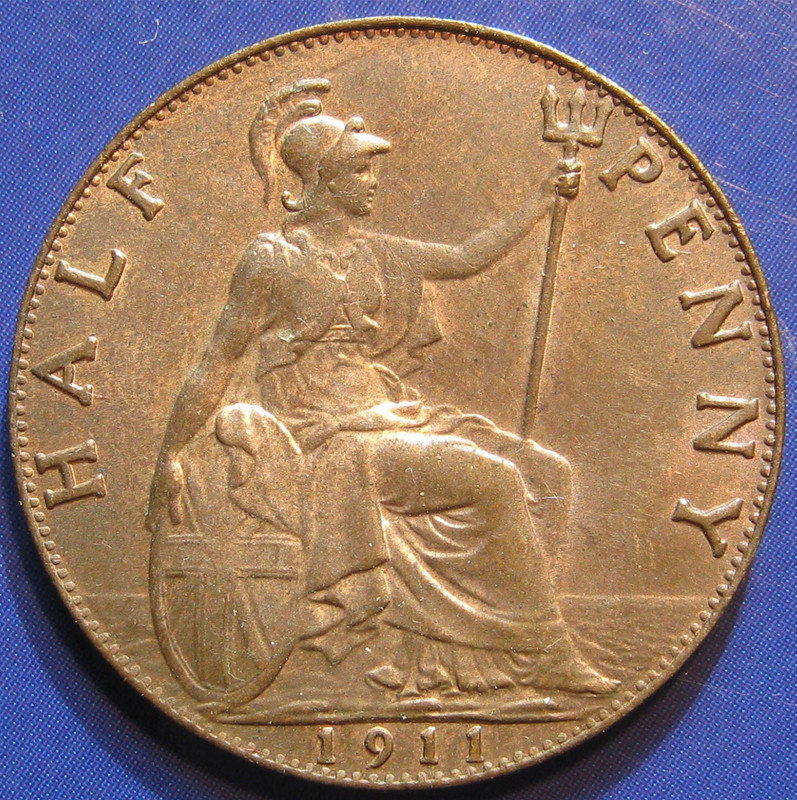
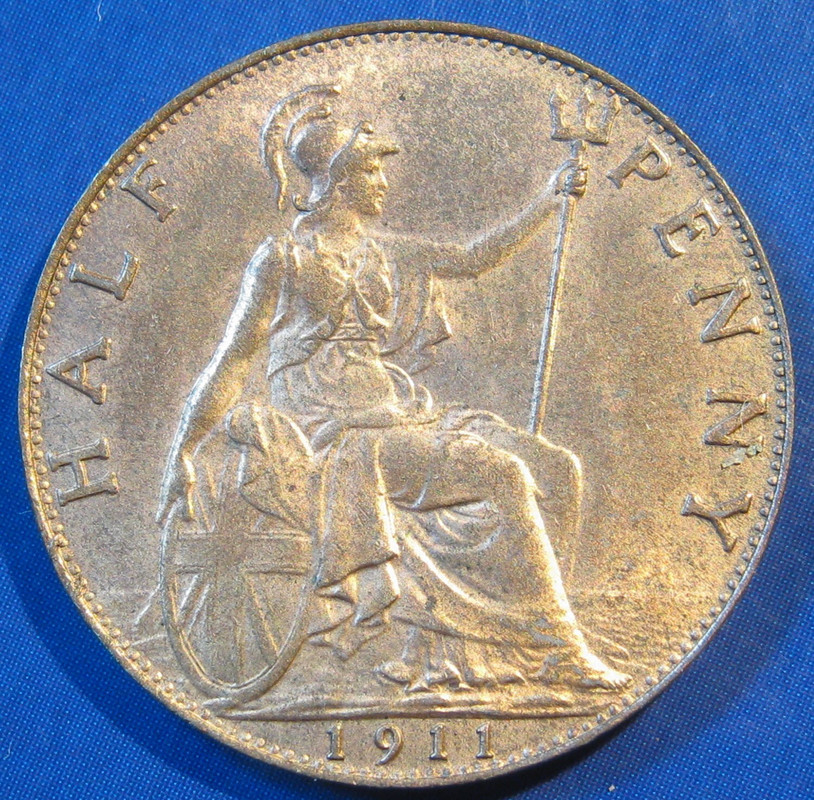
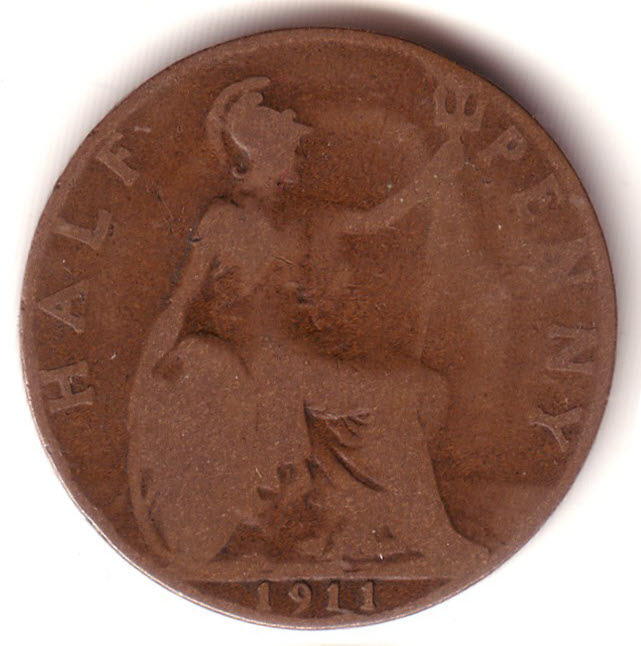
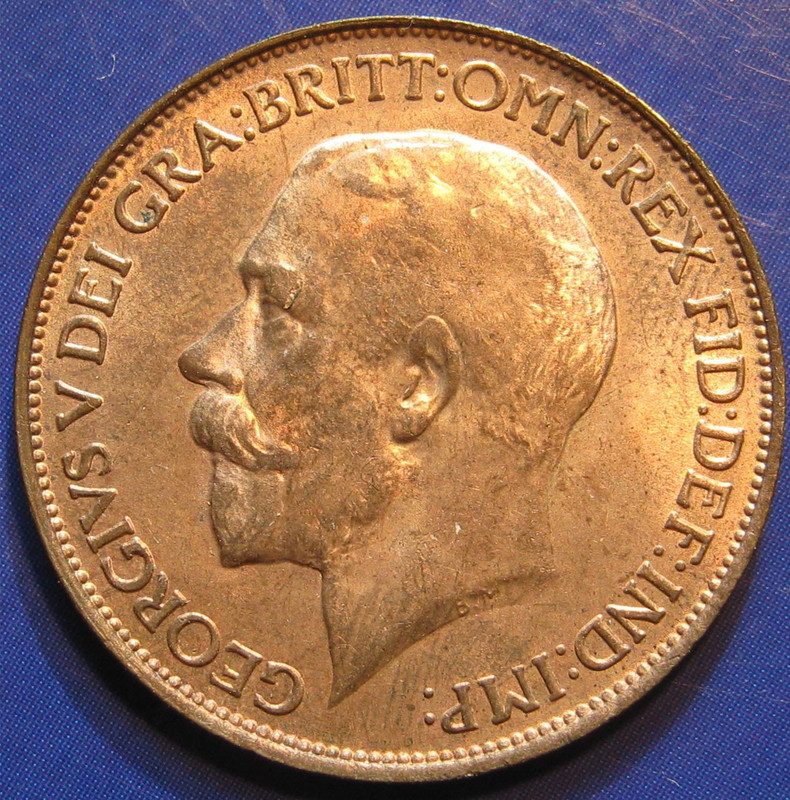
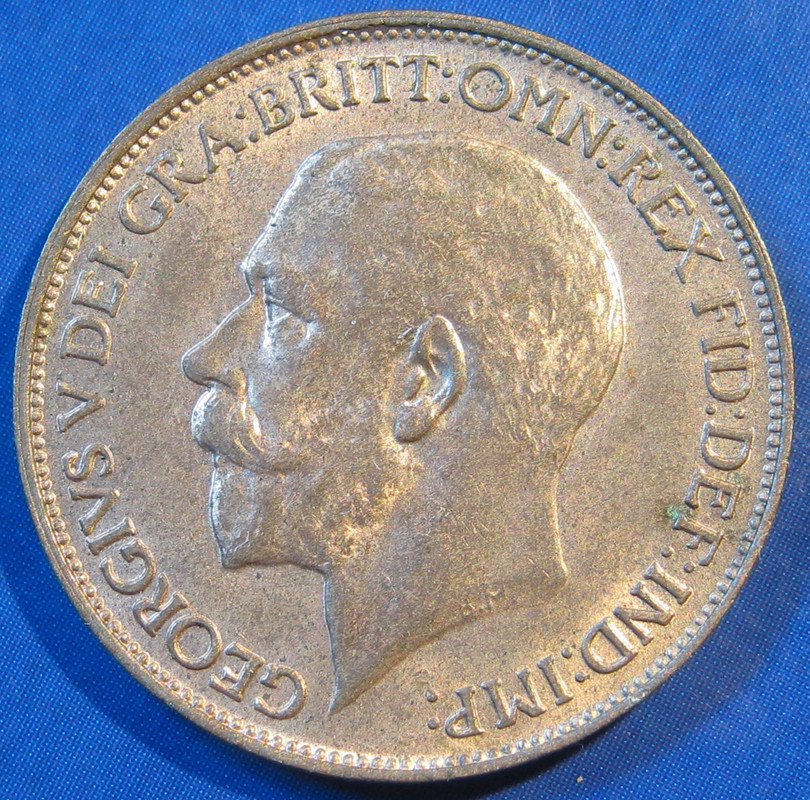
1911 — The first year offers four combinations: two obverses (Flat Neck / Hollow Neck, as in the other bronze denominations) and two reverses (A and A*), differing in bead size and the position of the last 1 in the date. Groom catalogues all four separately; Peck and Freeman do not.
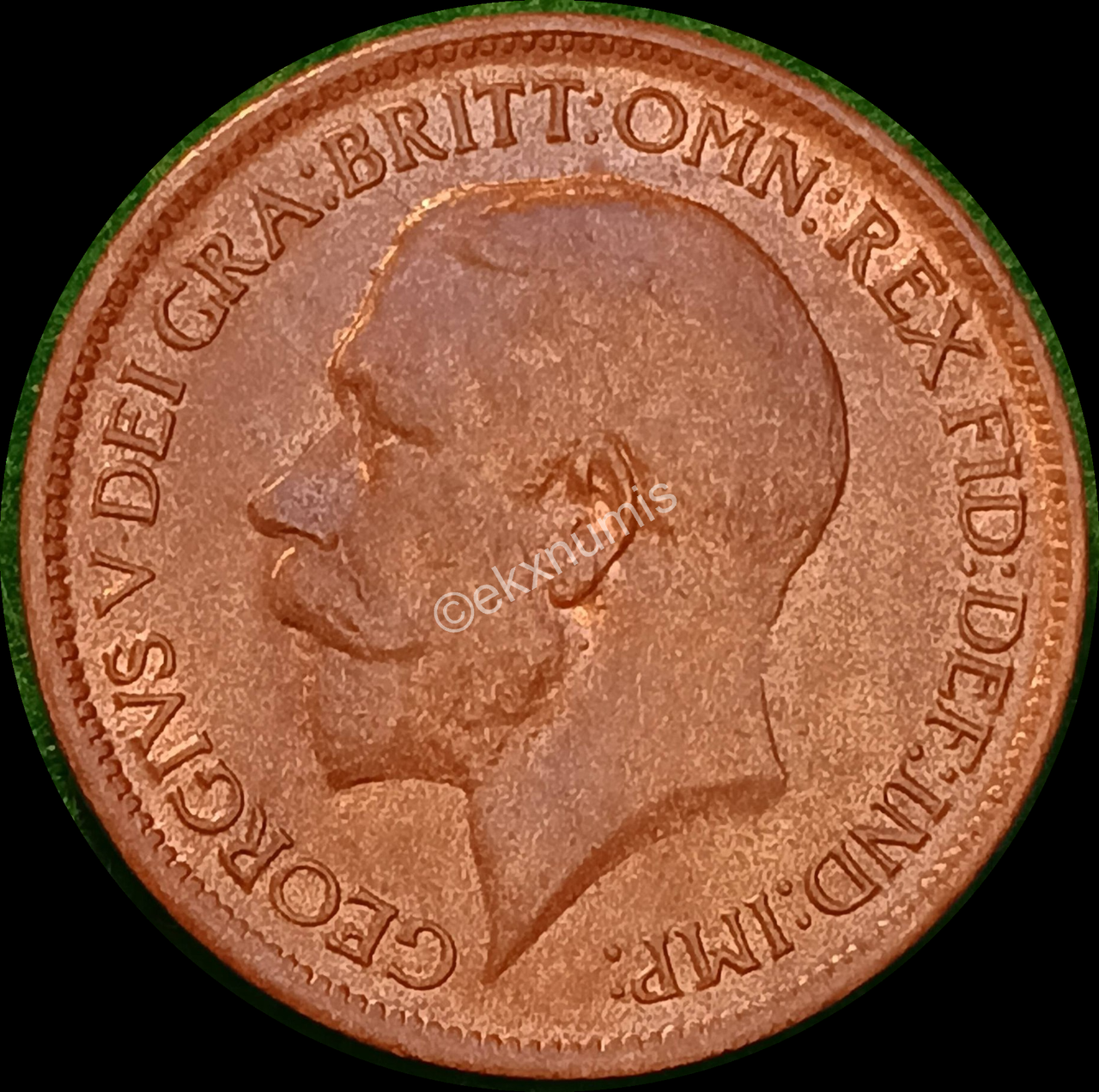
1912–1924 — Weak strikes are a persistent feature of the early halfpenny series, particularly around 1913–1917. The 1912 Reverse A* variety — with a clear gap between the date and the exergue line and large beads — is recorded by Groom as scarce. The alloy changes of the early 1920s (from 95% Cu / 4% Sn / 1% Zn to 95.5% Cu / 3% Sn / 1.5% Zn from 1923) can produce noticeable colour differences between pieces of the same date.
1925 — The Modified Head was applied to the halfpenny a year earlier than the other denominations. The 1925 Modified Head is slightly scarcer than the First Head, but nothing approaching the rarity of the 1926 Modified Head Penny. The two types are, however, far easier to distinguish than the penny equivalents — the border teeth and overall proportions of the bust differ noticeably.
1926–1936 — The Modified Head continues through 1926 and 1927 before the small head is introduced in 1928, in common with all George V denominations bar the farthing.
George V Halfpenny
 1911
1911Obv 1 Rev A
 1911
1911Obv 1 Rev A*
 1911
1911Obv 1* Rev A
 1911
1911Obv 1* Rev A*
 1912
1912
 1913
1913
 1914
1914
 1915
1915
 1916
1916
 1917
1917
 1918
1918
 1919
1919
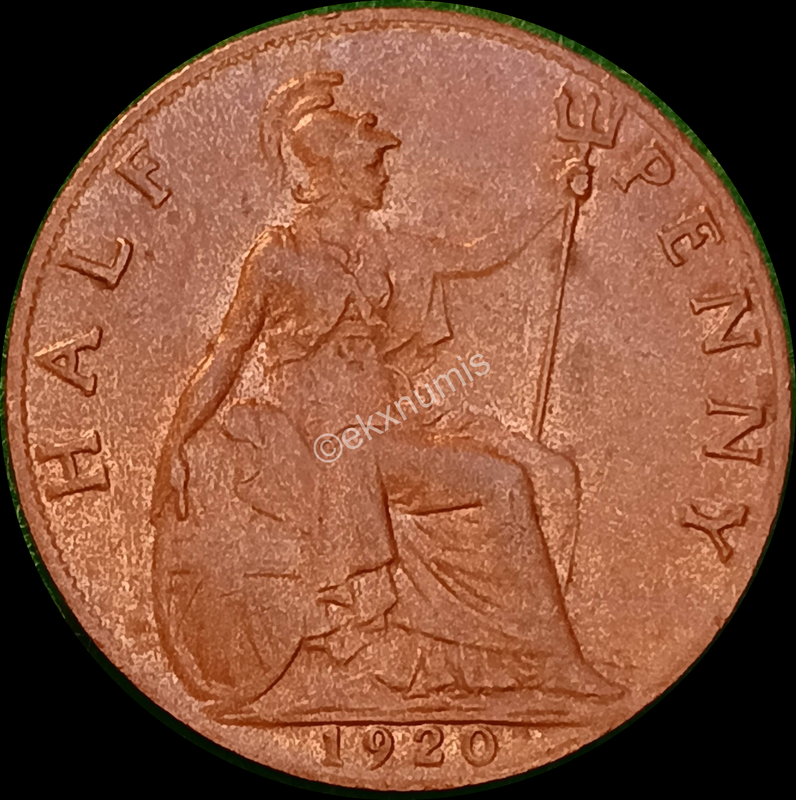 1920
1920
 1921
1921
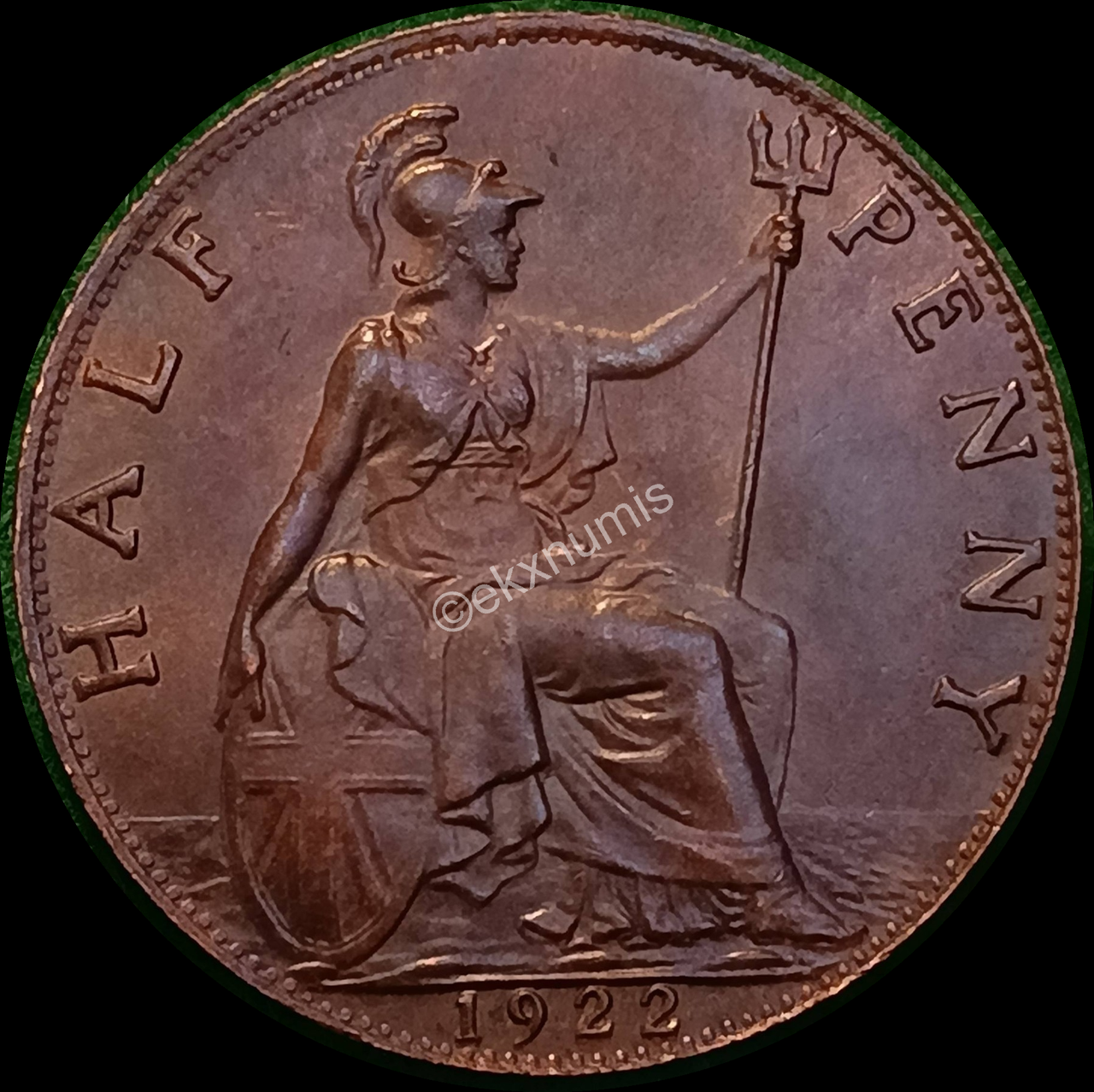 1922
1922
 1923
1923
 1924
1924
 1925
1925First Effigy
 1925
1925Modified Effigy
 1926
1926
 1927
1927
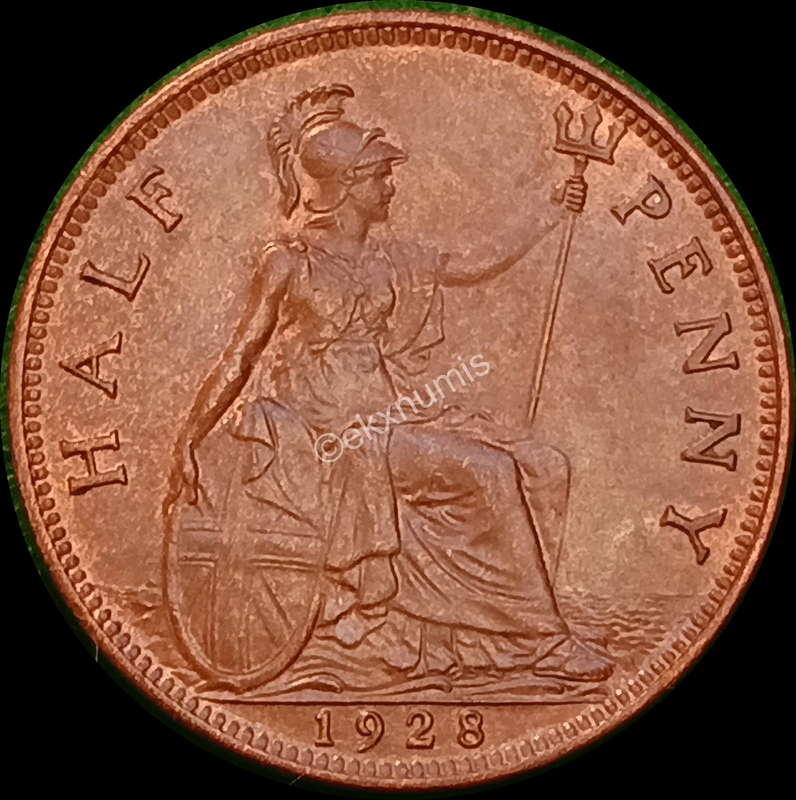 1928
1928
 1929
1929
 1930
1930
 1931
1931
 1932
1932
 1933
1933
 1934
1934
 1935
1935
 1936
1936
Specifications
| Years Issued | 1911–1936 |
| Diameter | 25.48 mm |
| Weight | 5.67 g |
| Edge | Plain |
| Alloy |
Upto 1922: 95% Copper, 4% Tin, 1% Zinc From 1923: 95.5% Copper, 3% Tin, 1.5% Zinc |
| Obverse Designer | Sir Bertram Mackennal |
| Reverse Designer | Leonard Charles Wyon |
Year-by-Year Reference
1911
1911 holds much for the hardcore variety hunter. Take the halfpenny, for instance; not only does it display the hollow neck/flat neck obverses, like the other bronze denominations of this year, but there are 2 reverses too, making four combinations to find. Groom catalogues the four types separately, but Peck and Freeman do not, so the best relative scarcity estimates I can give are those from the small number that have passed through my hands.
| Reverse A | Obverse 1: Flat Neck |
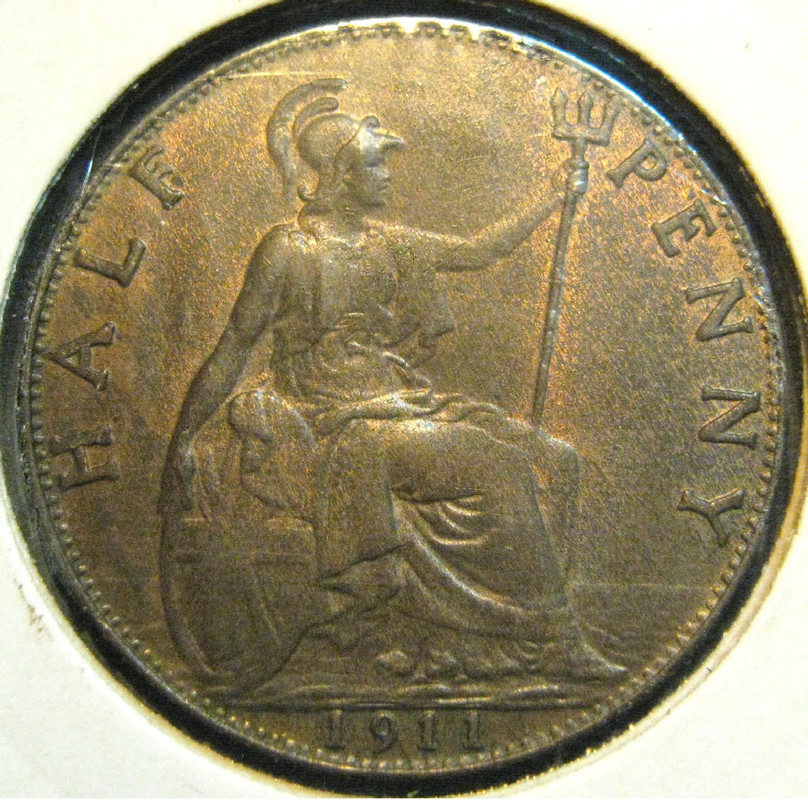
|
|
|
|
| Reverse A* | Obverse 1: Flat Neck |
|
|
|
|
| Reverse A | Obverse 1*: Hollow Neck |
|
|
|
|
|
| Reverse A* | Obverse 1*: Hollow Neck |
|
|
|
|
|
1912
All the 1912 halfpennies that I have had have been Reverse A, with:
- No gap between date and exergue line
- 2 in date centred over a bead
- small beads with gap between them
Peck and Freeman only recognise this type, but Groom suggests that a Reverse A* type exists too, with:
- Clear gap between date and exergue line
- 2 in date centred over a space between beads
- large beads with almost no gap
| 1912 Halfpenny |
|---|
| Obverse 1 | Reverse A |
|
|

|
1913
1+A
They were plagued by weak strikes and streaky lustre, so it is quite unusual to find one that exhibits neither.
Halfpennies are seriously under-rated in terms of their difficulty in high grade.
| 1913 Halfpenny |
|---|
| Obverse 1 | Reverse A |
|
|

|
1914
1+A
| 1914 Halfpenny |
|---|
| Obverse 1 | Reverse A |
|
|

|
1915
1+A
| 1915 Halfpenny |
|---|
| Obverse 1 | Reverse A |
|
|

|
1916
1+A
| 1916 Halfpenny |
|---|
| Obverse 1 | Reverse A |
|
|

|
1917
1+A
From a standing start, it took me seven upgrades to get this far with this date.
| 1917 Halfpenny |
|---|
| Obverse 1 | Reverse A |
|
|

|
1918
1+A
| 1918 Halfpenny |
|---|
| Obverse 1 | Reverse A |
|
|

|
1919
1+A
| 1919 Halfpenny |
|---|
| Obverse 1 | Reverse A |
|
|

|
1920
1+A
| 1920 Halfpenny |
|---|
| Obverse 1 | Reverse A |
|
|
1921
1+A
| 1921 Halfpenny |
|---|
| Obverse 1 | Reverse A |
|
|

|
1922
1+A
| 1922 Halfpenny |
|---|
| Obverse 1 | Reverse A |
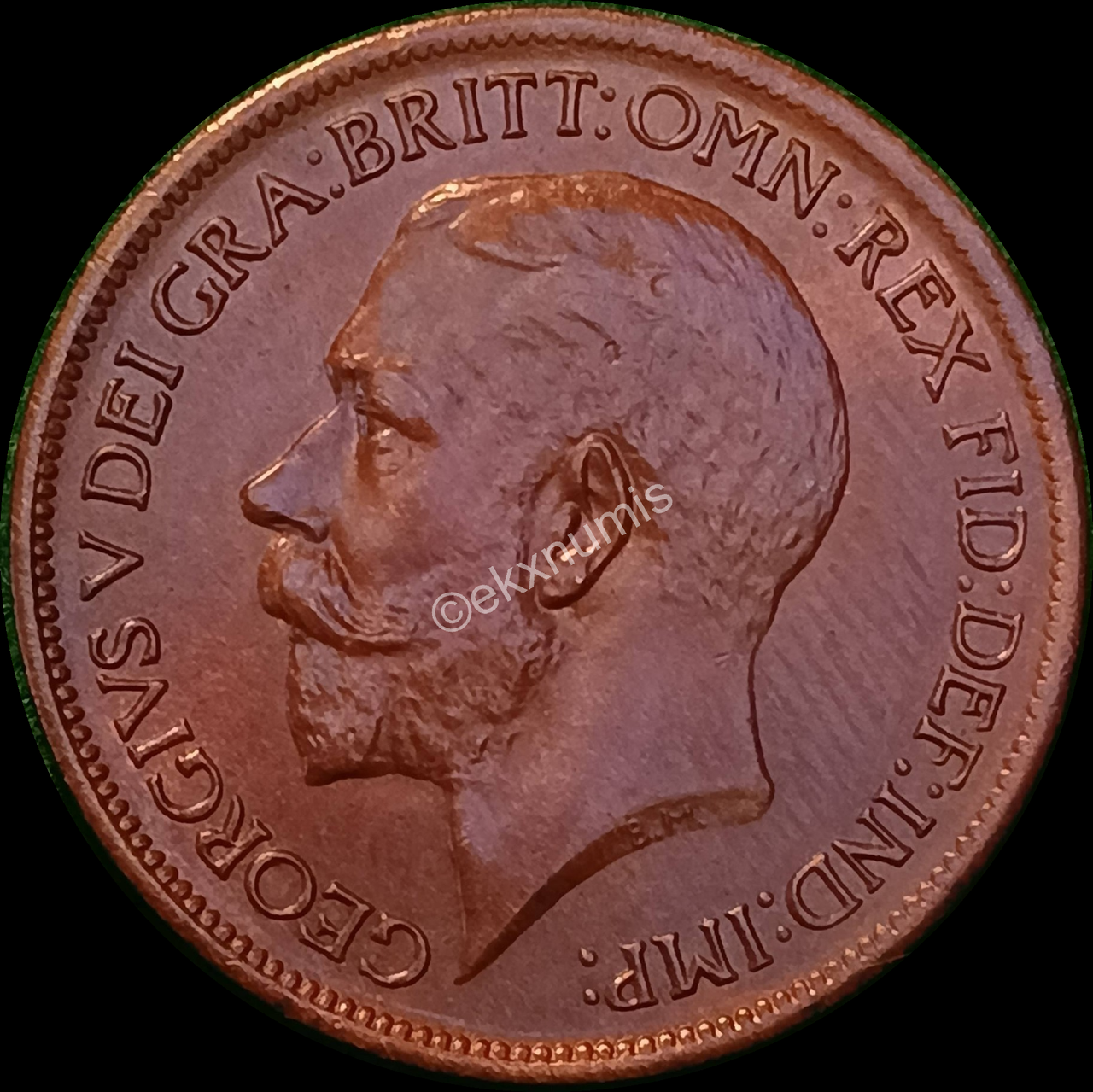
|
|
1923
1+A
| 1923 Halfpenny |
|---|
| Obverse 3 | Reverse B |
|
|

|
1924
1+A
| 1924 Halfpenny |
|---|
| Obverse 3 | Reverse B |
|
|

|
1925
The Modified Head was introduced in 1925 for Halfpennies, a year earlier than the other denominations. It is slightly scarcer than the First Head halfpenny, but nothing like the rarity of the 1926 Modified Head penny. I find the Modified Head halfpenny to be much easier to identify than the equivalent penny — the difference is immediately recognisable when compared side by side. Compare the length and shape of the border teeth, for instance.
| 1925 Halfpenny |
|---|
| Obverse 1: First Head | Obverse 1: Modified Head |

|

|
1926
2+B
| 1926 Halfpenny |
|---|
| Obverse 2 | Reverse B |
|
|

|
1927
2+B
| 1927 Halfpenny |
|---|
| Obverse 2 | Reverse B |
|
|

|
1928
3+B — Obverse 3 has the smaller head that sees the coinage through to the end of the reign.
| 1928 Halfpenny |
|---|
| Obverse 3 | Reverse B |
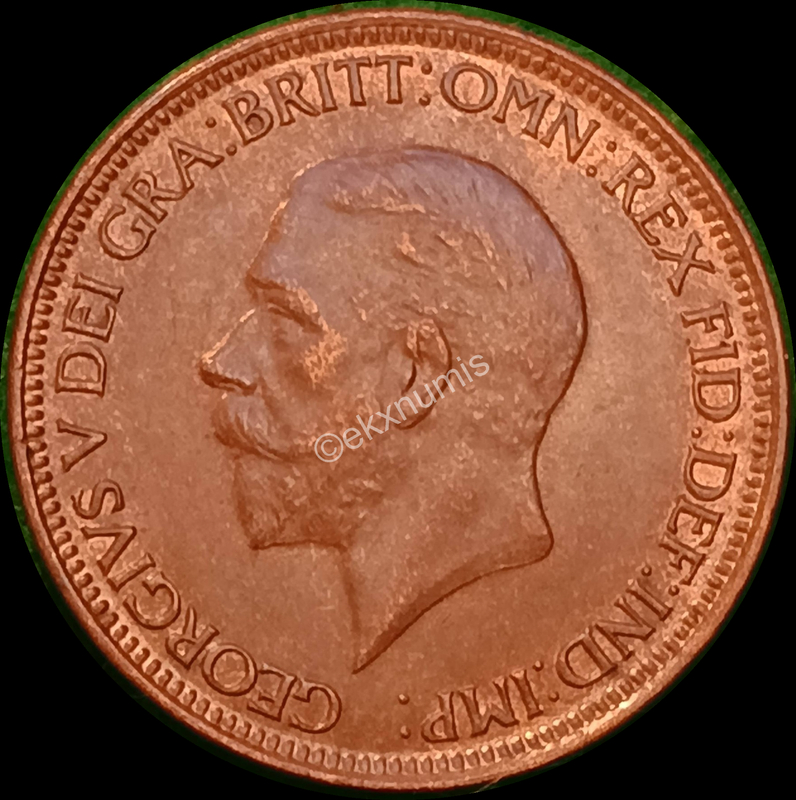
|
|
1929
3+B
| 1929 Halfpenny |
|---|
| Obverse 3 | Reverse B |
|
|

|
1930
3+B
| 1930 Halfpenny |
|---|
| Obverse 3 | Reverse B |
|
|

|
1931
3+B
| 1931 Halfpenny |
|---|
| Obverse 3 | Reverse B |
|
|

|
1932
3+B
| 1932 Halfpenny |
|---|
| Obverse 3 | Reverse B |
|
|

|
1933
3+B
| 1933 Halfpenny |
|---|
| Obverse 3 | Reverse B |
|
|

|
1934
3+B
| 1934 Halfpenny |
|---|
| Obverse 3 | Reverse B |
|
|

|
1935
3+B
| 1935 Halfpenny |
|---|
| Obverse 3 | Reverse B |
|
|

|
1936
3+B
| 1936 Halfpenny |
|---|
| Obverse 3 | Reverse B |
|
|

|