George VI
Coinage 1937–1952 · Collector Reference
A complete visual reference to the George VI coinage series — nine denominations spanning the end of silver coinage, the transition to copper-nickel, and the removal of the imperial titles. Every date, every variety, with links to full denomination pages.
Introduction
The George VI coinage spans 1937 to 1952 and marks two of the most consequential transitions in the history of British currency — the final elimination of silver from circulating coinage in 1947, and the removal of the imperial title IND IMP in 1949 following Indian independence. All denominations carry the portrait of George VI by Thomas Humphrey Paget, depicting the King bare-headed and facing left. This page provides a complete year-by-year visual reference to the George VI coinage series, with links to detailed denomination pages covering all coinage types, die varieties, and collector notes.
The George VI series is compact — sixteen years, nine denominations — but historically dense. It opens with a Coronation coinage in 1937, passes through the Second World War, sees the last silver coins struck for British circulation in 1946, transitions to copper-nickel in 1947, loses its imperial dimension in 1949, and closes with the King's death in 1952. Collecting the series in high grade across all denominations is a substantial undertaking; the copper-nickel issues in particular circulated hard and long, and genuinely uncirculated examples of many dates are scarcer than their mintage figures suggest.
The Three Coinages
- 1st Coinage (1937–1946) – Struck in .500 silver for the milled denominations and bronze for the minor coinage. Introduced the new reign with revised reverse designs by George Kruger Gray across the silver series and parallel nickel-brass and silver threepences.
- 2nd Coinage (1947–1948) – Silver eliminated entirely; copper-nickel (75% copper, 25% nickel) replaced .500 silver across the halfcrown, florin, shilling, and sixpence. Design otherwise unchanged.
- 3rd Coinage (1949–1952) – Following Indian independence, IND IMP removed from the obverse legend across all denominations. On the sixpence, this additionally required a complete redesign of the royal cypher from GRI to G VI R.
The Coinage at a Glance
- Crowns (1937, 1951) – Two commemorative issues: the 1937 Coronation Crown in .500 silver and the 1951 Festival of Britain Crown in copper-nickel, struck with polished dies.
- Halfcrowns (1937–1951) – New reverse design by George Kruger Gray introducing a suspended heraldic shield in place of the tilting shield of the George V series. A unique 1952 currency halfcrown is also recorded.
- Florins (1937–1951) – Two reverses recorded for 1937; the copper-nickel issues are condition rarities due to extended circulation as decimal 10p.
- Shillings (1937–1951) – English and Scottish reverse types struck throughout; the 1946 English shilling exists in two reverse varieties.
- Sixpences (1937–1952) – Two reverse varieties (1937–1942 and 1943–1946); unique among denominations in requiring a complete cypher redesign in 1949. Key date: 1952.
- Threepences (1937–1952) – Two parallel series: the round .500 silver threepence (1937–1944, plus export issues) and the twelve-sided nickel-brass threepence (1937–1952). Notable wartime varieties including sharp and round-cornered types.
- Pennies (1937–1951) – Bronze; three obverses and four reverses producing a range of die combinations. Notable for the wartime alloy change, the artificially darkened 1944–1946 issues, and the very low mintage 1950 and 1951 dates.
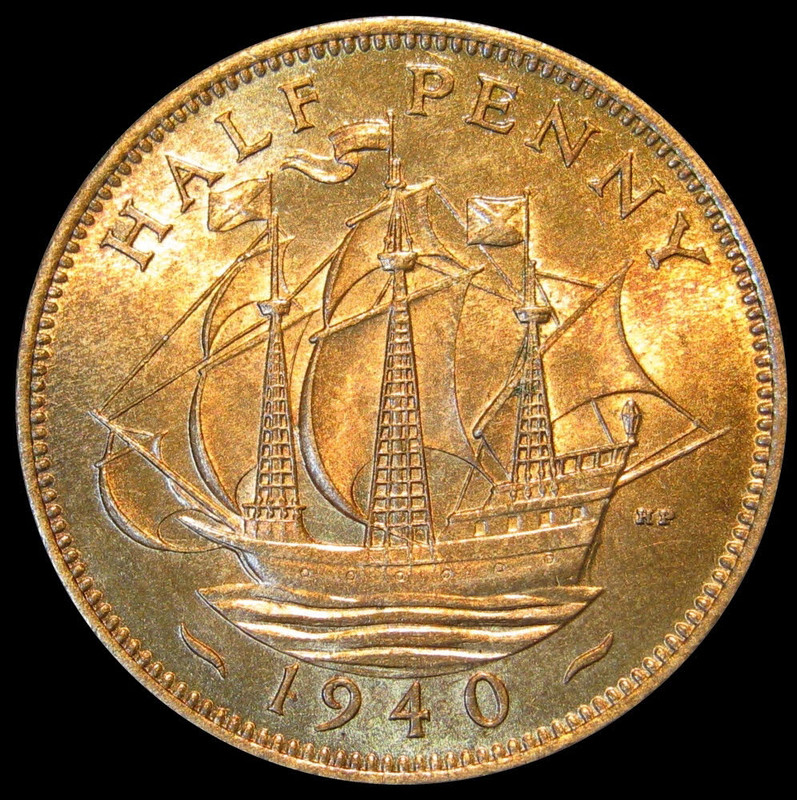
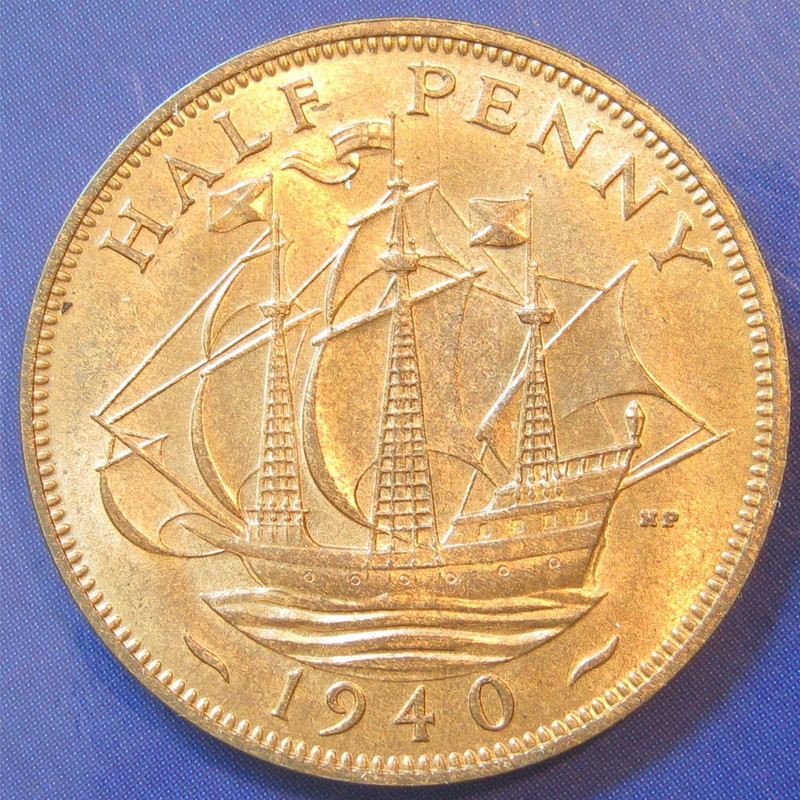
- Halfpennies (1937–1952) – Bronze; the 1949 legend change marks the boundary of the two coinages.
- Farthings (1937–1952) – Bronze; the wren reverse introduced under this reign. The 1949 legend change applies as with other denominations.
The End of Silver Coinage
The most significant moment in the George VI series is 1947 — the year British silver coins ceased to contain any silver at all. The .500 alloy introduced under George V in 1920 had itself been a compromise; by 1947, even that reduced silver content was deemed economically unsustainable in postwar Britain, and the switch to copper-nickel was made. The last .500 silver coins for circulation were dated 1946. From 1947 onward, British circulating coinage contained no precious metal for the first time in its history — a watershed that marks the end of an unbroken tradition stretching back to the Anglo-Saxon period.
The coin gallery below provides a year-by-year visual reference to every issue across all denominations. Click any coin image to go directly to the relevant section of its denomination page, or select a denomination from the navigation above for full variety listings, specifications, and collector notes.