
Collectors Guide
George V Florins
The George V florin (two shillings) is one of the most studied denominations of the reign, struck from 1911 to 1926 with multiple reverse designs and well-documented varieties. Notable issues such as the 1914 florin varieties make this series particularly popular among collectors. This guide explores the design changes, specifications and key varieties of George V florins.
Introduction
The Florin of George V was struck throughout most of the reign and forms one of the principal silver denominations of the period. The George V Florin series reflects both the silver debasement of 1920 and later changes to the royal portrait and reverse design introduced during the reign.
Four distinct coinages can be identified, reflecting the reduction in silver content in 1920, a later modification to the King’s portrait, and the introduction of a completely new reverse design.
- 1st Coinage (1911–1919) – Struck in sterling silver (.925) and introduced the new reign with the traditional crowned cruciform shield reverse.
- 2nd Coinage (1920–1926) – Retained the same design but used the reduced .500 silver alloy introduced after the First World War.
- 3rd Coinage (1926–1927) – Introduced a modified portrait of George V, creating a short transitional issue.
- 4th Coinage (1927–1936) – Introduced a completely new reverse design by George Kruger Gray while continuing the later portrait and .500 silver alloy.
Coinage Details
1st Coinage (1911–1919) — The first coinage was struck in traditional sterling silver (.925) and introduced the effigy of George V by Sir Bertram Mackennal. The reverse retained the crowned cruciform shields of the Royal Arms used on the Edward VII florins. These early pieces represent the final circulating sterling-silver florins before the debasement of British silver coinage.
2nd Coinage (1920–1926) — In 1920, rising silver prices forced the British government to reduce the precious-metal content of circulating coinage. From this point onward the florin was struck in .500 fine silver, containing equal parts silver and base metal. This change marks the second coinage, which retained the same basic design but used the new alloy.
3rd Coinage (1926–1927) — A further modification followed with the introduction of a revised portrait of George V. This short transitional issue retained the debased silver alloy and the earlier cruciform shield reverse while introducing subtle changes to the King’s effigy and legend.
A notable feature of the 1926–1927 coinage is the shortened obverse legend, with the titles FID DEF IND IMP removed from the inscription. This change accompanied the introduction of the modified effigy of George V and marks the transitional phase between the earlier and later designs of the reign.
4th Coinage (1927–1936) — The fourth and final coinage introduced a new reverse designed by George Kruger Gray. The earlier crowned shields were replaced with a more modern arrangement of four crowned shields separated by sceptres, creating a distinctive cruciform design that became one of the defining features of the later George V florins. This design continued with the modified portrait and the .500 silver alloy through to the end of the reign.
Overall, the George V florin series reflects the wider economic and artistic changes of the early twentieth century— particularly the impact of rising silver prices after the First World War and the broader move toward modernised coin designs during the later years of the reign.
George V Florins
 1911
1911
 1912
1912
 1913
1913
 1914 – Rev C
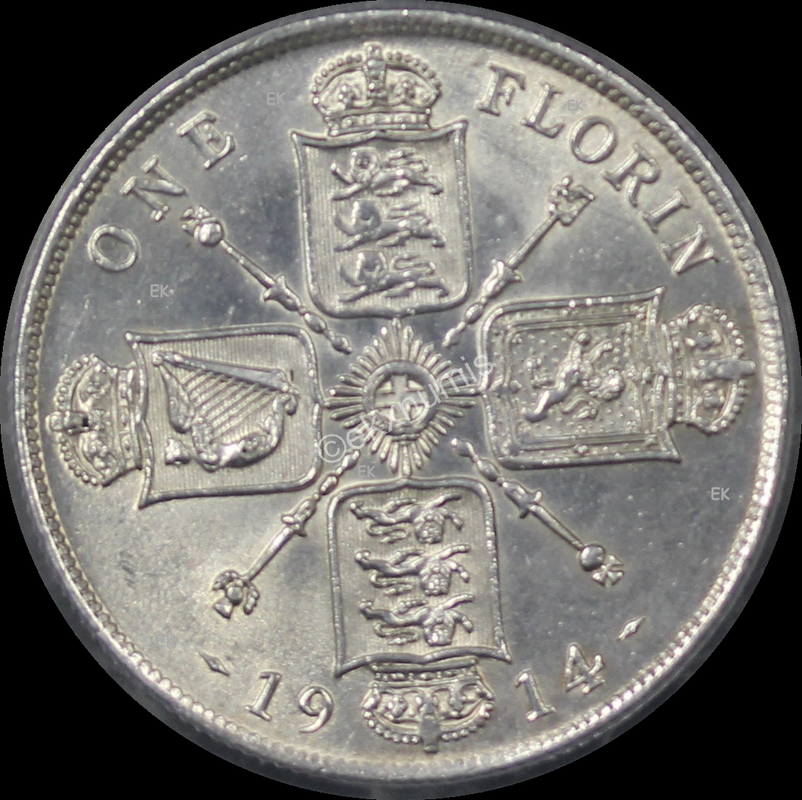 1914 – Rev D
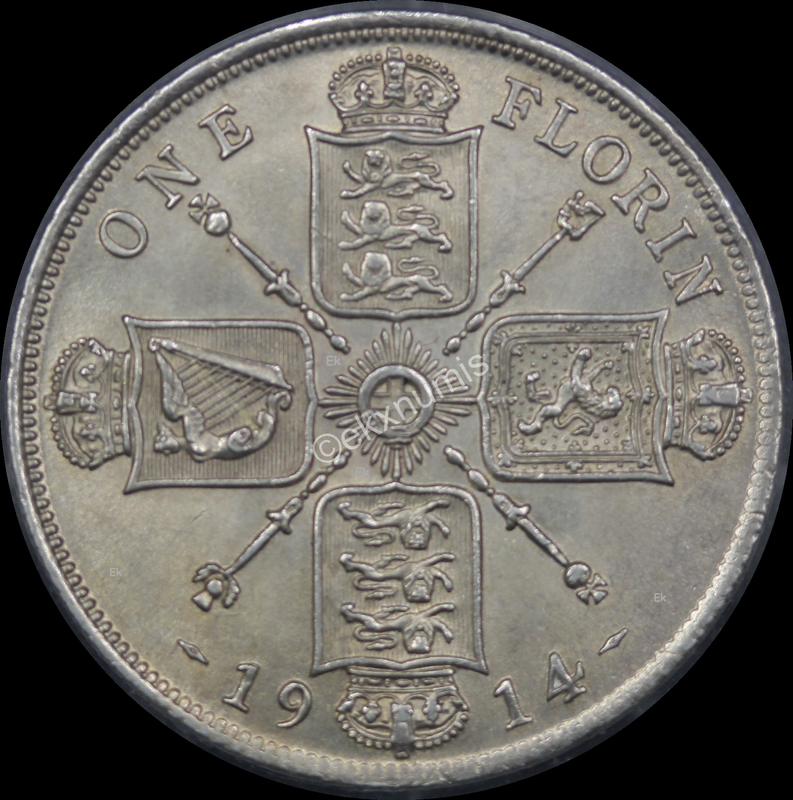 1914 – Rev E
 1915
1915
 1916
1916
 1917
1917
 1918
1918
 1919
1919
 1920
1920
 1921
1921
 1922
1922
 1923
1923
 1924
1924
 1925
1925
 1926
1926
 1928
1928
 1929
1929
 1930
1930
 1931
1931
 1932
1932
 1933
1933
 1935
1935
 1936
1936
Specifications
Specifications
| Years Issued | 1911–1936 |
| Diameter | 19.3 mm |
| Weight | 2.83 g |
| Edge | Reeded |
| Alloy |
1911–1919: 92.5% silver, 7.5% copper 1920–1936: 50% silver, 40% copper, 10% nickel |
| Obverse Designer | Sir Bertram Mackennal |
| Reverse Designers |
1911–1926: George William de Saulles 1927–1936: George Kruger Gray ("Oak and Acorn" design) |
Year-by-Year Reference
1911
| 1911 Florin |
|---|
| Obverse | Reverse |

|
|
Catalogue numbers are listed in the reference table.
1912
Years after a Coronation are scarce in high grade - 1903, 1912, 1938, 1954.
Probably, because they weren't new any more, people didn't hoard them.
| 1912 Florin |
|---|
| Obverse | Reverse |

|
|
Catalogue numbers are listed in the reference table.
1913
You will struggle to find 1913s in higher grade than this.
3+B
| 1913 Florin |
|---|
| Obverse | Reverse |

|
|
Catalogue numbers are listed in the reference table.
1914
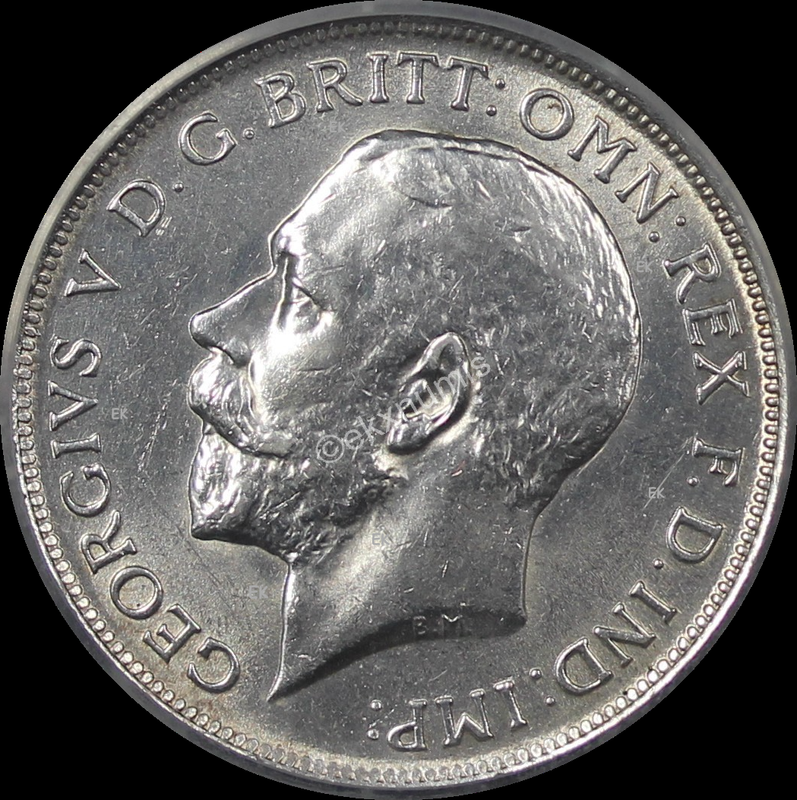
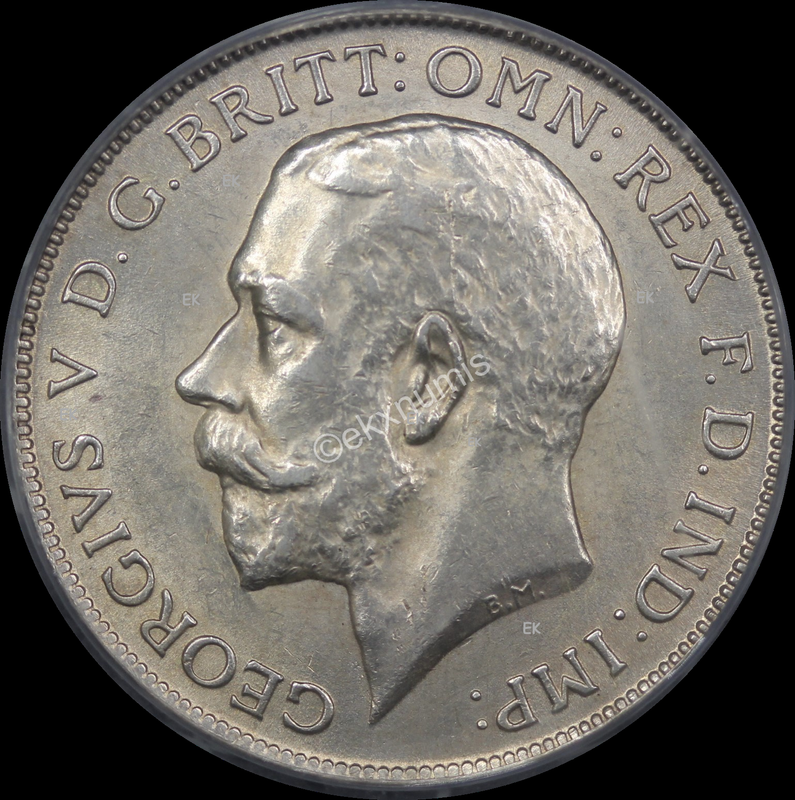
Based on Davies and David J groom there are 3 reverses (C, D and E) and 1 obverse for the 1914 Florin Three different reverse dies to look out for in 1914. Most coins are Reverse E. C and D are much scarcer.
1914 2+C
Obverse 2 – 'I' of BRITT to 'Bead'
Reverse C – ????
Reference: ESC 942, Bull 3774, Davies 1752
1914 2+D
Obverse 2 – 'I' of BRITT to 'Bead'
Reverse D – ????
Reference: ESC 942, Bull 3774, Davies 1751
1914 2+E
Obverse 2 – 'I' of BRITT to 'Bead'
Reverse E – ????
Reference: ESC 942, Bull 3774, Davies 1751
| 1914 Florin Varieties |
|---|
| Obverse 2 | Reverse C |

|
|
| Obverse 2 | Reverse D |
|
|
| Obverse 2 | Reverse E |
|
|
Catalogue numbers are listed in the reference table.
1915
Just an observation - as more and more people near completing their date runs, I think the Scarce dates, like this one, are getting scarcer. And the common dates are getting commoner.
| 1915 Florin |
|---|
| Obverse | Reverse |

|
|
Catalogue numbers are listed in the reference table.
1916
| 1916 Florin |
|---|
| Obverse | Reverse |

|
|
Catalogue numbers are listed in the reference table.
1917
Top grade examples of this date are very difficult to get your hands on.
| 1917 Florin |
|---|
| Obverse | Reverse |

|
|
Catalogue numbers are listed in the reference table.
1918
1914 2+C
1918 Standard Issue
Reference: ESC 942, Bull 3774, Davies 1752
1914 2+D
1918 Satin/Specimen Die (SD)
Reference: ESC 942, Bull 3774, Davies 1751
| 1918 Florin Varieties |
|---|
| Obverse | Reverse |

|
|
| Obverse (SD) | Reverse (SD) |

|

|
Catalogue numbers are listed in the reference table.
1919
| 1919 Florin |
|---|
| Obverse | Reverse |

|
|
Catalogue numbers are listed in the reference table.
1920
Quite apart from the varieties, 1920 florins display a very steep grade gradient. VF specimens are common, EF scarce, and As Struck coins are rare.
- ➤ 1920 2+E1
- ➤ 1920 2+E2
- ➤ 1920 3+E
| 1920 Florin Varieties |
|---|
| Obverse 2 | Reverse E1 |

|
|
| Obverse 2 | Reverse E2 |

|

|
| Obverse 3 | Reverse E |

|

|
Catalogue numbers are listed in the reference table.
1921
| 1921 Florin |
|---|
| Obverse | Reverse |

|
|
Catalogue numbers are listed in the reference table.
1922
| 1922 Florin |
|---|
| Obverse | Reverse |

|
|
Catalogue numbers are listed in the reference table.
1923
The 1923 Florin is known in two main varieties, both of which can be difficult to locate in high grade.
1923 2+E
Obverse 2 – 'I' of BRITT to 'Bead'
Reference: ESC 942, Bull 3774, Davies 1752
1923 3+E
Obverse 3 - 'I' of BRITT to 'Space'
Reference: ESC 942, Bull 3774, Davies 1751
| 1923 Florin Varieties |
|---|
| Obverse 2 - 'I' of BRITT to 'Bead' | Reverse E |

|
|
| Obverse 3 - 'I' of BRITT to 'Space' | Reverse E |

|

|
Catalogue numbers are listed in the reference table.
1924
1924 florins display a very steep grade gradient. VF specimens are common, EF scarce, and As Struck coins are rare.
| 1924 Florin |
|---|
| Obverse | Reverse |
|
|

|
Catalogue numbers are listed in the reference table.
1925
1925 florins are a well known key date, and hence are common in worn condition. Top grade examples are very difficult to find.
| 1925 Florin |
|---|
| Obverse | Reverse |
|
|

|
Catalogue numbers are listed in the reference table.
1926
1926 florins display a very steep grade gradient. VF specimens are common, EF scarce, and As Struck coins are rare.
| 1926 Florin |
|---|
| Obverse | Reverse |

|
|
Catalogue numbers are listed in the reference table.
1927
| 1927 Florin |
|---|
| Obverse | Reverse |

|

|
Catalogue numbers are listed in the reference table.
1928
| 1928 Florin |
|---|
| Obverse | Reverse |

|
|
Catalogue numbers are listed in the reference table.
1929
| 1929 Florin |
|---|
| Obverse | Reverse |

|
|
Catalogue numbers are listed in the reference table.
1930
| 1930 Florin |
|---|
| Obverse | Reverse |

|
|
Catalogue numbers are listed in the reference table.
1931
A regular issue with no major varieties.
| 1931 Florin |
|---|
| Obverse | Reverse |
|
|

|
Catalogue numbers are listed in the reference table.
1932
1932 florins are a well-known key date, common in worn condition; top grade examples are very rare (rated R2 by Cope and Rayner).
| 1932 Florin |
|---|
| Obverse | Reverse |
|
|

|
Catalogue numbers are listed in the reference table.
1933
A standard issue with no significant varieties.
| 1933 Florin |
|---|
| Obverse | Reverse |
|
|

|
Catalogue numbers are listed in the reference table.
1934 - No Florin for this year.
1935
A regular issue with no major varieties.
| 1935 Florin |
|---|
| Obverse | Reverse |
|
|

|
Catalogue numbers are listed in the reference table.
1936
A standard issue with no significant varieties.
| 1936 Florin |
|---|
| Obverse | Reverse |
|
|

|
Catalogue numbers are listed in the reference table.
References
Attributions and variety identifications for the George V Halfcrown series are based principally on the standard published references listed below. These works form the core framework for catalogue numbering, die classification, and comparative study.
- Coins of England and the United Kingdom
- ESC – English Silver Coinage
- Bull – English Silver Coinage since 1649
- Davies – British Silver Coins since 1816