
Articles
1914 Florin Varieties — Die Reference Guide
Identifying the 1914 Florin Reverse Dies C – E • Numismatic Study
Introduction
The George V Florin of 1914 marks the final pre-war issue in the sterling-silver florin series introduced in 1911. Designed by Sir Bertram MacKennal (obverse) and Leonard Charles Wyon (reverse), it continued the Edwardian-style cruciform shield motif but shows notable refinements in rim and lettering.
Groom does a brilliant job here as usual. Three reverse dies — C, D and E — are recognised, each with subtle diagnostic traits in the harp-shield crown alignment and the spacing of FLORIN. This guide documents and illustrates those varieties to aid accurate attribution. All are paried with Obverse - 2???
The Revese C is lot scarer. I haven't seen one yet physically and I dont have one in my collection yet.
Apart from these Groom report 3 minor varieties of Revese D. I have 2 of the 3 varieties
General Information
- Monarch: George V (1910 – 1936)
- Denomination: Florin (2 Shillings)
- Date: 1914
- Composition: Sterling Silver (0.925 fine)
- Weight: 11.31 g (ASW 0.3364 oz)
- Diameter: 28.5 mm
- Edge: Milled
- Obverse Designer: Sir Bertram MacKennal (BM on truncation)
- Reverse Designer: Leonard Charles Wyon
- Legend: GEORGIVS V DEI GRA BRITT OMN REX FID DEF IND IMP / ONE FLORIN TWO SHILLINGS 1914
- Mint: Royal Mint – London
1914 Reverse Varieties
1914 • Reverse C — Davies 1735
Reverse C is considered the earliest hub used in 1914. It shows a fine rim and wide lettering with the F of FLORIN pointing between two beads. The harp-shield crown aligns to a single bead and the crosses are well separated from the rim.
| Obverse 2 | Reverse C |
References:
- Davies – 1735
- Bull – 3559
- Coins of England – 3990
1914 • Reverse D — Davies 1736
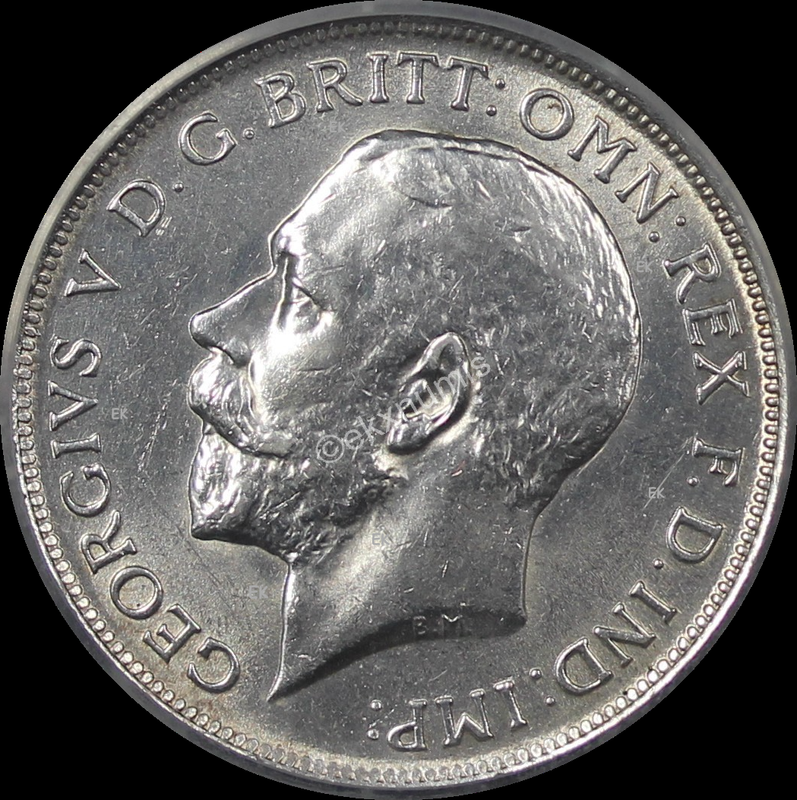
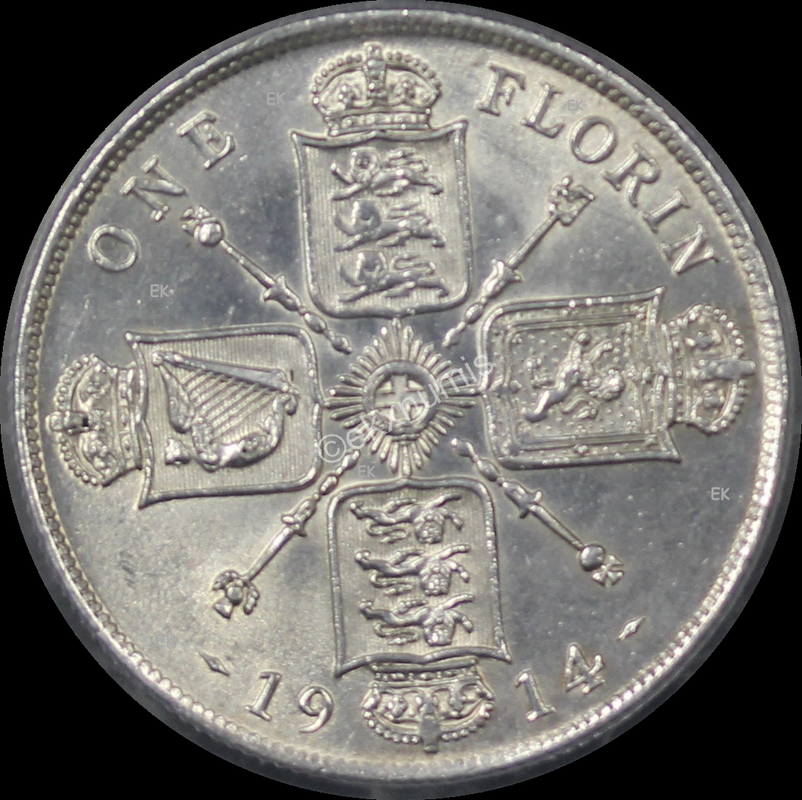
Reverse D shares the general layout of C but has a slightly broader rim and tighter lettering. The harp crosses sit closer to the rim and the FLORIN legend is more compact. It is the most frequently encountered type of 1914.
| Obverse 2 | Reverse D |
 |
 |
References:
- Davies – 1736
- Bull – 3559
- Coins of England – 3990
1914 • Reverse E — Davies 1737
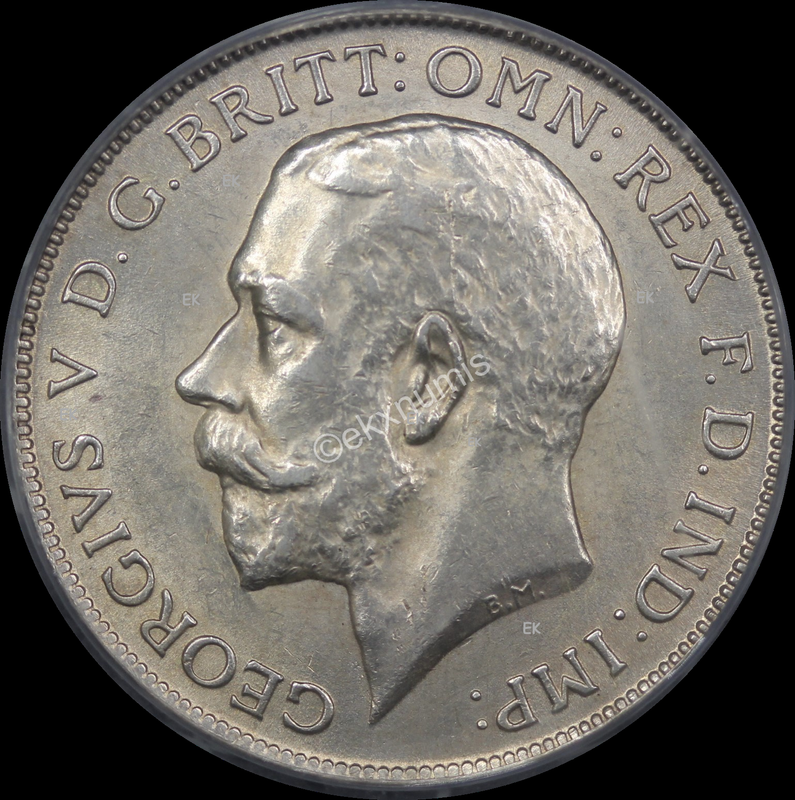
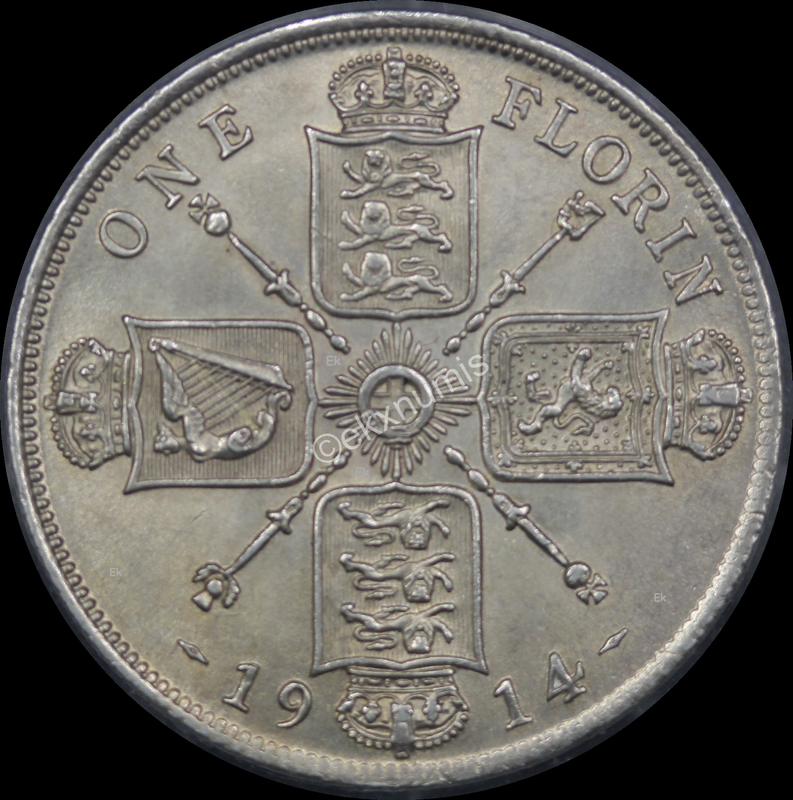
The final reverse hub shows a more rounded border and deeper field relief. The F of FLORIN sits slightly misaligned with the L, providing a quick diagnostic marker. Lettering is tighter and more compact than on D.
| Obverse 2 | Reverse E |
 |
 |
References:
- Davies – 1737
- Bull – 3559
- Coins of England – 3990
Details of 1914 Reverse Dies
The 1914 George V Florin exists with three reverse hubs — C, D, and E — each showing subtle but important differences in legend spacing, border bead position, and harp-shield alignment. These variations reflect the ongoing die refinements of the early George V series.
Collectors can accurately attribute their coins by observing the top of the crown on the harp shield and how the word FLORIN aligns with the rim. The diagnostic cards below summarise the key markers for each reverse type.
How to Distinguish 1914 Reverse Dies
Key visual traits that distinguish each of the three reverse hubs used for the 1914 Florin.

Reverse C
- The top of the crown on the harp's shield points to a border bead.
- Has smaller border beads.
- Has a thin border bead.
- The harp crosses are away from the border beads.
- The 'N' of 'FLORIN' is nearer to the shield than the border beads.
- The words 'ONE FLORIN' and '1914' are further away from the design.
- The 'L' of 'FLORIN' points to a space between border beads.
- The top bar of the 'F' of 'FLORIN' is slightly misaligned with the 'L'.
- The lettering is large.
Earliest reverse; encountered less frequently than D and E.
Reverse D
- The top of the crown on the harp shield points to a border bead.
- Has smaller border beads.
- Has a thicker rim.
- The crosses on the crown are away from the border beads.
- The 'N' of 'FLORIN' is equidistant from the shield and the border beads.
- The words 'ONE FLORIN' and '1914' are furthest away from the design.
- The 'L' of 'FLORIN' points to a space between border beads.
- The top bar of the F of FLORIN is slightly misaligned with the L.
- The lettering is large.
Most common reverse for the 1914 issue.
Reverse E
- The top of the crown on the harp's shield points to a space between beads.
- Has larger border beads.
- Has a thicker border bead.
- The 'N' of 'FLORIN' close to the shield.
- The words 'ONE FLORIN' and '1914' are closer to the design.
- The word FLORIN is further away from the design.
- The 'L' of 'FLORIN' points to a border bead.
- The top of the F of FLORIN is aligned with the L.
- The lettering is large.
Final hub with realigned legend and refined spacing.
Minor Varieties of '1914 Reverse D'
Groom reports that there are 3 minor varieties of Reverse D of 1914 florin. The dissference is based on the position of '1' and '4' in the date 1914. They have been categorised into tthe following
- Reverse D1
- Reverse D2
- Reverse D3
Collectors can accurately attribute their coins by observing the top of the crown on the harp shield and how the word FLORIN aligns with the rim. The diagnostic cards below summarize the key markers for each reverse type.
How to Distinguish '1914 Reverse D' Varieties
Key visual traits observed on each of the three Reverse D die states.

Reverse D1
- Fine, sharp rim beads around 10 – 2 o’clock positions.
- “F” of FLORIN slightly higher, between two beads.
- Polish lines visible between harp and shield.
- Field smooth and lustrous — fresh die.
Earliest Reverse D state with sharp detail and clean beads.

Reverse D2
- Outer rim thickening near “ONE FLORIN”.
- Beads between 5 – 7 o’clock slightly merging.
- “N” of FLORIN drawn inward toward shield.
- Softened lettering from mild die wear.
Intermediate state showing rim expansion and bead flattening.

Reverse D3
- Rim broadened and irregular from heavy die wear.
- “F” of FLORIN lower — touching bead line.
- Beads near date merged into rim; possible die crack near harp.
- Fields dull with visible flow lines.
Late-state Reverse D showing rim flattening and fatigued surface.
'1914 Reverse D' Diagnostics
Reverse D1
- The top of the crown on the harp's shield points to a border bead.
- Has smaller border beads.
- Has a thin border bead.
- The harp crosses are away from the border beads.
- The 'N' of 'FLORIN' is nearer to the shield than the border beads.
- The words 'ONE FLORIN' and '1914' are further away from the design.
- The 'L' of 'FLORIN' points to a space between border beads.
- The top bar of the 'F' of 'FLORIN' is slightly misaligned with the 'L'.
- The lettering is large.
Earliest die; seen less frequently than D and E.
Reverse D2
- The top of the crown on the harp shield points to a border bead.
- Has smaller border beads.
- Has a thicker rim.
- The crosses on the crown are away from the border beads.
- The 'N' of 'FLORIN' is equidistant from the shield and the border beads.
- The words 'ONE FLORIN' and '1914' are furthest away from the design.
- The 'L' of 'FLORIN' points to a space between border beads.
- The top bar of the F of FLORIN is slightly misaligned with the L.
- The lettering is large.
Most common reverse of the 1914 issue.
Reverse D3
- The top of the crown on the harp's shield points to a space between beads.
- Has larger border beads.
- Has a thicker border bead.
- The 'N' of 'FLORIN' close to the shield.
- The words 'ONE FLORIN' and '1914' are closer to the design.
- The word FLORIN is further away from the design.
- The 'L' of 'FLORIN' points to a border bead.
- The top of the F of FLORIN is aligned with the L.
- The lettering is large.
Final die with subtle realignment of legend.