Articles: George II Lima Halfcrown Guide
1745 and 1746 Lima Halfcrowns
George II Lima Halfcrowns • Captured Spanish silver • Edge lettering • LIMA Varieties - 1745/3 • 1746/5 • V over U in GEORGIVS •
Historical Background
The 1745 and 1746 Lima Halfcrowns are among the most historically important silver coins of the eighteenth century. At first glance they appear similar to other halfcrowns of George II, yet the word LIMA beneath the King's bust immediately sets them apart and links the coinage to one of Britain's most celebrated naval victories.
The silver associated with the Lima coinage originated from treasure captured during Commodore George Anson's famous circumnavigation of the globe between 1740 and 1744. During the voyage, Anson's squadron captured the richly laden Spanish treasure galleon Nuestra Señora de Covadonga in the Pacific Ocean. The capture yielded a vast quantity of silver and other treasure, much of which eventually reached Britain and became associated with the bullion used for the Lima coinage.
To commemorate the achievement, the word LIMA was placed on selected gold and silver denominations struck during the reign of George II. Although often described as a mintmark, it should not be interpreted as one in the usual sense. The coins were struck at the Royal Mint in London. The inscription instead served as a commemorative mark, drawing attention to the Spanish-American origin of the bullion and the naval success through which it had been obtained.
The Lima coinage quickly became a symbol of national pride. Contemporary Britons were well aware of Anson's exploits, and the appearance of LIMA on the coinage transformed ordinary circulating money into a public reminder of Britain's growing naval power and expanding global influence during the eighteenth century.
For collectors today, the Lima Halfcrowns offer far more than a simple date and type series. They combine attractive George II silver coinage with a direct connection to maritime history, international conflict, Spanish colonial wealth and one of the most famous naval voyages of the period. Few British coins carry such a clear and visible link between the coin itself and the historical events that inspired its creation.
Specifications
| Monarch | George II |
|---|---|
| Denomination | Halfcrown |
| Years Covered | 1745 and 1746 |
| Metal | Sterling Silver |
| Weight | Approximately 14.14 grams |
| Diameter | Approximately 34 mm |
| Obverse | Old laureate bust of George II facing left, with LIMA below |
| Reverse | Four crowned shields arranged cruciform around the Garter Star |
| Standard Currency Edge | Raised lettered edge with regnal year in words |
| Main References | Spink 3695 / 3695A; ESC and Bull references vary by date and variety |
Edge Lettering and Regnal Year
The edge lettering is an important part of the Lima Halfcrown attribution. These coins carry raised edge lettering rather than a plain or simple milled edge. The inscription includes both the traditional anti-clipping phrase DECVS ET TVTAMEN and the regnal year of George II in Latin words.
The phrase DECVS ET TVTAMEN means “An Ornament and a Safeguard”. It refers to the lettered edge itself: decorative in appearance, but also intended to make clipping and edge tampering easier to detect.
| Issue | Edge Inscription | Translation | Collector Note |
|---|---|---|---|
| 1745 Lima Halfcrown | DECVS ET TVTAMEN ANNO REGNI DECIMO NONO | An Ornament and a Safeguard, in the Nineteenth Year of the Reign | Standard currency edge for the 1745 Lima issue |
| 1746 Lima Halfcrown | DECVS ET TVTAMEN ANNO REGNI DECIMO NONO | An Ornament and a Safeguard, in the Nineteenth Year of the Reign | Recorded on standard 1746 Lima currency strikes |
Standard Lima Halfcrown Issues
The standard Lima Halfcrowns of 1745 and 1746 share the same broad design. The obverse shows the old laureate bust of George II facing left, with LIMA below the bust. The reverse shows four crowned shields arranged in cruciform form around the central Garter Star.
For a type collector, either the 1745 or 1746 issue can represent the Lima Halfcrown. For a variety collector, however, the coin should be checked more carefully: date, edge lettering, legend, overdate traces and the condition of the relevant diagnostic areas all matter.
Bull treats the Lima Halfcrowns within the wider George II halfcrown die classification. For this article, the most useful collector approach is to separate the normal dated issues first, and then treat the overdates and legend errors in dedicated variety sections.
1745 Lima Halfcrown
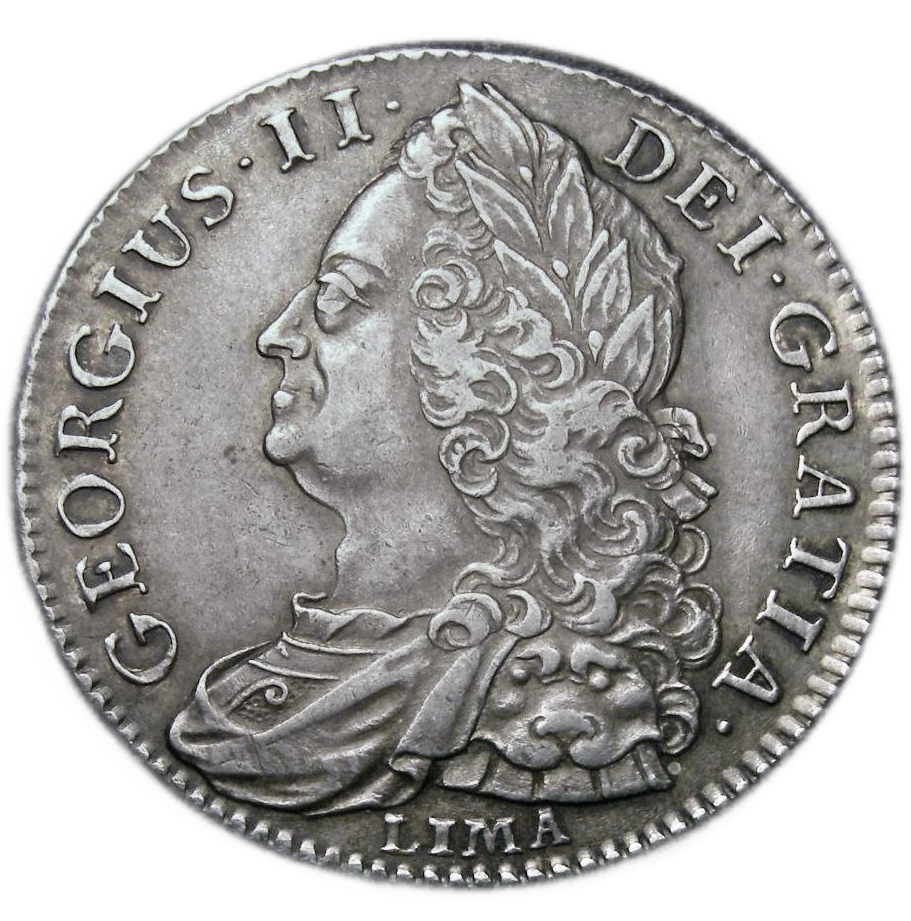
Image: London Coins
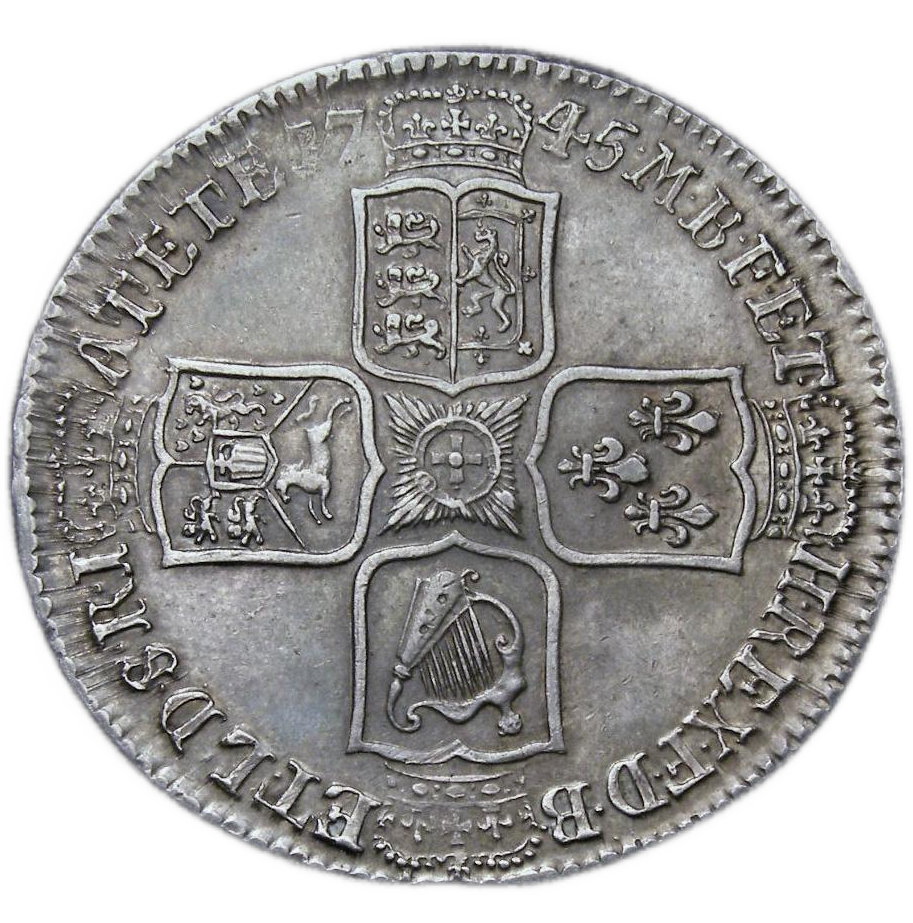
Image: London Coins
The 1745 Lima Halfcrown is identified by the date on the reverse and the word LIMA below the King’s bust on the obverse. The normal issue should first be treated as a currency strike unless clear evidence supports a specialist attribution.
Please note the 'U' in GEORGIUS. This changed to 'V' in GEORGIVS for 1746
The key collector feature for 1745 is the date. The final digit should be checked carefully because the important 1745/3 variety is recorded for this issue.
Obverse
- Old laureate bust of George II facing left.
- LIMA below the bust truncation.
- Legend (Latin): GEORGIUS·II· DEI·GRATIA·.
- Translation: George the Second by the Grace of God.
- Engraver: John Sigismund Tanner.
- Confirm that the Lima mark is clear and not confused with surface damage.
Reverse
- Four crowned shields arranged cruciform around the Garter Star.
- Date 1745 below the reverse design.
- Legend (Latin): M·B·F·ET H·REX·F·D·B ET·L·D·S·R·I A·T·ET·E·1746·.
- Expanded Legend: Magnae Britanniae, Franciae et Hiberniae Rex, Fidei Defensor, Brunsvici et Luneburgi Dux, Sacri Romani Imperii Archi‑Thesaurarius et Elector.
- Translation: King of Great Britain France and Ireland Defender of the Faith Duke of Brunswick and Luneburg, High Treasurer and Elector of the Holy Roman Empire.
- Engraver: Johann Ochs.
- Check the final digit for traces of the 1745/3 overdate.
- Reverse type attributed as Bull Reverse 1.
Edge Lettering
The standard 1745 Lima Halfcrown carries the edge inscription: DECVS ET TVTAMEN ANNO REGNI DECIMO NONO
Translation: An Ornament and a Safeguard, in the Nineteenth Year of the Reign
The inscription served both as decoration and as protection against clipping. The regnal year element records the nineteenth year of George II's reign and provides an additional historical feature of the coin.

Image: London Coins
1746 Lima Halfcrown
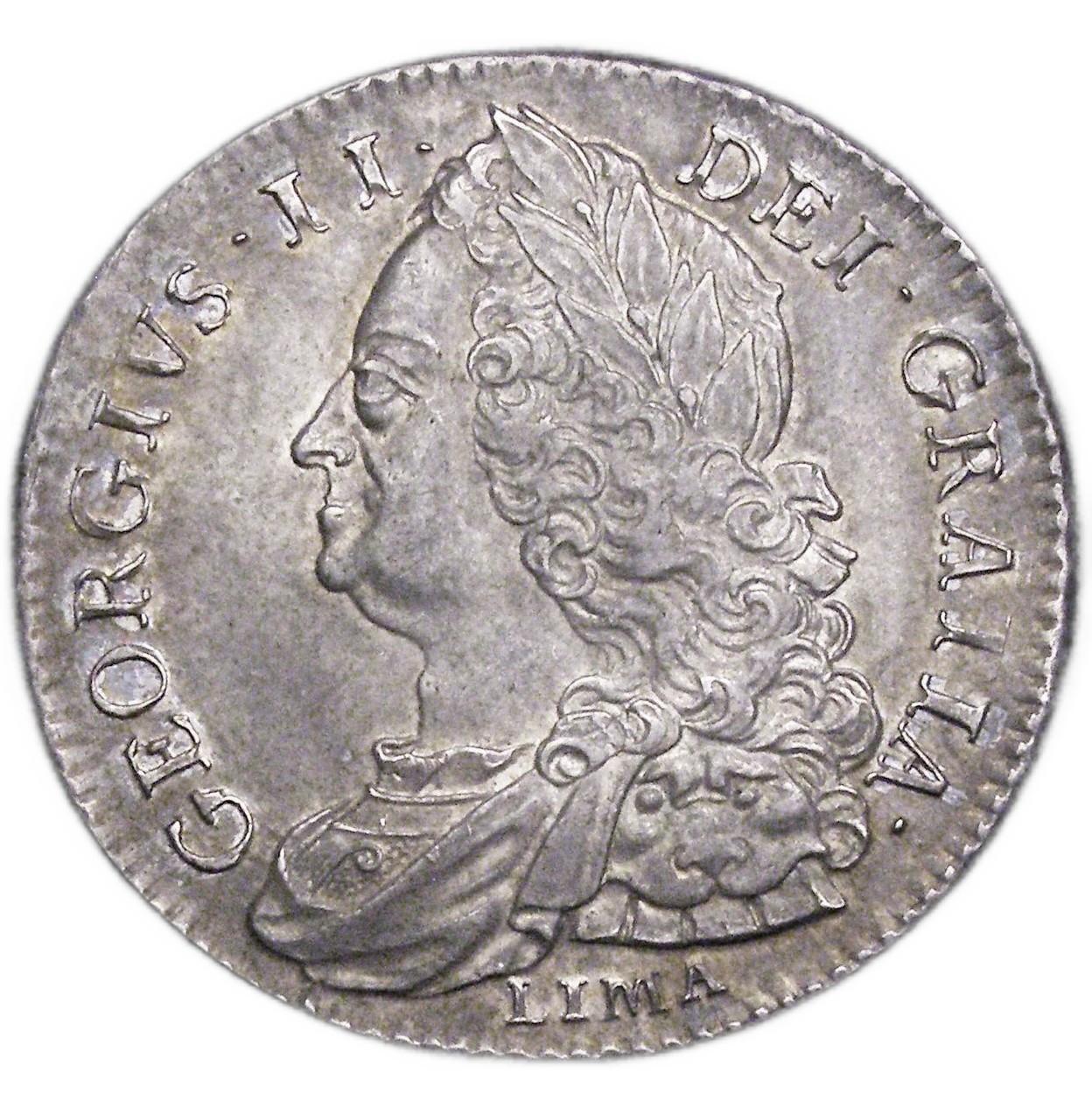
Image: London Coins
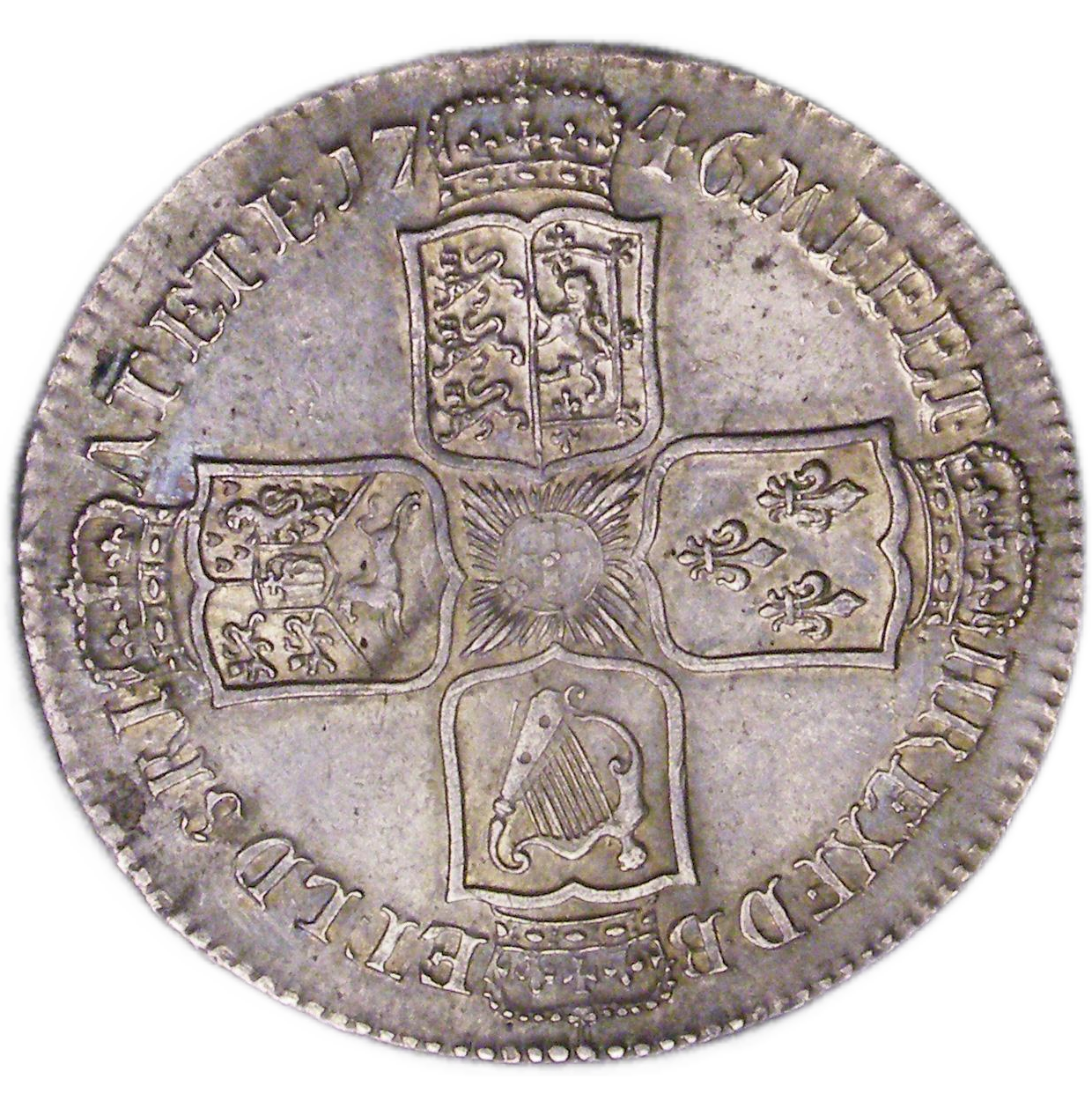
Image: London Coins
The 1746 Lima Halfcrown continues the same historical Lima type, but it is especially important for variety collectors. The issue is associated with both the 1746/5 overdate and the V over U in GEORGIVS obverse legend variety.
The coin should therefore be examined in three areas: the word LIMA below the bust, the final digit of the date, and the letters in GEORGIVS on the obverse legend.
Obverse
- Old laureate bust of George II facing left.
- LIMA below the bust truncation.
- Legend (Latin): GEORGIVS·II· DEI·GRATIA·.
- Translation: George the Second by the Grace of God.
- Engraver: John Sigismund Tanner.
- Confirm that the Lima mark is clear and not confused with surface damage.
Reverse
- Four crowned shields arranged cruciform around the Garter Star.
- Date 1746 below the reverse design.
- Legend (Latin): M·B·F·ET H·REX·F·D·B ET·L·D·S·R·I A·T·ET·E·1746·.
- Expanded Legend: Magnae Britanniae, Franciae et Hiberniae Rex, Fidei Defensor, Brunsvici et Luneburgi Dux, Sacri Romani Imperii Archi‑Thesaurarius et Elector.
- Translation: King of Great Britain France and Ireland Defender of the Faith Duke of Brunswick and Luneburg, High Treasurer and Elector of the Holy Roman Empire.
- Engraver: Johann Ochs.
- Check the final digit for traces of the 1745/3 overdate.
- Reverse type attributed as Bull Reverse 1.
Edge Lettering
The standard 1745 Lima Halfcrown carries the edge inscription:
DECVS ET TVTAMEN ANNO REGNI DECIMO NONO
Translation:
An Ornament and a Safeguard, in the Nineteenth Year of the Reign
The inscription served both as decoration and as protection against clipping. The regnal year element records the nineteenth year of George II's reign and provides an additional historical feature of the coin.

Edge image placeholder: 1746 currency DECIMO NONO edge
Lima Halfcrown Varieties
Although the 1745 and 1746 Lima Halfcrowns share the same design, both dates contain important varieties that are highly sought after by specialist collectors. These varieties are not immediately obvious from the general type alone and usually require close inspection of the date or obverse legend.
The 1745 issue is chiefly known for the 1745/3 overdate. The 1746 issue carries stronger variety interest, with both the 1746/5 overdate and the V over U in GEORGIVS obverse legend variety recorded.
For attribution, full obverse and reverse photographs are useful, but close-up images of the date and legend are essential. Many examples are worn, toned or softly struck, so the diagnostic feature should be checked carefully before assigning a variety.
1745 Lima Halfcrown Varieties
The key Lima variety for 1745 is the 1745/3 overdate. This is a reverse date variety where the final digit 5 was punched over an earlier 3.
1745/3 — 5 over 3
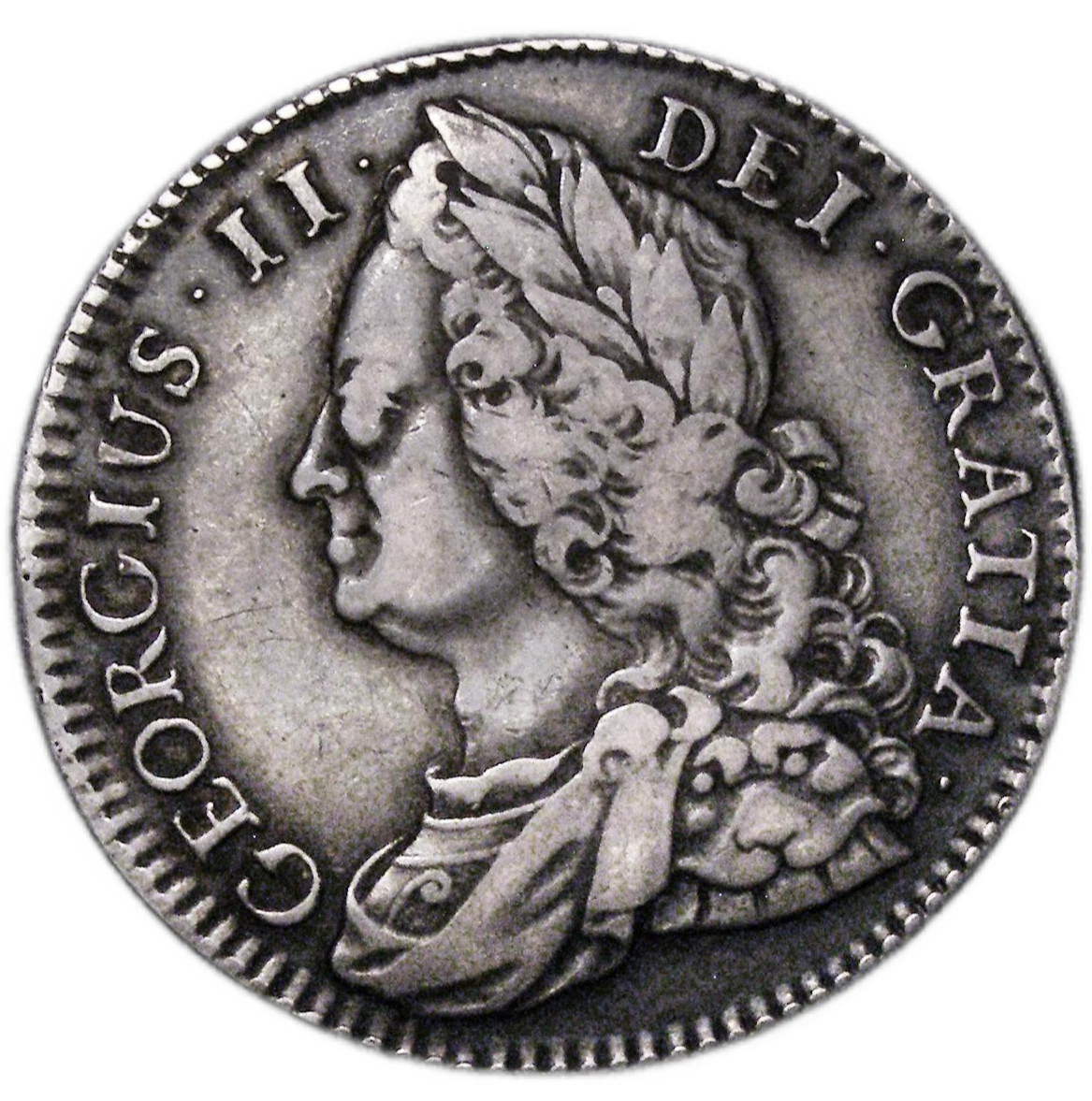
Image: Source to be confirmed
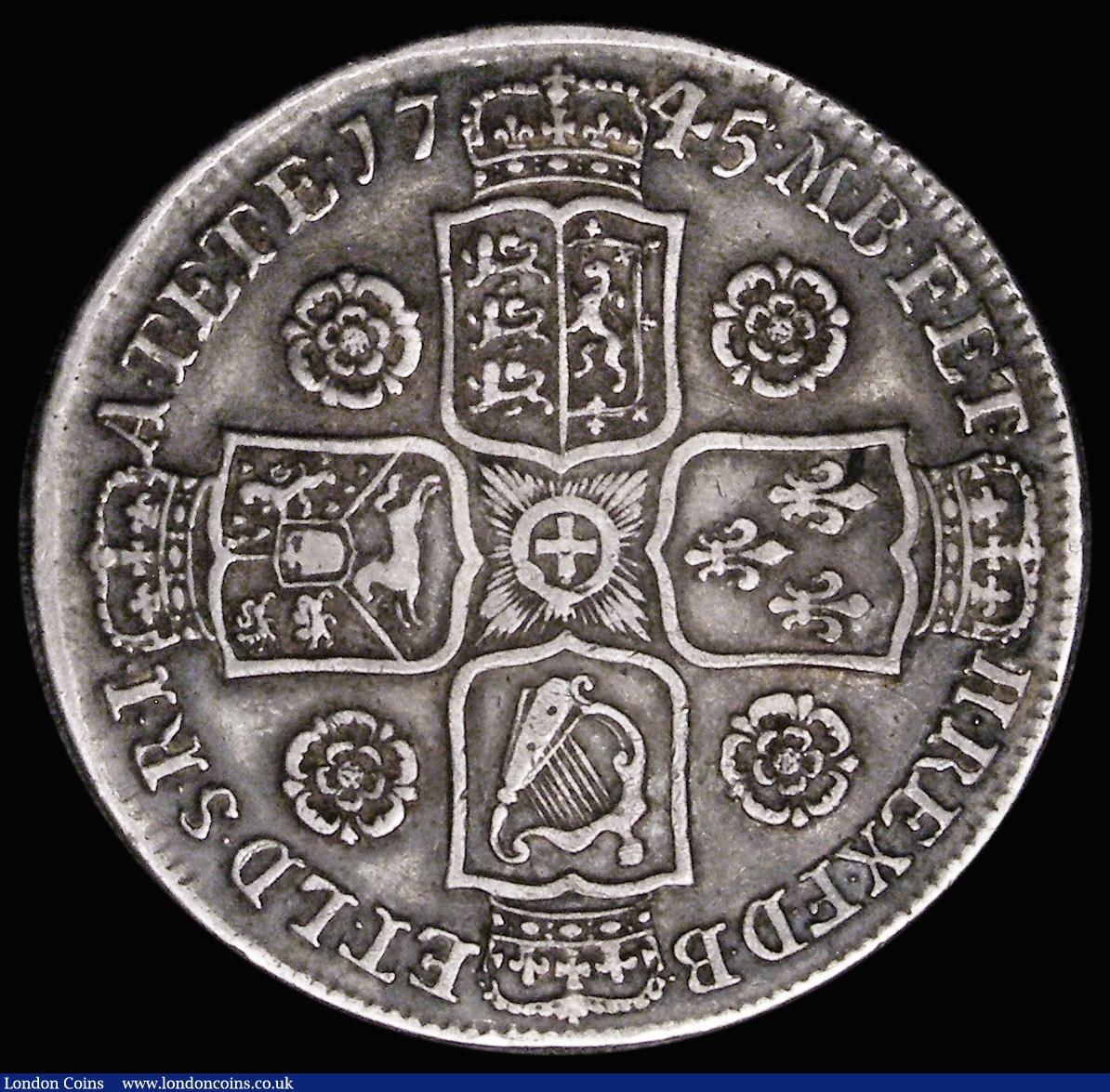
Image: Source to be confirmed

Close-up placeholder: 1745/3 date diagnostic
On the 1745/3 variety, the final digit of the date should be examined closely for traces of the underlying 3 beneath the 5. The clearest evidence is usually seen around the lower curve and internal area of the final digit.
This variety should not be attributed from the full reverse image alone. A close-up of the date is required, as wear, surface marks or shadows can make the lower part of the 5 appear misleading.
- Date: 1745
- Variety: 5 over 3
- Area to inspect: Final digit of the date
- Collector importance: Major 1745 Lima date variety
- Image priority: Reverse close-up of the date
1746 Lima Halfcrown Varieties
The 1746 Lima Halfcrown carries the strongest variety interest within the two-date Lima Halfcrown group. The main varieties to record are the 1746/5 overdate and the V over U in GEORGIVS obverse legend variety.
1746/5 — 6 over 5
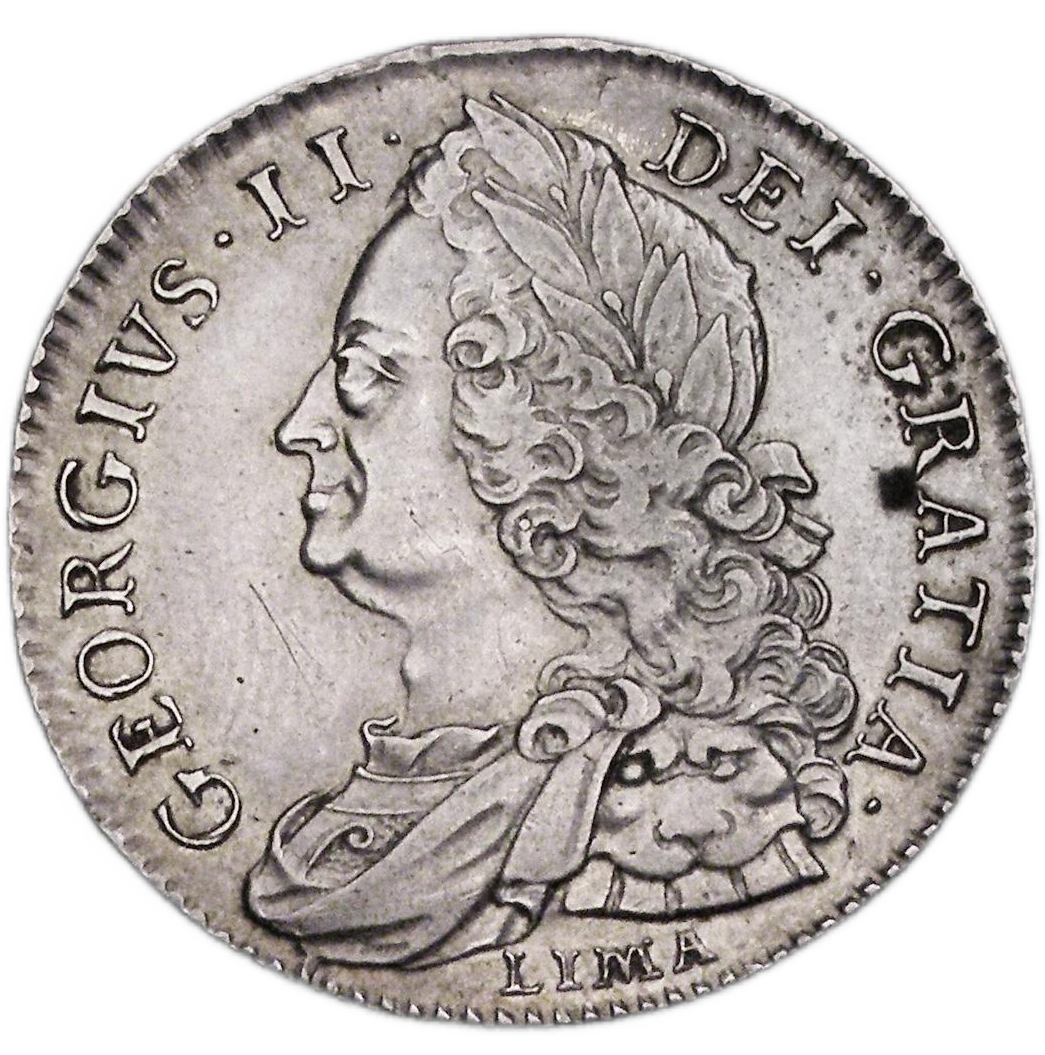
Image: London Coins
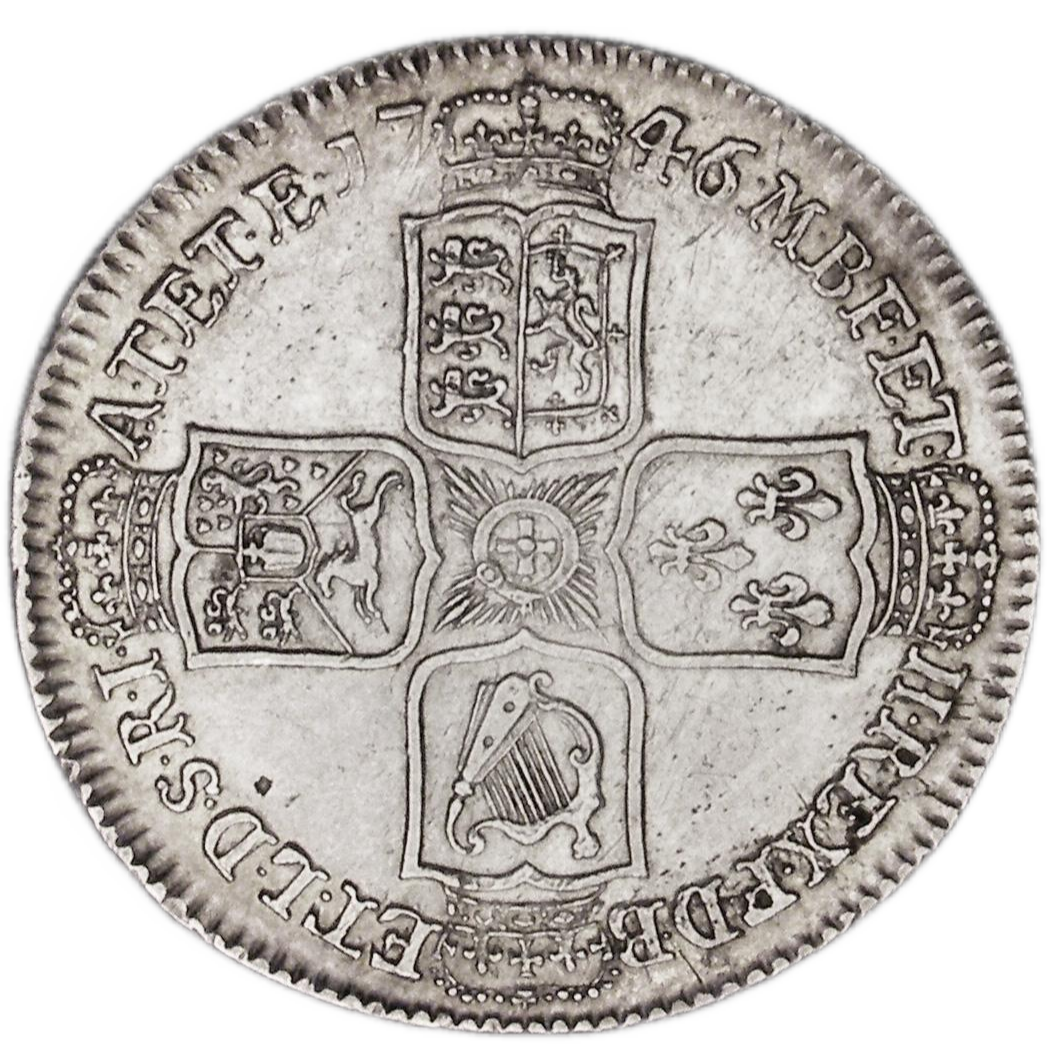
Image: London Coins
The 1746/5 is a major overdate variety. The final digit 6 was punched over an earlier 5, leaving visible traces of the underlying numeral on stronger examples.
The lower curve and internal area of the 6 are the most important places to inspect. On worn examples, the overdate may be difficult to confirm.
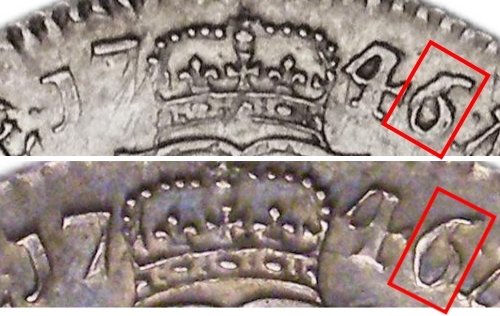
Close-up of standard 1746 and 1746-over-5 Halfcrown
- Date: 1746
- Variety: 6 over 5
- Area to inspect: Final digit of the date
- Collector importance: Major 1746 Lima overdate
- Image priority: Reverse close-up of the date
V over U in GEORGIVS
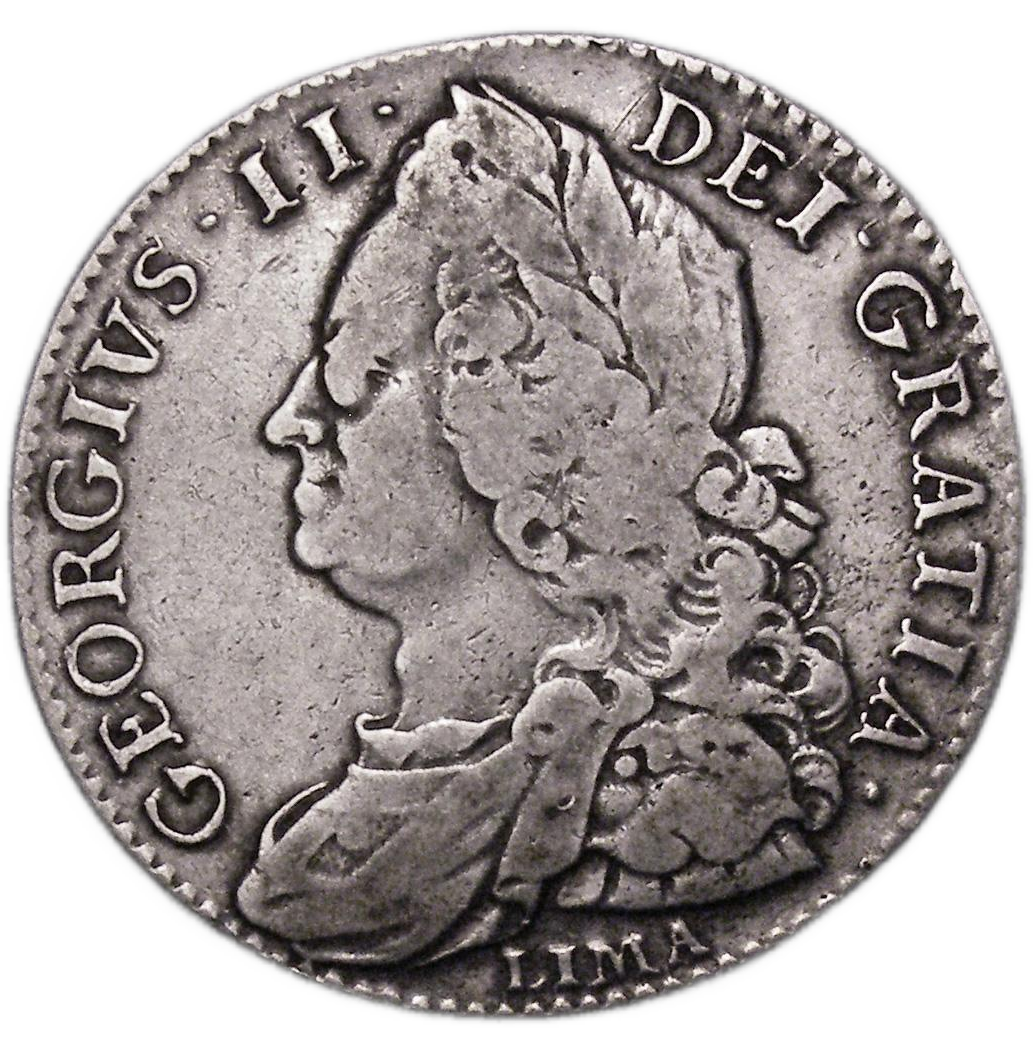
Image: London Coins
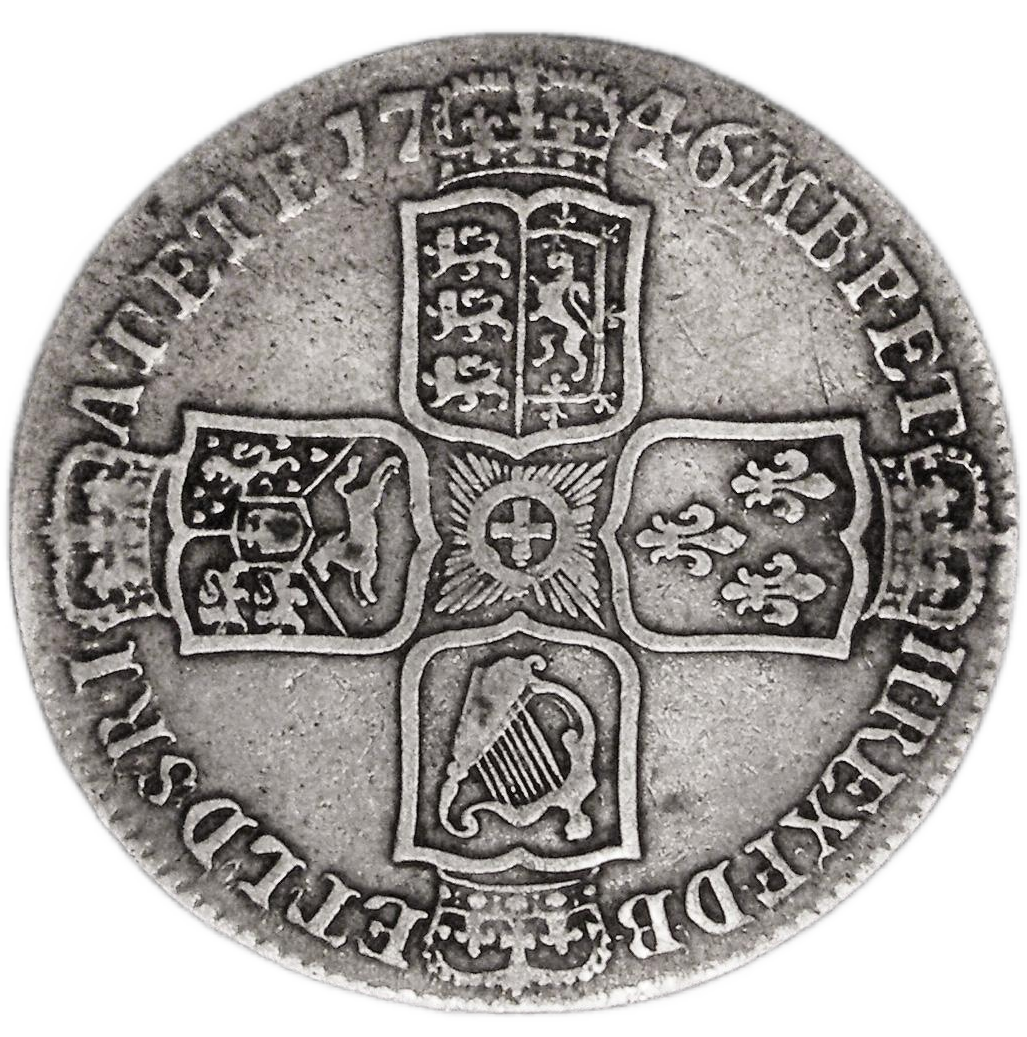
Image: London Coins
The V over U in GEORGIVS is an obverse legend variety. It is not a date variety. The diagnostic area is the word GEORGIVS, where the V shows traces of an underlying U.
This variety should be checked on the obverse, not the reverse. A full obverse image helps show the coin type, but the actual attribution depends on a clear close-up of the affected letters.
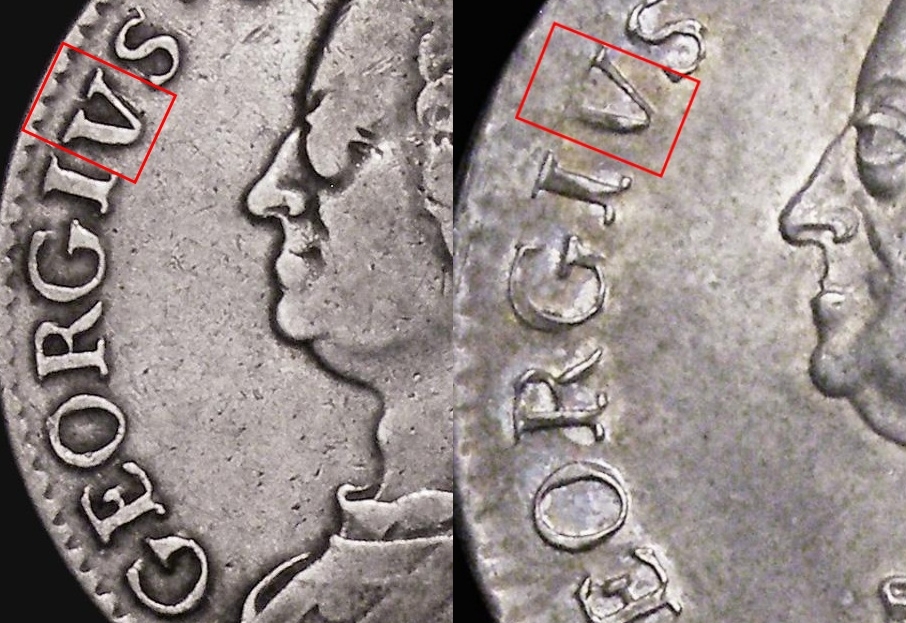
Close-up of standard 1746 and 1746 v-over-u Halfcrown
- Date: 1746 Lima Halfcrown
- Variety: V over U in GEORGIVS
- Area to inspect: Obverse legend
- Collector importance: Obverse legend variety
- Image priority: Close-up of GEORGIVS
- Reference: Bull 1690, rated R3
Lima Halfcrown Variety Census
The following table is intended as a working collector census for the Lima Halfcrown group. It focuses only on the 1745 and 1746 Lima issues and separates currency issues, recognised varieties and the 1746 proof issue.
| Date | Issue / Variety | Diagnostic Feature | Area to Inspect | Edge Note |
|---|---|---|---|---|
| 1745 | Standard Lima Halfcrown | LIMA below bust; normal date | Obverse bust area and reverse date | DECIMO NONO |
| 1745 | 1745/3 | Final 5 struck over underlying 3 | Final digit of date | DECIMO NONO |
| 1746 | Standard Lima Halfcrown | LIMA below bust; normal date | Obverse bust area and reverse date | DECIMO NONO |
| 1746 | 1746/5 | Final 6 struck over underlying 5 | Final digit of date | DECIMO NONO |
| 1746 | V over U in GEORGIVS | V punched over underlying U | Obverse legend GEORGIVS | DECIMO NONO |
Quick Attribution Guide
| If You See... | Likely Attribution |
|---|---|
| LIMA below bust and date 1745 | 1745 Lima Halfcrown |
| Traces of 3 beneath the final 5 | 1745/3 variety |
| LIMA below bust and date 1746 | 1746 Lima Halfcrown |
| Traces of 5 beneath the final 6 | 1746/5 variety |
| U visible beneath V in GEORGIVS | V over U in GEORGIVS variety |
Lima Halfcrown Catalog Reference
The Lima Halfcrown series is small in number but rich in historical significance and specialist varieties. The following catalogue reference summarises the main issues currently recognised for the 1745 and 1746 Lima Halfcrowns, including standard currency strikes, overdates, legend varieties and the 1746 proof issue.
By combining the principal Bull and ESC references in a single table, collectors can quickly identify individual varieties and place them within the wider Lima Halfcrown series.
| Date | Issue / Variety | References | Comments |
|---|---|---|---|
| 1745 | Standard Lima Halfcrown | ESC 605, Bull 1687 | Rated C2 by Bull |
| 1745 | 1745/3 | ESC 'Unlisted', Bull 1687a | Rated R6 by Bull |
| 1746 | Standard Lima Halfcrown | ESC 606, Bull 1688 | Rated C2 by Bull |
| 1746 | 1746/5 | ESC 607, Bull 1689 | Rated Rare by Bull |
| 1746 | V over U in GEORGIVS | ESC 'Unlisted', Bull 1690 | Rated R3 by Bull |
Collecting Notes
Lima Halfcrowns are popular because they combine attractive eighteenth-century silver design with a clear historical connection. The word LIMA makes the coin instantly recognisable and gives it appeal beyond ordinary date collecting.
For standard examples, originality is very important. Many surviving coins show wear, old cleaning, scratches, adjustment marks, rim knocks or uneven toning. A coin with clear Lima lettering, sound rims, natural surfaces and strong detail is more desirable than a brighter but cleaned example.
Variety collectors should examine the coin in a consistent order:
- Confirm the word LIMA below the bust.
- Confirm the date: 1745 or 1746.
- Check the final digit for overdate traces.
- Check GEORGIVS for the V over U variety.
- Record the edge inscription where possible.
- Assess surfaces, strike quality and provenance.
Clear close-up images are essential. Full obverse and reverse photographs help establish the type, but the main varieties require close-ups of the date, legend and edge.
Conclusion
The 1745 and 1746 Lima Halfcrowns are among the most memorable silver coins of George II. The visible LIMA mark gives the coins a direct connection with captured Spanish silver, while the standard design remains firmly within the classic eighteenth-century halfcrown series.
For type collectors, either date can represent the Lima Halfcrown. For variety collectors, the series offers far more depth through the 1745/3, 1746/5, V over U in GEORGIVS and the specialist 1746 proof issue.
The strongest attribution approach is to study the coin systematically: obverse, reverse, date, legend, edge and surfaces. With clear images and careful Bull-based attribution, the Lima Halfcrowns can form one of the most useful George II specialist references on Ekxnumis.