
Articles
1920 Halfcrown Varieties — Die Reference Guide
Identifying the Five Die Pairings (Davies 1672 – 1676) • Numismatic Study
Introduction
This reference guide covers the 1920 George V Halfcrown varieties, including the five recognised Davies 1672–1676 die pairings. It explains how to identify each combination using Obverse 1, 2, and 3, Reverse A and B, portrait size, legend spacing, rim beads, and garter diagnostics.
The 1920 George V Halfcrown marks the beginning of the debased 0.500 silver era. Despite this reduction in fineness, the same Bertram MacKennal portrait and Wyon shield reverse continued in use. However, a series of five distinct obverse–reverse die pairings were employed, catalogued by Peter J. Davies (nos. 1672 – 1676) and expanded upon by David J. Groom.
Each variety shows differences in head size, legend spacing, and rim treatment, as well as whether the garter on the reverse is raised or plain. These diagnostics are essential for collectors pursuing a complete George V half-crown variety set.
The following guide summarises and illustrates these five pairings using the Davies sequence. All coins were struck at the Royal Mint – London, with a total mintage of approximately 17.9 million.
General Information
- Monarch: George V (1910 – 1936)
- Denomination: Halfcrown (2 Shillings 6 Pence)
- Date: 1920
- Composition: .500 Silver (after May 1920)
- Weight: 14.14 g
- Diameter: 32 mm
- Edge: Milled
- Obverse Designer: Sir Bertram MacKennal (“BM” on truncation)
- Reverse Designer: Leonard Charles Wyon
- Legend: GEORGIVS V DEI GRA BRITT OMN REX FID DEF IND IMP / HALFCROWN 1920
- Mint: Royal Mint – London
1920 Die Pair Possible Combinations
The five recognised pairings (D.1672 – D.1676) can be observed.
- OBVERSE 1 + REVERSE A
- OBVERSE 1 + REVERSE B
- OBVERSE 2 + REVERSE A
- OBVERSE 3 + REVERSE A
- OBVERSE 3 + REVERSE B
1920 • OBVERSE 1 + REVERSE A • DAVIES 1672
Commonest 1920 die pairing. Obverse 1 shows the small-head portrait; reverse A has a raised garter above “F.19”. The “F of DEF” points between beads, and the rim is fine. The reverse legend sits higher from the shield.
| Obverse 1 | Reverse A |
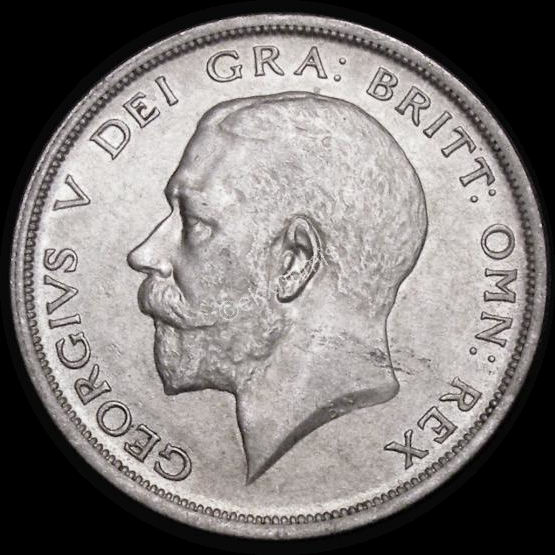
|
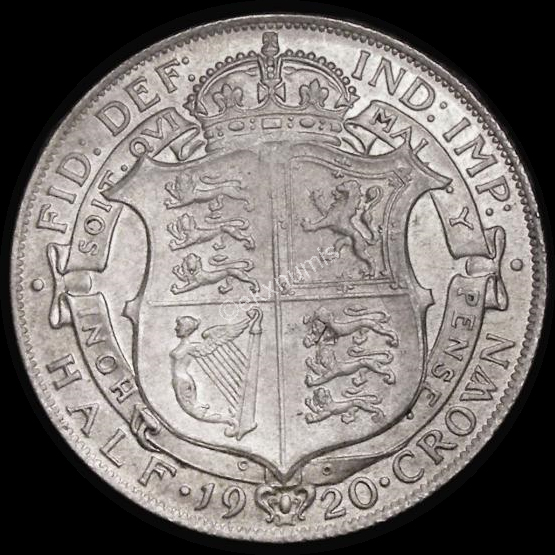
|
References:
- Davies – 1672
- Groom – Type 1A
- Coins of England – 4021
1920 • OBVERSE 1 + REVERSE B • DAVIES 1673
Same obverse as D.1672, but reverse B has a plain garter above “F.19” and a distinct pocket above the “C” of CROWN. Scarcer than 1672; alignment of the garter to rim differs subtly.
| Obverse 1 | Reverse B |
 |
 |
References:
- Davies – 1673
- Groom – Type 1B
1920 • OBVERSE 2 + REVERSE A • DAVIES 1674
Obverse 2 is a re-engraved small-head hub with tighter lettering. Reverse A retained the raised garter style. A notably scarcer combination, easily overlooked due to subtle obverse legend differences.
| Obverse 2 | Reverse A |
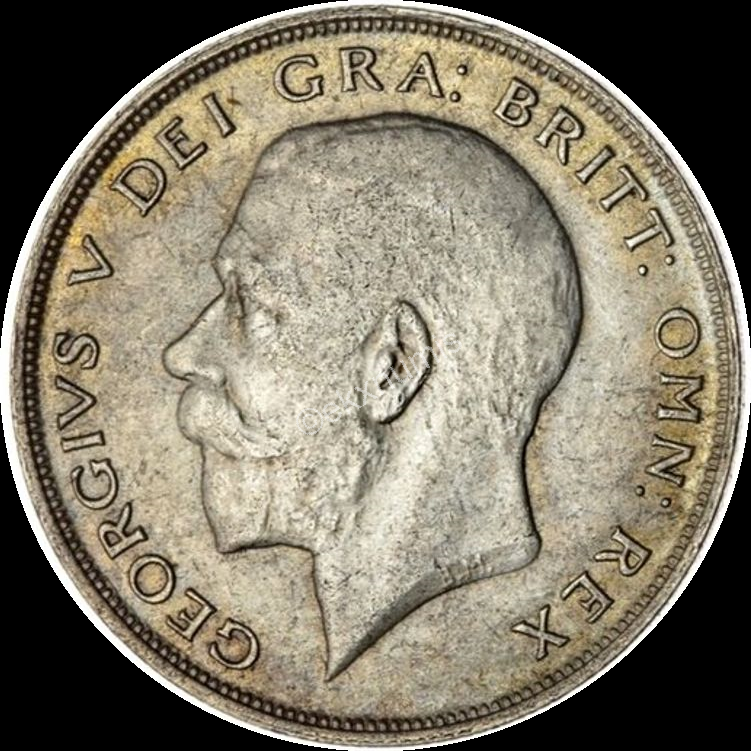
|
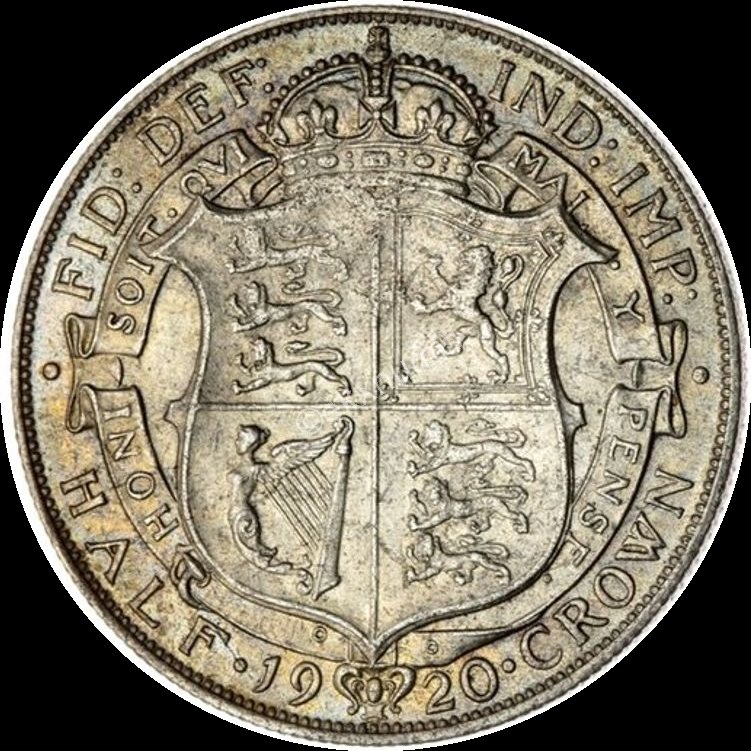
|
References:
- Davies – 1674
- Groom – Type 2A
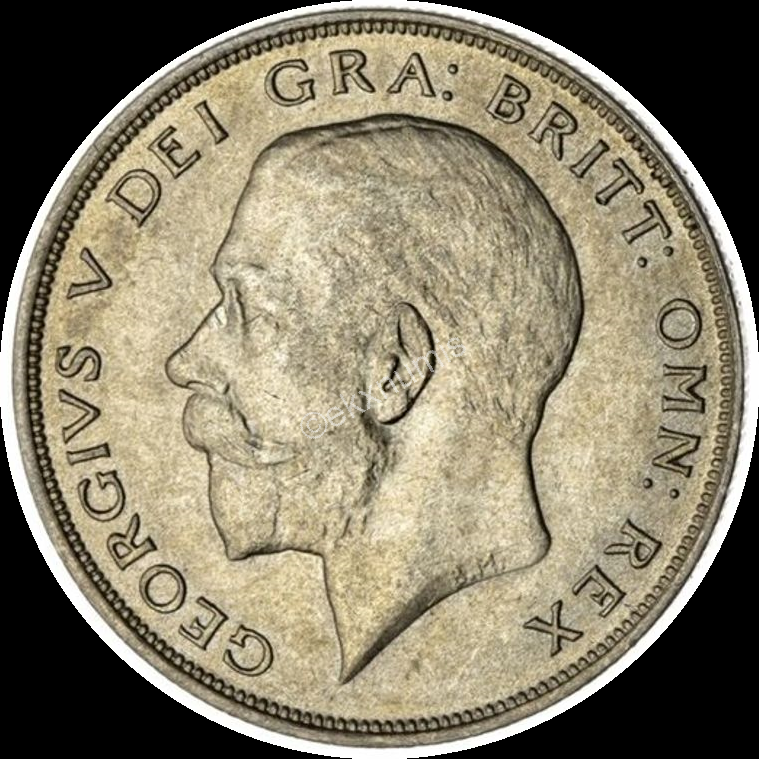
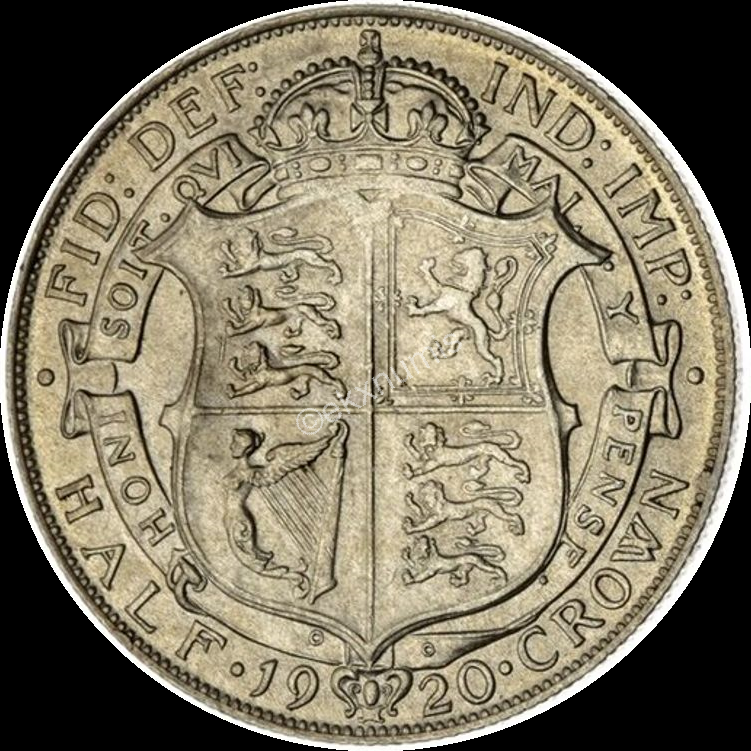
1920 • OBVERSE 3 + REVERSE A • DAVIES 1675
Obverse 3 introduces the large-head effigy, paired again with reverse A (raised garter). Beading is thicker and the rim broader. Common among late-1920 issues.
| Obverse 3 | Reverse A |
|
|
References:
- Davies – 1675
- Groom – Type 3A
1920 • OBVERSE 3 + REVERSE B • DAVIES 1676
The rarest regular variety for 1920. Large-head obverse 3 combined with plain-garter reverse B. The “C” of CROWN lies under a pocket in the rim, and the garter is level rather than raised.
| Obverse 3 | Reverse B |

|
|
References:
- Davies – 1676
- Groom – Type 3B
How to Distinguish the 1920 Dies
The five recognised pairings (D.1672 – D.1676) can be separated by observing obverse portrait size, rim thickness, legend spacing and the nature of the garter edge on the reverse.
- Obv 1: Small head; wide spacing – paired with Rev A/B.
- Obv 2: Modified small head – narrow legend.
- Obv 3: Large head; heavier rim – paired with Rev A/B.
- Rev A: Raised garter above “F.19”.
- Rev B: Plain garter and “pocket” above C of CROWN.
Careful comparison under angled light reveals rim bead shape and garter relief differences. In practice, Reverse A coins are more common; Reverse B pairings (D.1673 and D.1676) are scarcer.
How to Distinguish 1920 Obverse Dies
Key visual traits that distinguish each of the three obverse hubs used for the 1920 Halfcrown.
Obverse 1
- A small head, measuring 24mm.
- The effigy is in high relief.
- The letters in 'REX' are close spaced.
- The 'I' of 'DEI' points to a space.
- The 'A' of 'GRA' points to a bead.
- The 'I' of 'BRITT' points to the right of a bead.
- The gap between the bases of the 'A' and the 'B' above the head is wide.
- There is normal hair to the back of the head.
- There are 185 rim beads.
Earliest reverse; encountered less frequently than D and E.
Obverse 2
- A medium head, measuring 24/½mm.
- The effigy is in high relief.
- The letters in 'REX' are wide spaced.
- The 'I' of 'DEI' points to a border bead (more correctly to the right of a bead).
- The 'A' of 'GRA' points to a space between beads.
- The 'I' of 'BRITT' points to a bead.
- The gap between the bases of the 'A' and the 'B' above the head is narrower.
- There is better defined hair to the back of the head.
Most common reverse for the 1914 issue.
Obverse 3
- A larger head, measuring 25mm.
- The effigy is in low relief.
- The letters in 'REX' are wide spaced.
- The 'I' of 'DEI' points to a border bead (more correctly to the right of a bead).
- The 'A' of 'GRA' points to right of a bead.
- The 'I' of 'BRITT' points to a bead.
- The gap between the bases of the 'A' and the 'B' above the head is narrower.
- There is normal hair to the back of the neck.
- There are 188 rim beads.
Final hub with realigned legend and refined spacing.
How to Distinguish 1920 Reverse Dies
Key visual traits that distinguish each of the two reverse hubs used for the 1920 Halfcrown.
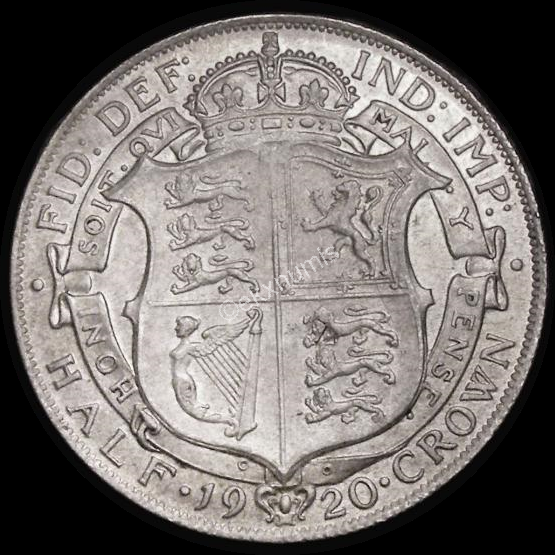
Reverse A
- The design is normal sized.
- There is a raised edge on the garter above the 'F' of 'HALF' and the '19'.
- There is no pocket above the 'C' of 'CROWN'.
- A thinner edge.
Most common reverse for the 1914 issue.
Reverse B
- The design is slightly smaller.
- There is a plain edge on the garter above the 'F' of 'HALF and the '19'.
- There is a small pocket above the 'C' of 'CROWN'.
- A thicker edge.
Final hub with realigned legend and refined spacing.